To strengthen your grip for rock climbing, focus on grip types like open-handed and crimp grips. Incorporate exercises such as fingerboard training, hand grippers, and bodyweight workouts like pull-ups. Don't forget core strength for better body positioning and energy conservation. Always warm up, progress gradually, and allow for rest days to prevent injuries. Keep track of your progress to stay motivated. There's plenty more to explore about enhancing your grip strength effectively.
Understanding Grip Types in Rock Climbing
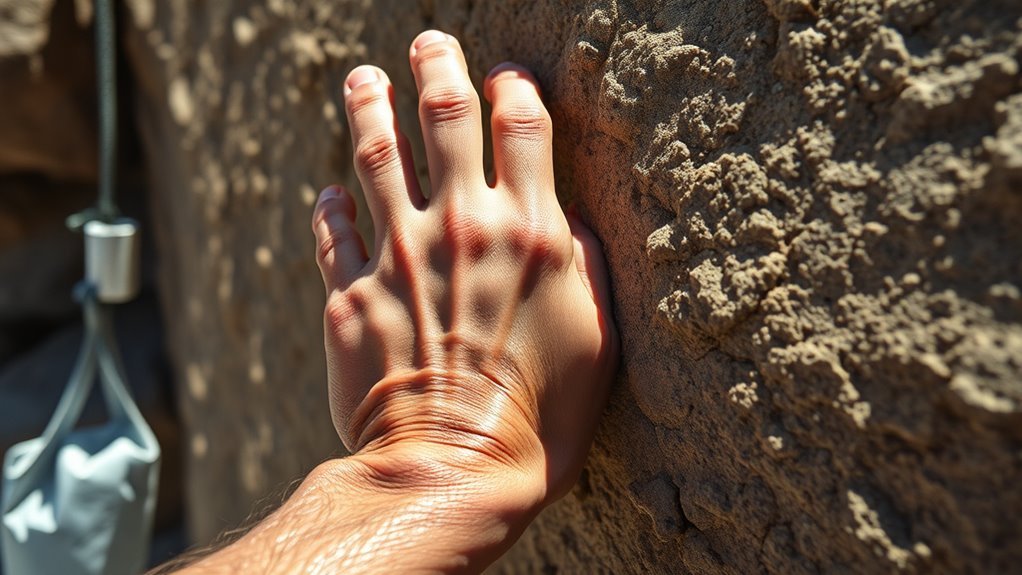
When you start rock climbing, it's important to understand the different types of grips you'll encounter on the wall. Each grip offers a unique challenge and can influence your climbing experience. You'll find open-handed grips, where your fingers spread wide, allowing for a relaxed hold that promotes freedom of movement. Then there are crimp grips, where your fingers curl tightly, giving you maximum control on small edges.
Another type is the pinch grip, which requires you to squeeze two opposing surfaces, enhancing your hand strength and dexterity. You might also come across slopers, smooth holds that test your ability to maintain balance and body positioning. Familiarizing yourself with these grips not only helps you climb more effectively but also allows you to tap into the spirit of adventure that comes with rock climbing. Embrace the variety, and let your hands guide you to new heights! Additionally, understanding the importance of grip strength can significantly enhance your climbing performance and energy conservation.
Essential Grip Strengthening Exercises
To improve your grip for rock climbing, you'll want to incorporate a variety of exercises into your routine. Fingerboard training techniques, grip strength tools, and bodyweight exercises can all help you develop the necessary strength. Additionally, proper nutrition plays a crucial role in fueling your muscles for optimal performance and recovery. Let's explore these essential methods to boost your grip effectively.
Fingerboard Training Techniques
Although grip strength is essential for rock climbing success, many climbers overlook the importance of fingerboard training. Incorporating this technique into your routine can reveal new levels of power and control. Start with basic hangs, using different holds to engage various finger muscles. Aim for 7-10 seconds of hanging, followed by equal rest time. Gradually increase your hang time as you get stronger. You can also try repeaters—hang for 7 seconds, rest for 3, and repeat for several sets. Don't forget to mix in pull-ups to build upper body strength, which complements your grip. Listen to your body and allow proper recovery to avoid injuries. Embrace these techniques, and you'll tap into your climbing potential on the rock face!
Grip Strength Tools
Building on the foundation of fingerboard training, integrating grip strength tools into your routine can elevate your climbing performance even further. Tools like hand grippers, resistance bands, and finger extensor devices are perfect for enhancing your grip. Hand grippers let you focus on crushing strength, while resistance bands can improve overall hand stability. Don't overlook finger extensor devices; they help balance your grip by strengthening the opposing muscles. You can easily incorporate these tools at home or on the go, making it convenient to build strength whenever you want. Commit to a regular routine, and you'll notice a significant boost in your grip strength, allowing you to tackle those challenging climbs with confidence and freedom.
Bodyweight Exercises for Grip
While many climbers focus on specialized tools for grip strength, incorporating bodyweight exercises into your training can yield impressive results without any equipment. Push-ups and pull-ups not only build upper body strength but also engage your grip. Try doing a set of dead hangs from a pull-up bar; just hang there and feel your grip working hard. You can also perform towel pull-ups—wrap a towel over the bar and grip it for a challenging twist. For a different approach, practice finger push-ups; they'll target your fingers specifically. Finally, don't underestimate the power of hanging leg raises; they'll engage your core while your grip holds you steady. These exercises can free your climbing potential and enhance your overall performance.
Incorporating Fingerboards Into Your Training
Since you're looking to boost your grip strength for rock climbing, incorporating fingerboards into your training routine can be a game changer. Fingerboards allow you to target specific muscle groups in your fingers and hands, enhancing your overall grip. Here's how to make the most of it:
- Start Slow: Begin with easier holds to avoid injury. Gradually increase the difficulty as you gain confidence.
- Use a Timer: Set a timer for your hangs. Aim for 7-10 seconds per hang, with equal rest in between.
- Vary Grips: Mix it up! Use different holds—edges, slopers, and pockets—to engage various muscles.
- Frequency: Train 2-3 times a week, allowing your muscles to recover.
The Role of Core Strength in Grip Performance
Your core strength plays an essential role in how well you grip while climbing. A stable core helps you maintain better body positioning, allowing for enhanced grip endurance. When your core is strong, you'll find it easier to hold onto those challenging holds without fatigue. Additionally, a strong core reduces injury risk by supporting your spine during exertion, which is crucial for maintaining grip strength throughout your climbs.
Core Stability Importance
Core stability plays an essential role in improving grip performance for rock climbers. When your core is strong, you're better able to maintain balance and control, allowing your grip to focus solely on holding onto the rock. Here's why core stability is critical:
- Reduces Fatigue: A strong core supports your movements, preventing your arms from overworking.
- Enhances Balance: It helps you maintain your center of gravity, allowing for more precise hand placements.
- Improves Body Positioning: A stable core enables you to position your body effectively on the wall, making it easier to reach holds.
- Increases Efficiency: With a strong core, you'll use less energy, allowing you to climb longer and with greater confidence.
Embrace core training; it's essential for your climbing journey!
Enhanced Grip Endurance
Enhanced grip endurance is essential for rock climbers, and it's closely linked to your core strength. When your core's engaged, you stabilize your body, allowing your grip to work more effectively without unnecessary strain. This means you can hang on longer and tackle more challenging routes with confidence.
To enhance this connection, focus on exercises that build both your core and grip simultaneously. Think pull-ups combined with leg raises or hanging core exercises. As your core muscles strengthen, you'll notice your grip endurance improving, letting you explore climbing routes that once felt out of reach. Embrace this synergy; it's not just about strength, but about freedom in movement, letting you navigate the vertical world with ease and power.
Tips for Injury Prevention While Training Grip Strength
While strengthening your grip is essential for rock climbing, it's equally important to prioritize injury prevention during your training. You want to climb freely without the worry of setbacks. Here are some tips to keep you safe:
- Warm Up: Always start with a proper warm-up to get blood flowing to your hands and forearms.
- Gradual Progression: Increase your grip strength gradually. Avoid overexerting yourself to minimize strain and injuries.
- Use Proper Technique: Focus on your form during exercises. Poor technique can lead to unnecessary stress on your muscles and joints.
- Rest and Recovery: Don't skip rest days. Allowing your muscles time to recover helps prevent injuries and guarantees long-term progress. Embracing rest days is key to accessing true potential in your training.
Tracking Your Progress and Setting Goals
How can you guarantee that your grip strength training is effective and leads to tangible improvements in your climbing? Start by tracking your progress. Keep a dedicated journal or use an app to log your workouts, noting exercises, sets, and reps. This'll help you visualize your growth and stay motivated.
Next, set specific, achievable goals. Instead of vague ambitions like "get stronger," aim for clear targets, like increasing your hang-time on a fingerboard or completing a certain number of pull-ups. Break those targets into smaller milestones to celebrate your progress along the way.
Regularly assess your performance on different climbing routes. Are you tackling harder problems or feeling more confident on the wall? This reflection will help you adjust your training as needed. Remember, each small victory builds your freedom on the rock, so keep pushing and enjoying the journey! Additionally, consider finding inspiration in online communities to connect with others who share your climbing goals, providing support and motivation to enhance your training experience.
Frequently Asked Questions
How Often Should I Train My Grip for Optimal Results?
You should train your grip about two to three times a week for ideal results. Balance your sessions with rest days; your body needs time to recover and grow stronger. Consistency is key to progress.
Can Grip Strength Improve Other Athletic Performances?
A solid grip can elevate your game, enhancing performance in sports like tennis or gymnastics. It's all about that connection—when your hands are strong, you'll feel more liberated and in control during every movement.
What Is the Best Nutrition for Grip Strength Recovery?
For ideal grip strength recovery, you'll want to focus on protein-rich foods like chicken or legumes, along with healthy fats from nuts. Hydration's key too, so don't forget to drink plenty of water!
Are There Specific Grips for Different Climbing Styles?
Aren't there countless grips for diverse climbing styles? Each technique caters to unique challenges. Whether you're bouldering or sport climbing, mastering specific grips can release your potential, letting you conquer those heights with newfound freedom.
How Do I Know if I'm Overtraining My Grip?
If you're feeling persistent pain, excessive fatigue, or decreased performance, you might be overtraining your grip. Listen to your body, and don't ignore signs like prolonged soreness or inability to complete your usual routine.