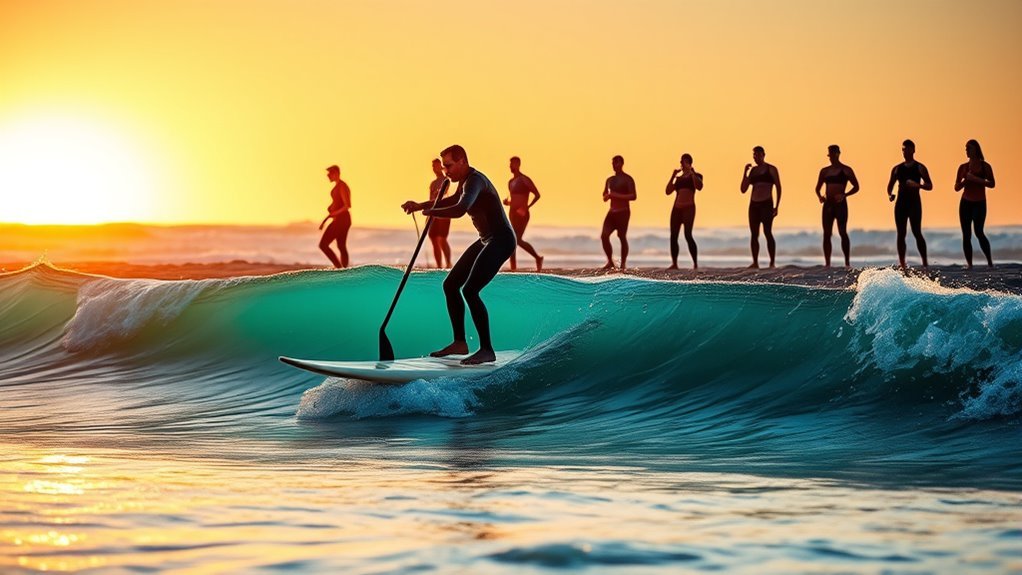
To build endurance for surfing, focus on cardiovascular training, like running or swimming, for 30 minutes, 3-4 times a week. Incorporate strength training with compound movements and prioritize flexibility through stretching. Interval training is key; alternate high-intensity bursts with recovery. Don't forget hydration and proper nutrition to fuel your workouts. Yoga can also enhance your balance and core. Keep track of your progress and goals for motivation. There's more to discover about enhancing your surfing stamina!
Understanding Surfing Endurance
When you hit the waves, understanding surfing endurance becomes essential for maximizing your performance. It's not just about paddling out; it's about maintaining energy and focus as you ride the swells. Endurance in surfing means being able to keep your stamina high, allowing you to catch more waves and push through fatigue.
To truly embrace that freedom on the water, you need to build both physical and mental endurance. You'll want to engage in activities that enhance your core strength, flexibility, and balance. Think of it as connecting with your body, learning how to ride the rhythm of the ocean without exhausting yourself. Incorporating muscular endurance enhancement through specific training methods can significantly improve your ability to perform longer on the waves.
Cardiovascular Training for Surfers
To excel in surfing, incorporating cardiovascular training into your routine is essential, as it boosts your stamina and keeps you energized during long sessions in the water. Activities like running, cycling, or swimming can elevate your heart rate and improve your overall endurance. Aim for at least 30 minutes of moderate to high-intensity cardio three to four times a week.
Don't forget to mix it up! Interval training can be particularly beneficial; short bursts of intense effort followed by periods of rest mimic the unpredictable nature of catching waves. This method not only enhances endurance but also allows you to push your limits and discover your true potential.
Incorporate interval training to mimic the rhythm of catching waves and enhance your surfing performance.
Another great option is to get out on a paddleboard or go for a surf skate session. These activities not only enhance your cardiovascular fitness but also enhance your balance and coordination—key elements for a great ride.
Stay consistent, and you'll notice how your endurance improves, letting you embrace every moment in the surf with freedom.
Strength Training to Enhance Paddling Power
Building up your endurance with cardiovascular training is just the start; strength training is key to enhancing your paddling power. To catch those waves and ride freely, you need to develop the muscles that drive your paddle strokes. Focus on compound movements like pull-ups, bench presses, and rows—they'll build strength in your back, shoulders, and arms, giving you the explosive power to paddle hard.
Incorporate resistance bands and medicine balls into your routine for functional strength that translates directly to the water. Don't forget your core; exercises like planks and rotational movements will stabilize your body, allowing for more powerful strokes. Bodyweight exercises can also be beneficial for improving muscle endurance and coordination. Aim for a balanced workout plan that targets all muscle groups, enhancing your overall performance. Remember, the stronger you are, the easier it gets to paddle out, catch waves, and enjoy the freedom of surfing. So, embrace strength training, and feel the difference in your paddling power!
Flexibility and Balance Exercises
To excel in surfing, you need to focus on flexibility and balance. Incorporating stretching techniques, core stability exercises, and balance board training can greatly enhance your performance on the waves. Additionally, improved range of motion through mobility training allows for more fluid movements, helping you navigate the surf with greater ease and efficiency. Let's explore how these exercises can help you stay steady and agile while surfing.
Stretching Techniques for Surfers
While you might think of surfing as primarily a test of strength and endurance, flexibility and balance are equally essential for improving your performance on the water. Incorporating stretching techniques into your routine can enhance your range of motion and help you stay agile on the board.
Here's a quick reference table for effective stretching techniques:
| Stretching Technique | How to Do It | Benefits |
|---|---|---|
| Pigeon Pose | Sit, bend one leg, extend the other | Opens hips, improves balance |
| Downward Dog | Hands and feet on the ground, lift hips | Stretches back, strengthens legs |
| Seated Forward Bend | Sit and reach for your toes | Lengthens hamstrings, calms mind |
| Warrior II | Stand with arms extended, bend knee | Builds strength, enhances focus |
Make these stretches part of your routine, and feel the freedom of movement on your surfboard!
Core Stability Exercises
Having developed flexibility through stretching techniques, it's time to focus on core stability exercises that can greatly enhance your surfing performance. A strong core keeps you balanced and agile on the board, allowing you to ride those waves with confidence. Here are three core stability exercises to incorporate into your routine:
- Plank: Hold a plank position for 30 seconds to a minute, keeping your body straight. Engage your core throughout.
- Russian Twists: Sit on the ground, lean back slightly, and twist your torso side to side while holding a weight or medicine ball.
- Bird-Dog: On all fours, extend one arm and the opposite leg simultaneously. Hold for a few seconds and switch sides.
Integrating these exercises will empower your surfing journey!
Balance Board Training
If you're looking to take your surfing skills to the next level, balance board training can be a game-changer. This simple yet effective tool helps you improve your balance, flexibility, and overall stability on the board. By practicing on a balance board, you'll mimic the shifting weight and movements you experience while surfing, allowing you to build muscle memory and enhance your coordination.
Start with basic exercises, like standing still or performing squats, and gradually progress to more dynamic movements. You'll not only strengthen your core but also develop the agility needed to tackle those gnarly waves. Incorporating balance board training into your routine can give you the freedom to flow with the ocean, making your surfing experience more exhilarating and enjoyable.
Interval Training for Improved Performance
If you want to boost your surfing performance, interval training can be a game changer. It offers numerous benefits, from increased endurance to improved speed on the waves. Let's explore some effective interval workouts and the vital recovery and nutrition tips to keep you at your best. Additionally, incorporating cross-training benefits such as strength and flexibility work can enhance your overall performance in the water.
Benefits of Interval Training
While many athletes focus on steady-state cardio for endurance, incorporating interval training can greatly enhance your performance in surfing. This method not only builds stamina but also improves your overall fitness level. Here are three key benefits of interval training:
- Increased Power: Short bursts of high-intensity work boost your explosive strength, essential for paddling out quickly and catching waves.
- Enhanced Recovery: Interval training helps your body adapt to the demands of surfing, allowing for quicker recovery between intense sessions.
- Time Efficiency: You can achieve more in less time, fitting workouts into your busy surf schedule while still reaping the endurance benefits.
Embrace interval training, and you'll find yourself riding waves with greater ease and confidence!
Sample Interval Workouts
Incorporating interval workouts into your training routine can greatly boost your surfing performance. Try a simple approach: alternate between high-intensity paddling and relaxed recovery. For instance, paddle hard for 30 seconds, then rest for 1 minute. Repeat this for 15-20 minutes. You can also mix in sprinting on the beach. Sprint for 20 seconds, then walk for 40 seconds, and do this for 15 minutes. Another option is to do a 1-minute burst of intense pop-ups followed by 30 seconds of rest. These workouts not only build endurance but also enhance your explosive power and overall fitness. Embrace the freedom of the ocean, and let these intervals prepare you for those solid waves ahead!
Recovery and Nutrition Tips
To maximize the benefits of your interval training, focusing on recovery and nutrition is essential. You want to ride those waves with energy and ease, so here are some tips to keep you on top:
- Hydrate: Drink plenty of water before, during, and after your workouts. Staying hydrated helps your muscles recover faster and improves performance.
- Nutrient-dense meals: Fuel your body with whole foods like fruits, veggies, lean proteins, and healthy fats. These will provide the energy you need for intense sessions.
- Rest days: Don't underestimate the power of rest. Schedule recovery days to let your body heal and adapt, ensuring you're ready for your next surf session.
Embrace these strategies, and you'll feel the freedom of surfing longer and stronger!
Nutrition for Sustained Energy
When you're out in the waves, having the right nutrition can make all the difference in sustaining your energy levels. Fueling your body with the right balance of carbohydrates, proteins, and healthy fats is key. Carbs provide quick energy, so think whole grains, fruits, and veggies to keep you powered up. Pair that with lean proteins like fish or chicken to help with muscle recovery after those long sessions. Don't forget healthy fats from sources like avocados and nuts; they'll keep you feeling full and energized.
Timing also matters—snack on something light before hitting the surf, and refuel with a hearty meal afterward. Proper pre-workout nutrition can boost your energy levels and performance, so experiment with energy bars or smoothies to find what works for you. By tuning into your body's needs and enjoying a colorful plate, you'll stay energized and ready for whatever the ocean throws your way. Embrace the freedom of the surf with the right nutrition!
Hydration Tips for Surfers
Staying hydrated is essential for your performance in the water, so it's important to choose the right fluids. You'll want to time your hydration effectively, especially before and after your sessions. Plus, knowing the signs of dehydration can help you avoid unnecessary fatigue and keep your energy levels up. Remember that monitoring urine color is a simple way to assess your hydration status and ensure you're performing at your best.
Choosing the Right Fluids
While you might be focused on catching waves, proper hydration is essential for maintaining your endurance in the water. Choosing the right fluids can make a huge difference in your performance. Here are three top picks to keep you energized:
- Water: It's your best friend! Always keep a bottle handy to stay refreshed and avoid fatigue.
- Coconut Water: Packed with electrolytes, coconut water's a natural hydrator. It's perfect for replenishing after a long surf session.
- Sports Drinks: If you're hitting the waves for hours, a low-sugar sports drink can help maintain energy levels and replace lost electrolytes.
Timing Your Hydration
To maximize your performance in the water, timing your hydration is essential. Start sipping water at least an hour before you hit the waves; this primes your body for action. During your surf session, take short breaks to hydrate—just a few gulps every 20 to 30 minutes can make a difference. You don't want to feel weighed down, so avoid chugging large amounts all at once. After your session, replenish with electrolytes to restore balance and prepare for your next ride. Listen to your body; if you're feeling thirsty, don't wait. Staying ahead of your hydration game means you'll have the energy and stamina to fully embrace the freedom of riding those waves. Enjoy every moment!
Recognizing Dehydration Signs
How can you tell if you're becoming dehydrated while surfing? It's vital to stay in tune with your body, especially when you're out riding waves. Here are three signs to watch for:
- Thirst – If you're feeling thirsty, your body's already signaling that it needs water. Don't ignore it!
- Dizziness – Feeling lightheaded or dizzy can be a sign of dehydration. If you start to feel off-balance, it's time to take a break.
- Dark Urine – Pay attention to your urine color. If it's dark yellow, that's a clear indicator you need to hydrate.
Stay aware of these signs, and keep your hydration game strong so you can keep shredding those waves with freedom!
Incorporating Yoga Into Your Routine
Incorporating yoga into your routine can greatly enhance your surfing endurance and overall performance. Yoga builds flexibility, balance, and core strength, essential for maneuvering those waves. Plus, it helps clear your mind, allowing you to connect with the ocean on a deeper level. Additionally, practicing poses like Child's Pose can help ease muscle tension and promote recovery after a long day of surfing.
Here's a quick overview of how different yoga styles can benefit your surfing:
| Yoga Style | Benefits | Recommended Duration |
|---|---|---|
| Hatha | Builds strength & flexibility | 30 minutes |
| Vinyasa | Improves endurance & flow | 45 minutes |
| Yin | Enhances flexibility & relaxation | 30 minutes |
| Ashtanga | Boosts stamina & focus | 60 minutes |
| Restorative | Aids recovery & stress relief | 20 minutes |
Rest and Recovery Strategies
Although surfing demands high physical exertion, adequate rest and recovery are essential for maintaining peak performance and preventing injury. To keep your body in top shape, consider these key strategies:
- Prioritize Sleep: Aim for 7-9 hours of quality sleep each night. This is when your body repairs itself, allowing you to hit the waves with renewed energy.
- Hydrate and Nourish: Drink plenty of water and fuel your body with nutritious foods. This helps in muscle recovery and keeps your energy levels up.
- Active Recovery: Engage in low-impact activities like walking or gentle yoga on rest days. This promotes blood flow and helps alleviate soreness without overexerting yourself.
Incorporating these strategies into your routine will help you enjoy the freedom of surfing longer and more effectively. Remember, rest isn't just a break; it's part of your journey to becoming a stronger surfer, as rest days contribute to a vibrant, sustainable fitness experience.
Tracking Progress and Setting Goals
To improve your surfing endurance effectively, tracking progress and setting clear goals can make all the difference. By knowing where you stand, you can push your limits and enjoy the thrill of surfing even more. Start by defining specific, measurable, achievable, relevant, and time-bound (SMART) goals that resonate with your desire for freedom on the waves.
Here's a simple way to track your progress:
| Date | Goal | Progress |
|---|---|---|
| Week 1 | Paddle for 15 mins | Completed |
| Week 2 | Surf 5 days a week | Completed |
| Week 3 | Increase paddle time to 20 mins | In Progress |
| Week 4 | Surf for 30 mins straight | Not Started |
Keep this table handy as a reminder of your journey. Celebrate small victories, stay motivated, and let the waves guide your growth.
Frequently Asked Questions
How Does Surfing Differ From Other Endurance Sports?
Surfing's unique blend of balance, timing, and ocean dynamics sets it apart from traditional endurance sports. You're not just working out; you're riding waves, embracing nature's rhythm, and experiencing a freedom that's truly exhilarating.
Can Age Affect My Surfing Endurance?
Yes, age can affect your surfing endurance. As you get older, recovery might take longer, but with the right training and mindset, you can maintain and even enhance your stamina. Embrace the journey!
What Role Does Mental Endurance Play in Surfing?
Mental endurance is like riding a wave; it keeps you balanced when the ocean gets rough. It fuels your determination, helping you push through fatigue, embrace challenges, and ultimately ride the tide of your surfing journey.
Are There Specific Surfing Drills to Improve Endurance?
You can try paddling drills, timed sessions, and interval sprints in the water. These exercises keep your heart rate up and help you build stamina, ensuring you stay strong and focused during those epic waves.
How Often Should I Practice to Build Endurance Effectively?
You know what they say, "Practice makes perfect." To build endurance effectively, aim to practice consistently—ideally three to five times a week. Remember, it's all about finding that sweet balance between effort and recovery.