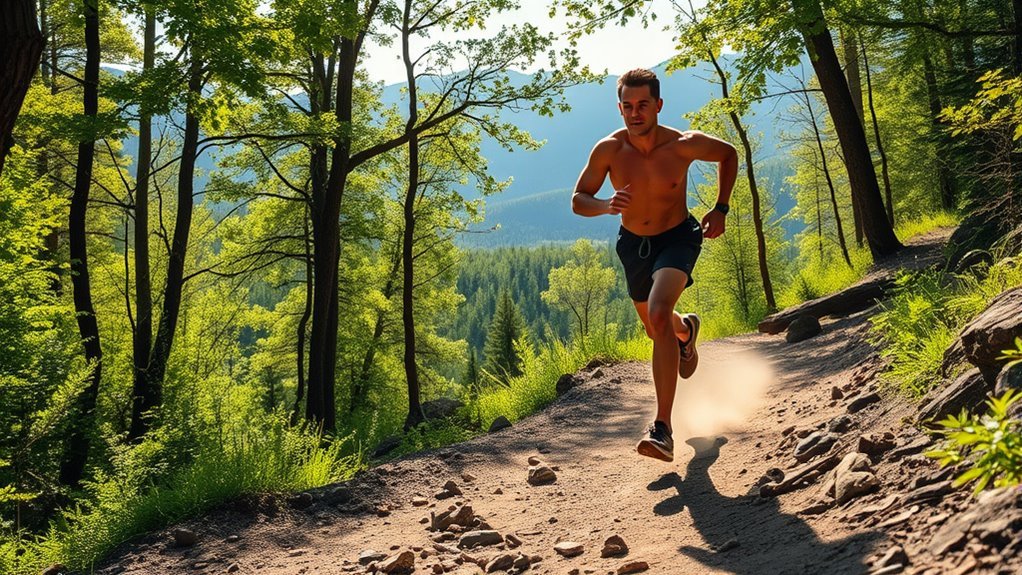
Trail running's the ultimate leg workout because it engages multiple muscle groups with every step. As you navigate uneven terrain, your quads, hamstrings, calves, and glutes work together, enhancing strength and stability. The varied slopes challenge your endurance and improve your balance and coordination. Plus, the beauty of nature can elevate your mood and keep you motivated. There's so much more to discover about trail running's benefits, so let's explore further!
The Unique Benefits of Trail Running
While many runners stick to pavement, you might discover that trail running offers a unique set of benefits that can elevate your fitness routine. For starters, there's nothing quite like the freedom of escaping the urban landscape and immersing yourself in nature. The fresh air and scenic views can boost your mood and motivation, making each run feel like an adventure.
Trail running also allows you to connect with the earth beneath your feet, providing a more dynamic and varied terrain that keeps things interesting. You'll navigate roots, rocks, and hills, which challenges your body in ways flat surfaces just can't. This variety not only enhances your mental agility but also helps break the monotony of a conventional running routine. Additionally, incorporating mobility training into your routine can enhance flexibility and reduce injury risk while trail running.
Embracing the trails can ignite your passion for running, offering a liberating experience that refreshes both body and spirit. So lace up those shoes and hit the trails!
Engaging Multiple Muscle Groups
Trail running not only enhances your mental well-being but also engages multiple muscle groups, making it a thorough workout. As you navigate uneven terrain, your legs aren't the only ones getting a workout. Your quads, hamstrings, calves, and glutes work together to power you up hills and stabilize you on descents. But it doesn't stop there—your core muscles engage to maintain balance and posture, while your arms and shoulders assist in propelling you forward.
Each step challenges your body, igniting small stabilizer muscles that often go unnoticed in regular running. This dynamic engagement not only builds strength but also increases endurance, allowing you to feel liberated in your movement. Incorporating joint-strengthening exercises into your routine can further enhance your performance and reduce injury risk. So, lace up those trail shoes and embrace the freedom of the wild. You'll discover a full-body workout that invigorates your spirit as much as it strengthens your physique. Get ready to release your potential on the trails!
Improved Balance and Coordination
As you tackle the twists and turns of the trail, you'll notice a remarkable improvement in your balance and coordination. Maneuvering uneven terrain forces your body to adapt, enhancing your agility and stability. You'll find that this newfound skill translates into everyday life, giving you the freedom to move with confidence.
Here are some benefits of improved balance and coordination through trail running:
- Enhanced Stability: Your body learns to adjust to shifting surfaces.
- Injury Prevention: Better balance reduces the risk of falls and sprains.
- Increased Agility: Quick movements become more natural, allowing for smoother maneuvering.
- Stronger Core Muscles: Engaging your core helps maintain posture and control.
Additionally, balance training can further support your development, leading to improved athletic performance. With every stride on the trail, you're not just running; you're empowering your body to become more balanced and coordinated. Embrace the journey, and feel the freedom it brings!
The Mental Health Boost of Nature
Running through nature doesn't just strengthen your legs; it also nurtures your mind. When you hit the trails, you're not just escaping the concrete jungle; you're immersing yourself in a world that calms your spirit. The fresh air fills your lungs, and the sounds of rustling leaves and chirping birds create a symphony that lifts your mood.
Each step you take on the uneven terrain pulls you away from stress and anxiety, helping you to reconnect with your true self. The vibrant colors of the landscape and the changing scenery awaken your senses, reminding you of life's beauty.
Nature's embrace offers a unique freedom, allowing your thoughts to flow as freely as your feet. You'll find clarity and focus in the wild, which can be hard to achieve in daily routines. Engaging in this mindful experience not only enhances your mental well-being but also reduces anxiety that may hinder your performance. So lace up your shoes, hit the trails, and let nature work its magic on your mind.
Building Endurance Through Varied Terrain
When you hit the trails, elevation changes can really test your endurance. Maneuvering uneven surfaces not only demands stability but also builds strength in your legs. Embracing these challenges is key to enhancing your overall performance. Incorporating long runs into your training schedule allows you to improve your endurance while navigating diverse terrains.
Elevation Changes Impact Endurance
Though you might not realize it, the varied elevation changes in trail running play an essential role in building your endurance. These ups and downs not only challenge your muscles but also push your cardiovascular system to new heights. Embracing the diversity of terrain gives you the freedom to explore and grow stronger. Here's how elevation changes boost your endurance:
- Increased heart rate: Climbing steep inclines elevates your heart rate, enhancing cardiovascular capacity.
- Muscle engagement: Different slopes activate various muscle groups, promoting overall leg strength.
- Improved stamina: Consistent elevation changes help you sustain longer runs without fatigue.
- Mental resilience: Overcoming challenging hills builds mental toughness, essential for long-distance running.
Uneven Surfaces Challenge Stability
While traversing the rugged terrain of a trail, you'll quickly realize that uneven surfaces demand a heightened sense of stability and balance. Each step presents a new challenge, pushing you to engage your core and leg muscles more than you would on a flat path. As you navigate roots, rocks, and dips, your body learns to adapt, building the endurance needed for those twists and turns. This constant adjustment not only strengthens your legs but also sharpens your focus and coordination. You'll feel a sense of freedom as you conquer each obstacle, embracing the wild unpredictability of nature. Trail running isn't just about speed; it's a thrilling journey that enhances your physical and mental resilience, empowering you to face any terrain.
Reducing the Risk of Injury
When you're trail running, strengthening your stabilizing muscles is key to preventing injuries. Improving your balance and coordination on varied terrain not only enhances your performance but also keeps you safe. Let's explore how these aspects can help you stay injury-free while enjoying the trails. Additionally, incorporating regular strengthening exercises for your hamstrings can further reduce your risk of injury and promote overall resilience.
Strengthening Stabilizing Muscles
Strengthening stabilizing muscles is essential for trail runners looking to reduce the risk of injury. When you hit those uneven terrains, your stabilizers work hard to keep you balanced and secure. Focus on these key muscle groups:
- Core Muscles: They provide the foundation for stability.
- Hip Flexors: Important for leg movement and control.
- Ankles: Strengthening them helps prevent sprains on tricky trails.
- Glutes: Essential for power and stability during each stride.
Improving Balance and Coordination
To navigate the unpredictable terrains of trail running effectively, you'll need to enhance your balance and coordination. As you tackle roots, rocks, and varying elevations, improved stability helps you maintain control, allowing you to move freely without fear of falling. When your body learns to adapt to these challenges, you're less likely to suffer from injuries. This heightened awareness of your movements also translates to better agility, letting you respond quickly to sudden shifts in the trail. By consistently practicing on uneven surfaces, your coordination will improve, making you a more confident and efficient runner. Embrace the wild, and let the thrill of trail running elevate your body's natural abilities, paving the way for a rewarding adventure.
Varied Terrain Benefits
Traversing varied terrain not only enhances your balance and coordination but also plays a significant role in reducing the risk of injury. When you run on trails, your body adapts to different surfaces, which strengthens stabilizing muscles and promotes safety. Here's how varied terrain helps:
- Improved Joint Stability: Uneven surfaces force your joints to engage and strengthen.
- Muscle Activation: Running on hills, rocks, and roots activates different muscle groups, reducing strain on any single area.
- Enhanced Proprioception: Maneuvering obstacles sharpens your body's awareness in space, helping to prevent falls.
- Cushioned Landings: Natural surfaces often provide better shock absorption than pavement, reducing impact-related injuries.
Trail Running Gear Essentials
When hitting the trails, having the right gear can make all the difference in your experience. Start with a good pair of trail running shoes. They'll provide grip and support for uneven terrain, allowing you to feel the freedom of movement without worrying about slips. Lightweight, moisture-wicking clothing is essential too. It'll keep you comfortable and dry, letting you focus on the path ahead.
Don't forget a hydration pack or handheld water bottle. Staying hydrated keeps your energy up, so you can explore longer. A good pair of sunglasses will protect your eyes from harsh sunlight, while a lightweight hat can shield your face. Finally, consider a small first-aid kit for minor scrapes or blisters. With the right gear, you'll be ready to embrace the wild, discover new trails, and enjoy every exhilarating step of your journey.
How to Get Started With Trail Running
Getting started with trail running is easier than you might think. First, you'll want to choose the right trail that matches your skill level, then invest in some essential gear to keep you comfortable. Finally, start with short distances to build your confidence and stamina gradually.
Choose the Right Trail
How do you choose the right trail for your first adventure in trail running? It's all about finding a path that matches your vibe and skill level. Here are some tips to help you pick the perfect trail:
- Check the difficulty: Start with a beginner-friendly trail that's not too steep or rocky.
- Look for distance: Choose a shorter route to avoid burnout; you can always go longer later.
- Consider the scenery: Pick a trail with beautiful views to keep your spirits high.
- Research the terrain: Make sure the surface is suitable for running, like dirt or gravel.
Essential Gear for Beginners
While you might feel enthusiastic to hit the trails, having the right gear can make all the difference in your experience. Start with a good pair of trail running shoes; they offer support and traction on uneven surfaces. A moisture-wicking shirt and comfortable shorts will keep you cool and chafe-free. Don't forget a lightweight jacket for sudden weather changes—it's all about staying prepared. A hydration pack or handheld water bottle's essential to keep you fueled as you explore. Also, consider a small first-aid kit and a phone for safety. With this gear, you'll feel confident and free as you embrace the adventure that awaits on the trails. Get ready to discover the joy of running in nature!
Start With Short Distances
To ease into trail running, start with short distances that match your current fitness level. This approach'll help you build confidence and enjoy the beauty of nature without feeling overwhelmed. Here are some tips to get you started:
- Choose local trails that are easy to navigate.
- Aim for a distance that feels comfortable, like 2-3 miles.
- Mix in walking breaks to avoid fatigue and savor your surroundings.
- Gradually increase your distance as you gain strength and stamina.
Tips for Staying Safe on the Trails
Staying safe on the trails is essential for enjoying your run without worry. Here are some tips to keep you safe while embracing the freedom of nature:
| Tip | Details |
|---|---|
| Know Your Route | Familiarize yourself with the trail map before heading out. |
| Stay Hydrated | Bring enough water, especially on hot days. |
| Watch Your Step | Stay alert for uneven terrain and obstacles. |
Always let someone know your plans before you go. Carry a fully charged phone for emergencies, and consider running with a buddy. If you encounter wildlife, keep your distance and don't provoke them. Dress in layers to adapt to changing weather, and remember that it's okay to turn back if conditions become unsafe. Enjoy the trails, but prioritize your safety so you can keep coming back!
Trail Running Communities and Events
Joining a trail running community can enhance your experience and keep you motivated, as you'll connect with like-minded individuals who share your passion for the outdoors. These communities offer not just camaraderie but also exciting opportunities to challenge yourself.
Connecting with a trail running community boosts motivation and creates lasting friendships with fellow outdoor enthusiasts.
You'll find that participating in events can elevate your trail running game. Here are some reasons to immerse yourself in your local scene:
- Group Runs: Experience new trails and push your limits alongside others.
- Workshops: Learn about techniques, gear, and nutrition from seasoned runners.
- Races: Test your endurance and compete in breathtaking locations.
- Social Gatherings: Celebrate your achievements and build lasting friendships.
Embracing the freedom of trail running while being part of a community fosters a sense of belonging, adventure, and personal growth. So, lace up your shoes and join the fun!
Frequently Asked Questions
How Does Trail Running Compare to Road Running for Leg Strength?
Trail running's like dancing with nature; it challenges your legs in ways road running can't. Uneven terrain builds strength and stability, giving you a powerful, free feeling as you conquer each trail's twists and turns.
Can Beginners Start Trail Running Without Prior Experience?
You can start trail running without prior experience. Just choose easy trails, wear proper shoes, and listen to your body. Embrace the freedom of nature, and let your legs discover their strength. Enjoy the journey!
What Are the Best Trails for Beginners?
For beginners, it's best to start on flat, well-marked trails like local parks or nature reserves. These paths'll help you build confidence and enjoy the freedom of trail running without overwhelming challenges.
How Often Should I Trail Run for Optimal Leg Workout?
To optimize your leg workout, try trail running three to four times a week. This frequency helps build strength and endurance, allowing you to enjoy the freedom of nature while enhancing your fitness journey.
Are There Specific Stretches for Trail Runners?
You should focus on dynamic stretches like leg swings and high knees before your run. Post-run, try static stretches like hamstring and quad stretches to keep your legs flexible and ready for the next adventure.