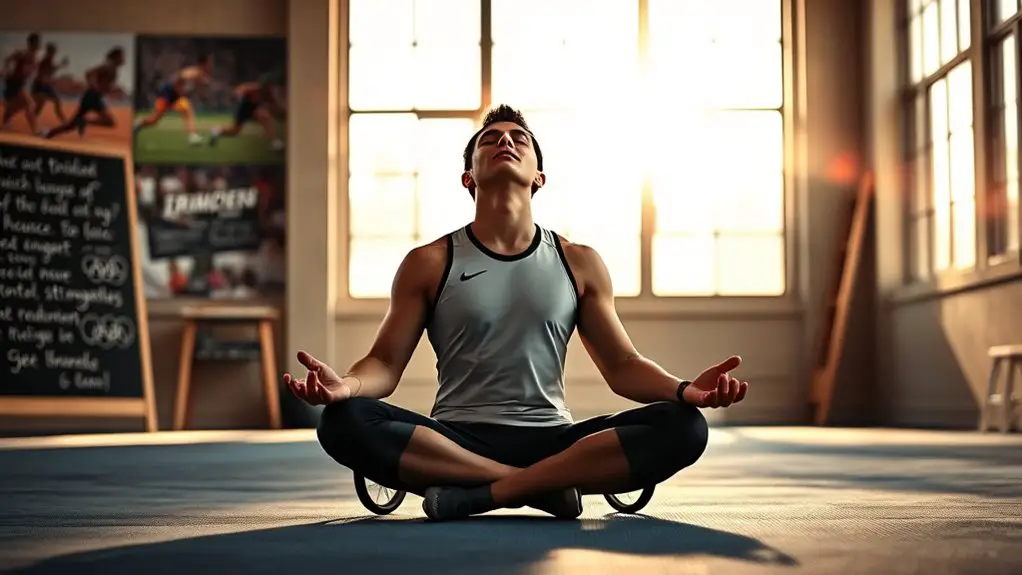
Relaxation's essential for sprinting as it enhances speed and efficiency. When you stay relaxed, your movements become fluid, reducing unnecessary muscle tension that drains energy. Techniques like deep breathing and visualization help create a calm mind and body. Elite sprinters like Usain Bolt show how a relaxed posture and controlled breathing can lead to peak performance. Embracing these practices not only improves your performance but also promotes enjoyment. Keep going to uncover more ways to optimize your sprinting!
Understanding the Role of Relaxation in Sprinting
While many athletes focus on strength and speed, understanding the role of relaxation in sprinting is essential for peak performance. You might think that tensing up will give you an edge, but it's actually the opposite. When you allow your muscles to relax, you can move more fluidly and efficiently. This freedom of movement reduces unnecessary energy expenditure, letting you sprint faster and longer.
Incorporating relaxation techniques, like deep breathing and visualization, can help you shake off the tension that builds up during races. Picture yourself gliding effortlessly, each stride feeling light and powerful. As you learn to let go, you'll discover that sprinting isn't just about brute force; it's about harmony within your body. Embracing relaxation can lead to a newfound sense of freedom, allowing you to truly enjoy the thrill of sprinting while maximizing your potential on the track. Additionally, developing mental toughness can provide the resilience needed to overcome challenges during races.
The Science Behind Muscle Tension and Performance
Muscle tension plays a significant role in how well you perform during sprints. When your muscles are overly tense, they can restrict your movement and drain your energy. This tension can lead to a decrease in speed and agility, making it harder for you to reach your full potential. Conversely, maintaining a balance of tension allows for fluid motion, enabling you to sprint freely and efficiently.
The science behind muscle tension isn't just about strength; it's about coordination. Your body needs to be relaxed enough to respond quickly while still generating power. That's where finding your sweet spot comes in. When you can strike that balance, you'll feel lighter and more connected to the ground, allowing for greater acceleration. In fact, strength training can enhance your power output, contributing to improved sprint performance. So, as you train, remember that freedom in your movements starts with understanding how muscle tension affects your performance. Embrace relaxation, and you'll reveal new levels of speed and efficiency.
Identifying Areas of Tension in Your Body
To improve your sprinting performance, it is crucial to identify areas of tension in your body. When you run, your muscles should feel loose and free, not tight and restricted. Start by tuning into your body before you hit the track. Close your eyes and take a few deep breaths, letting go of any distractions. Feel for tightness in your shoulders, neck, and hips, as these are common areas where tension accumulates. You might notice your jaw is clenched or your fists are tight; these are signals of stress that can hinder your speed. By recognizing these tension points, you can begin to address them. Remember, sprinting isn't just about speed; it's about fluidity and ease. When you release this tension, you'll not only run faster but also feel more connected to your movement, allowing you to truly enjoy the freedom of sprinting. Additionally, practicing mindfulness meditation can help you cultivate greater awareness of these tension areas and promote relaxation before your sprint.
Techniques to Cultivate Relaxation While Sprinting
As you sprint, incorporating specific techniques can help you stay relaxed and focused. Embracing relaxation isn't just beneficial; it's liberating. Here are some techniques to cultivate that freedom while you run:
- Maintain a loose grip on the handlebars or your arms to prevent tension.
- Visualize your path: Picture the ground flowing beneath you, allowing for smoother strides.
- Focus on your form: Keep your posture tall and your shoulders down, creating an open space for breath and movement.
- Incorporate rhythmic movements: Let your legs and arms move in sync, creating a natural flow that eases tightness.
- Use positive affirmations: Remind yourself that relaxation enhances speed, allowing you to break through mental barriers. Additionally, agility training techniques can further improve your overall performance and help maintain that relaxed state during sprints.
Breathing Strategies for Enhanced Relaxation
Keeping your body relaxed while sprinting paves the way for effective breathing strategies that can further enhance your performance. You can boost your endurance and maintain your energy levels by focusing on how you breathe. Here are some strategies to take into account:
| Breathing Technique | Benefits |
|---|---|
| Diaphragmatic | Increases oxygen intake |
| Rhythmic | Creates a steady pace |
| Nose Breathing | Promotes calmness |
| Exhalation Focus | Reduces tension and stress |
Practice diaphragmatic breathing to guarantee you're using your full lung capacity. Incorporating rhythmic breathing helps synchronize your breath with your strides, creating a comfortable flow. Don't forget to breathe through your nose when possible; this can ground you and keep you focused. Finally, emphasize exhalation to release any built-up tension. With these techniques, you'll feel more liberated and ready to conquer the track!
The Mind-Body Connection in Sprinting
While sprinting may seem like a purely physical activity, the mind plays a crucial role in achieving peak performance. Your mental state can either propel you forward or hold you back. Embracing this mind-body connection allows you to access your full potential on the track.
Consider these elements that illustrate this connection:
- Focus: Staying mentally present enhances your speed and technique.
- Visualization: Imagining your successful run can boost confidence and execution.
- Positive Self-Talk: Encouraging thoughts can help push through fatigue.
- Emotional Regulation: Managing anxiety leads to better performance under pressure.
- Mindfulness: Being aware of your body helps you relax and maintain peak form. Additionally, incorporating visualization techniques can further enhance your mental preparation and performance.
Incorporating Relaxation Into Your Training Regimen
Incorporating relaxation into your training regimen can greatly enhance your sprinting performance, especially since a relaxed body allows for more efficient movement. Start by integrating breathing exercises into your warm-up routine. Deep, diaphragmatic breathing helps calm your mind and body, setting a positive tone for your workouts.
Next, consider adding mindfulness practices, like meditation or yoga, to your weekly schedule. These activities promote body awareness and help you release tension that can hinder your speed.
During your sprint sessions, focus on relaxing your shoulders and arms. Tension in these areas can slow you down. Instead, visualize fluid, effortless movements as you run.
Finally, take time to unwind after each session. Stretching, foam rolling, or simply lying down can help your muscles recover and reinforce that sense of freedom. Embracing relaxation isn't just about slowing down; it's about releasing your full potential on the track. Additionally, practicing mindfulness can help ground you in the present moment, further enhancing your focus and performance.
Real-Life Examples of Relaxation in Successful Sprinters
When you think about successful sprinters, relaxation plays a key role in their performance. Usain Bolt's relaxed technique, Allyson Felix's calm focus, and Carl Lewis's breathing rhythm showcase how staying relaxed can enhance speed and efficiency. Let's explore how these champions mastered relaxation to achieve extraordinary results on the track. Additionally, their ability to maintain mental toughness under pressure exemplifies how relaxation contributes to overall performance in sprinting.
Usain Bolt's Relaxed Technique
Usain Bolt's relaxed technique is a hallmark of his extraordinary sprinting success. You can see how this approach sets him apart from others, allowing him to release his full potential. By embracing relaxation, he embodies the freedom to move effortlessly. Here are some key elements of his technique:
- Low shoulders: Keeps tension at bay.
- Fluid arm movement: Enhances stride efficiency.
- Relaxed facial expression: Reduces stress and maximizes focus.
- Controlled breathing: Maintains rhythm and stamina.
- Effortless acceleration: Allows for a natural build-up of speed.
Allyson Felix's Calm Focus
Calmness is a powerful asset in sprinting, and Allyson Felix exemplifies this through her composed demeanor on the track. When you watch her compete, you can see how her focus allows her to channel energy efficiently, avoiding the frantic tension that often plagues sprinters. Felix's ability to stay relaxed under pressure gives her a competitive edge. You might notice how she breathes steadily, maintaining a rhythm that helps keep her muscles loose. This calm focus not only enhances her performance but also inspires others to embrace relaxation as a crucial component of sprinting. By adopting a similar mindset, you can release your potential and experience the freedom that comes from running with grace and ease.
Carl Lewis's Breathing Rhythm
While many sprinters focus on power and speed, Carl Lewis demonstrated how a well-timed breathing rhythm can enhance performance. By mastering his breath, you can find that sweet spot between relaxation and intensity, allowing your body to move more efficiently. Here's what you can learn from his technique:
- Breath Timing: Syncing breaths with strides helps maintain rhythm.
- Relaxation: Calming breaths lower tension, improving speed.
- Focus: Controlled breathing enhances mental clarity.
- Endurance: Efficient oxygen use boosts stamina.
- Body Awareness: Breathing connects mind and body, promoting flow.
Incorporating Lewis's breathing rhythm into your training can free you from unnecessary strain, releasing your true sprinting potential. Embrace this technique, and watch your performance soar!
Frequently Asked Questions
How Does Stress Impact Sprinting Performance?
Stress can tighten your muscles and hinder your speed, making it harder to focus. When you're relaxed, your body moves more fluidly, allowing you to release your true potential and enjoy the freedom of sprinting.
Can Relaxation Techniques Prevent Injuries While Sprinting?
While tension can lead to injuries, relaxation techniques can actually enhance your sprinting performance. By finding that balance, you'll not only prevent injuries but also experience a newfound freedom in your stride. Embrace the calm!
What Are Common Signs of Tension in Sprinters?
You might notice common signs of tension in sprinters, like clenched fists, tight shoulders, or a rigid posture. These indicators can hinder performance, so recognizing them is essential for achieving a more fluid running style.
How Does Hydration Affect Relaxation During Sprinting?
Hydration's like a gentle breeze, easing your muscles and mind. When you're well-hydrated, you're less likely to feel tightness, allowing your body to move freely and effortlessly, enhancing your sprinting performance as you flow.
Are There Specific Stretches to Promote Relaxation Pre-Sprint?
Yes, there are specific stretches you can do to promote relaxation before sprinting. Focus on dynamic stretches like leg swings and arm circles, which help loosen your muscles and prepare your body for movement.