Yes, athlete’s foot is curable. With the right treatment involving over-the-counter antifungal creams and proper foot hygiene, you can eliminate the infection successfully. It’s important to maintain dry feet and avoid environments that promote fungal growth. However, many experience recurrences due to incomplete treatment or poor moisture management. By adopting proactive measures and understanding how to prevent reinfection, you can keep athlete’s foot at bay. Find out more about symptoms and prevention strategies.
Understanding Athlete’s Foot: What Is It?
Although it might seem minor, athlete’s foot is a common fungal infection that can cause discomfort and irritation. It primarily affects the skin between your toes and on the soles of your feet, often leading to itching and redness. Understanding this condition is essential for maintaining skin health and enjoying life without the nagging annoyance of persistent symptoms. Fungal infections thrive in warm, moist environments, making your feet a prime target. Maintaining dry and clean feet can help you prevent these pesky infections. Remember, while it may feel like a small inconvenience, athlete’s foot can impact your overall well-being. Empower yourself with knowledge about this condition, so you can embrace freedom in your daily activities without the burden of discomfort.
Common Causes of Athlete’s Foot
Athlete’s foot is typically caused by several key factors that create the perfect environment for fungal growth. Poor skin hygiene is a major culprit; when you don’t keep your feet clean and dry, it allows fungal infections to thrive. Moist environments, like those found in sweaty shoes or public showers, can also be breeding grounds for these pesky fungi. Additionally, sharing towels or footwear with someone infected can spread the fungi, increasing your risk. If you frequently wear tight shoes, they can trap moisture, further aggravating the issue. To maintain your freedom and comfort, prioritizing good skin hygiene is essential. Regular washing, drying, and choosing breathable footwear can help you steer clear of athlete’s foot and its annoying consequences.
Symptoms to Look Out For
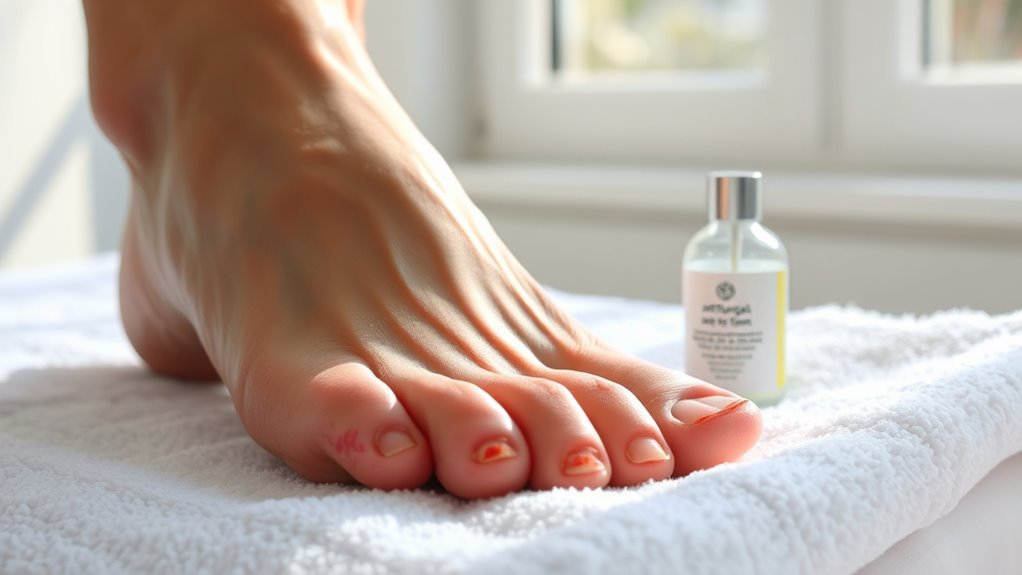
When it comes to athlete’s foot, there are several key symptoms you should watch for. One of the most common signs is itchy skin, especially between your toes or on the soles of your feet. You might also notice redness or a burning sensation, which can be quite uncomfortable. If your skin begins to crack or peel, that’s another red flag. Pay attention to any foul odor that might develop as well; it can be linked to the infection. Remember, maintaining good foot hygiene is essential in preventing and managing athlete’s foot. Regularly washing and thoroughly drying your feet can help keep those annoying symptoms at bay, allowing you the freedom to enjoy your activities without discomfort.
Diagnosis: How Is Athlete’s Foot Identified?
To identify athlete’s foot, your doctor will start with a visual assessment of your symptoms. If needed, they might also use laboratory tests to confirm the diagnosis. Understanding these methods can help you recognize the condition early and seek appropriate treatment.
Visual Symptoms Assessment
How can you tell if you have athlete’s foot? The first step is a thorough visual inspection of your feet, especially between your toes. Look for signs like redness, scaling, or peeling skin. You might notice an itchy or burning sensation, indicating a fungal infection. Symptom recognition is key; if your skin’s cracked or blisters have formed, it’s likely athlete’s foot. Don’t ignore these indicators, as they can lead to more discomfort and spread to others. Your freedom to walk, run, or simply enjoy life shouldn’t be hindered by this condition. By staying aware of these symptoms, you can take charge of your foot health and seek appropriate treatment if needed. Remember, your comfort matters!
Laboratory Testing Methods
Recognizing the visual symptoms of athlete’s foot is just the beginning. To truly pinpoint the issue, lab tests are essential. A healthcare provider might suggest taking a sample from the affected area for fungal cultures, which allow them to grow and identify the specific fungus causing your discomfort. This method guarantees that you’re not just guessing at a treatment. Additionally, a microscopic examination of the sample can reveal fungal elements directly, providing further clarity. These tests help you and your healthcare team choose the most effective treatment, freeing you from the nagging itch and irritation. If you suspect you have athlete’s foot, don’t hesitate to seek out these laboratory testing methods for a clear diagnosis.
Over-the-Counter Treatment Options
When dealing with athlete’s foot, you might find relief through a variety of over-the-counter treatment options. Topical creams are a popular choice; they’re easy to apply and often contain effective antifungal agents. You can simply massage them into the affected area for quick relief. If you prefer a lighter option, antifungal powders can keep your feet dry and help combat moisture, which is essential in preventing further fungal growth. These powders also work great in shoes, keeping your feet comfortable and free from irritation. Whichever option you choose, consistency is vital for success. With the right over-the-counter treatments, you can reclaim your freedom from athlete’s foot and get back to enjoying life without discomfort.
Prescription Medications for Severe Cases
If over-the-counter treatments don’t provide the relief you need, prescription medications may be necessary for severe cases of athlete’s foot. When the itch and discomfort become overwhelming, your doctor might recommend oral antifungals. These medications work from within, targeting the root of the infection to bring you quicker relief. In some instances, they may also prescribe stronger topical treatments that can help clear up stubborn areas. Remember, it’s essential to follow the prescribed regimen closely for the best results. While it may feel like a hassle, these medications can restore your freedom from the relentless itch and irritation. Don’t hesitate to discuss your symptoms openly with your healthcare provider; they’re there to help you reclaim your comfort.
Home Remedies: Do They Work?
While prescription medications are effective for severe cases, many people wonder if home remedies can also provide relief from athlete’s foot. Natural remedies like tea tree oil, vinegar, and baking soda have gained popularity, but their effectiveness varies. Some effectiveness research suggests they may help alleviate symptoms and promote healing, but results aren’t guaranteed for everyone.
Here’s a quick comparison of some common natural remedies:
| Remedy | Potential Benefits |
|---|---|
| Tea Tree Oil | Antifungal properties |
| Vinegar | Balances pH, reduces itching |
| Baking Soda | Draws out moisture, soothes skin |
| Garlic | Antimicrobial effects |
Ultimately, while these remedies can offer relief, it is crucial to monitor your condition and consult a healthcare professional if symptoms persist.
Tips for Preventing Athlete’s Foot
Preventing athlete’s foot is easier than you might think, and implementing a few simple habits can greatly reduce your risk. Start by wearing breathable shoes and moisture-wicking socks—this keeps your feet dry and happy. After a workout or swim, make sure to dry your feet thoroughly, especially between the toes. Consider using antifungal powder as a preventative measure, especially in warm, humid conditions. Embracing these lifestyle changes can be liberating; you’ll enjoy the freedom of moving without discomfort. Avoid walking barefoot in communal areas like locker rooms or pools, as these are breeding grounds for fungi. With these straightforward steps, you can keep athlete’s foot at bay and feel confident in your footwear choices.
When to See a Doctor
Wondering when it’s time to seek medical advice for athlete’s foot? It’s essential to know the warning signs that indicate you should consult a doctor. If your symptoms persist despite using over-the-counter treatments for more than two weeks, it’s definitely time to reach out. Additionally, if you notice increased redness, swelling, or pain, don’t hesitate to get professional help. Severe itching that disrupts your daily life or leads to open sores can also signal a need for medical intervention. Finally, if you have a weakened immune system or diabetes, seek advice sooner rather than later. Taking charge of your health can lead to freedom from discomfort and a quicker path to recovery.
Recurrence: Why Does Athlete’s Foot Keep Coming Back?
If you find that athlete’s foot keeps coming back, you’re not alone. Factors like moisture retention, incomplete treatment, and re-exposure to the fungus can all play a role in its recurrence. Understanding these reasons can help you take better steps to prevent future outbreaks.
Moisture Retention Factors
Moisture retention is a key factor in the recurrence of athlete’s foot, affecting many who struggle with this fungal infection. If you want to break free from its grip, you need to focus on moisture management. Fungi thrive in damp environments, so it’s vital to keep your feet dry. Choose breathable footwear and moisture-wicking socks to minimize sweat and humidity. After washing your feet, make sure to dry them thoroughly, especially between the toes. Using antifungal powders can also help to absorb excess moisture and discourage fungal growth. By taking these steps, you can greatly reduce the chances of athlete’s foot returning, allowing you to enjoy life without the constant worry of this pesky infection.
Incomplete Treatment Protocols
Managing moisture is only part of the battle against athlete’s foot. If you’re not sticking to a complete treatment protocol, the fungus can easily come back. Many people underestimate the necessary treatment duration, thinking a few days of medication will do the trick. But if you stop too early, the infection can resurface, leaving you frustrated.
To truly conquer athlete’s foot, you’ll need to make some lifestyle adjustments. This includes wearing breathable footwear, keeping your feet dry, and avoiding communal showers without protection. It’s all about staying vigilant and committed to your treatment plan. By understanding the importance of following through and adapting your habits, you can reclaim your freedom from this pesky condition for good.
Environmental Re-exposure Risks
Even after successfully treating athlete’s foot, the risk of re-exposure remains high, often leading to frustrating recurrences. You might find yourself back in the same boat due to environmental factors. Public showers, locker rooms, and shared swimming pools are hotspots for the fungus that causes athlete’s foot. If you don’t practice good footwear hygiene—like choosing breathable shoes and regularly changing socks—you could easily fall victim again. Avoiding these communal spaces can help, but if you have to use them, consider wearing flip-flops or water shoes. Remember, taking proactive steps in your environment is key to breaking the cycle. Don’t let athlete’s foot dictate your freedom; stay vigilant and keep your feet protected!
Frequently Asked Questions
Can Athlete’s Foot Spread to Other Parts of the Body?
Yes, athlete’s foot can spread to other parts of your body! Imagine your toes throwing a wild party and inviting the rest of your skin. If you don’t treat it, this pesky fungus can hitch a ride to areas like your hands or groin. Athlete’s foot transmission is sneaky, and before you know it, multiple body parts are affected. So, keep your feet clean and avoid letting this unwelcome guest spread!
Is Athlete’s Foot Contagious to Other People?
Yes, athlete’s foot is contagious to other people. It spreads through direct contact with an infected person or indirectly via contaminated surfaces, like floors and towels. To minimize the risk, keep your feet clean and dry, wear moisture-wicking socks, and avoid sharing footwear. Consider using antifungal powder in your shoes. By following these prevention tips, you can enjoy more freedom without worrying about transmitting athlete’s foot to others. Stay proactive and take care!
What Footwear Should I Avoid to Prevent Athlete’s Foot?
To keep your feet free as a bird, steer clear of footwear that traps heat and moisture. Opt for breathable shoes that allow your feet to breathe, like sandals or well-ventilated sneakers. Pair them with moisture-wicking socks that whisk away sweat, keeping your skin dry and happy. Avoid tight shoes or those made from synthetic materials that create a sauna for your feet; they’re a recipe for discomfort and potential athlete’s foot.
Can Diet Affect the Severity of Athlete’s Foot?
Yes, your diet can affect the severity of athlete’s foot. Certain nutrition factors, like sugar and refined carbs, can promote fungal growth, worsening your condition. On the flip side, a diet rich in whole foods, antioxidants, and probiotics may help strengthen your immune system, potentially reducing symptoms. By focusing on dietary impacts, you can empower yourself to manage athlete’s foot more effectively and enjoy greater freedom in your daily life.
How Long Does Athlete’s Foot Typically Last Without Treatment?
If you leave athlete’s foot untreated, its duration can last anywhere from a few weeks to several months, depending on your immune system and hygiene practices. Symptoms like itching, burning, and peeling can persist or worsen over time. Plus, untreated risks include spreading the infection to others or developing secondary bacterial infections. To regain your freedom from discomfort, it’s best to address the issue early on and take proper care of your feet.