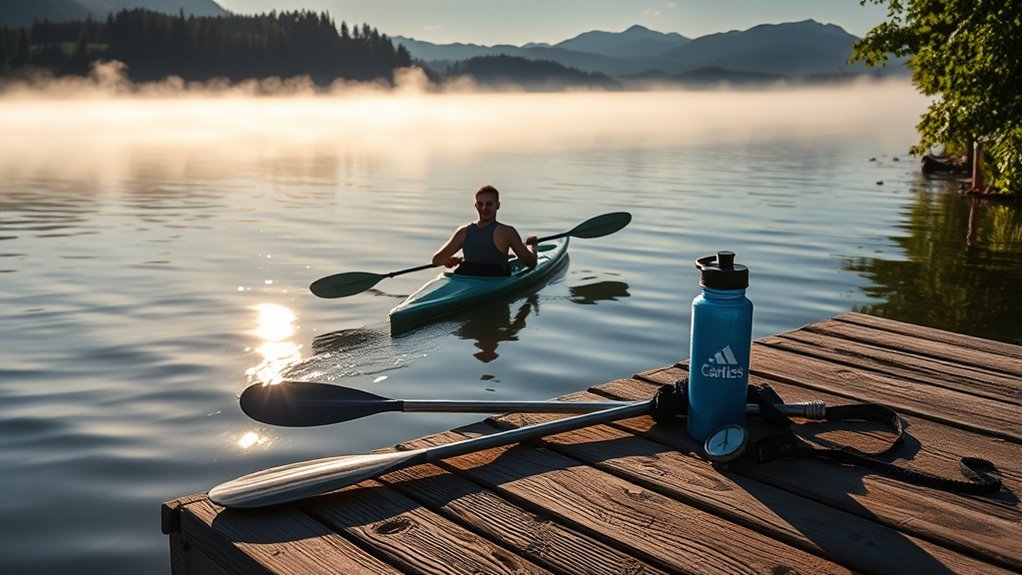
To train for long-distance kayaking, assess your current fitness level, focusing on endurance, strength, and paddling technique. Develop a structured training plan that includes regular paddling sessions, strength exercises, and cross-training activities. Gradually increase your paddling distance each week, while honing your technique for efficiency. Don't forget nutrition and hydration for energy. Mix in group paddling for motivation and skill enhancement. Discover the steps to prepare for the journey ahead and embrace the adventure.
Assess Your Current Fitness Level
Before diving into a training regimen, it's crucial to assess your current fitness level to set realistic goals and identify areas for improvement. Take a moment to evaluate your endurance, strength, and flexibility. Ask yourself how long you can paddle without feeling fatigued and what activities you enjoy. It's about understanding your body and its capabilities, so don't shy away from testing your limits.
Consider incorporating a mix of cardiovascular exercises like running or cycling to gauge your stamina. Try bodyweight exercises to see how your muscles hold up—this'll give you a clear picture of your overall strength. Flexibility is key too, so stretch and see how easily you can move. Keep track of your findings; they'll be your foundation for setting achievable goals. Embrace this self-assessment process—it's the first step toward the freedom of long-distance kayaking and enjoying every moment on the water! Additionally, remember that proper hydration strategies are vital for maintaining energy levels during your training sessions.
Develop a Structured Training Plan
With a clear understanding of your fitness level, it's time to create a structured training plan tailored to your long-distance kayaking goals. Start by setting specific, achievable targets. Consider how many days a week you want to paddle and how long you can realistically commit. Mix up your sessions with different distances and intensities to keep things fresh and engaging.
Incorporate other activities like strength training and flexibility exercises to enhance your overall performance. Don't forget to schedule rest days; they're essential for recovery and maintaining your energy. To support your training, pay attention to meal timing to optimize energy levels and recovery.
Make sure to track your progress, adjusting your plan as needed to avoid burnout or injury. This flexibility will help you stay motivated and connected to your passion for kayaking. Remember, your training should be as freeing as the open water, allowing you to enjoy the journey while preparing for the adventures ahead!
Focus on Endurance Building
To build your endurance for long-distance kayaking, start by gradually increasing your paddling distance each week. Incorporating cross-training can also enhance your overall fitness and support your kayaking performance. Don't forget that proper nutrition and hydration play critical roles in sustaining your energy levels during those longer sessions. Additionally, a structured training plan is essential for building endurance, allowing you to listen to your body and adjust as needed.
Gradual Distance Increase
Building endurance for long-distance kayaking requires a thoughtful approach to gradually increasing your distance. Start by evaluating your current capability, then set a baseline distance that feels challenging yet manageable. Each week, add a little more—maybe an extra mile or two. This incremental increase lets your body adapt without overwhelming it. Listen to your body; if you feel fatigued or sore, don't hesitate to rest or repeat a distance before pushing further. Incorporating longer paddles on weekends can also help simulate real conditions, giving you the freedom to explore new routes. Embrace the journey, and remember that each stroke brings you closer to your long-distance goals, allowing you to experience the beauty of nature from a kayak.
Cross-Training Benefits
As you prepare for long-distance kayaking, incorporating cross-training into your routine can greatly enhance your endurance. Engaging in activities like running, cycling, or swimming not only builds your cardiovascular strength but also works different muscle groups, keeping you balanced and injury-free. Each of these activities mimics the endurance demands of kayaking, so you'll feel more prepared on the water. Mixing things up prevents monotony, keeps your motivation high, and helps you discover new ways to enjoy movement. Plus, cross-training can improve your overall stamina, making those long paddles feel less intimidating. So, embrace the freedom to explore various workouts, and watch your kayaking performance soar as you build endurance like never before!
Nutrition and Hydration
While you're gearing up for long-distance kayaking, paying close attention to your nutrition and hydration is essential for boosting your endurance. Fueling your body right can make all the difference on the water. Here are some key tips:
- Carbohydrates: Load up on whole grains and fruits for sustained energy.
- Proteins: Incorporate lean meats, beans, and nuts to aid muscle recovery.
- Healthy Fats: Avocados and olive oil can provide long-lasting fuel.
- Hydration: Drink water consistently; consider electrolyte drinks for long sessions.
- Snacks: Bring energy bars or dried fruits to munch on during breaks.
With the right nutrition and hydration plan, you'll feel free and powerful, ready to conquer those long distances with confidence.
Incorporate Strength Training
To excel in long-distance kayaking, you need to incorporate strength training into your routine. Focusing on core strength will help improve your stability and paddling efficiency, while enhancing upper body power will boost your stroke performance. Together, these elements will make your time on the water more effective and enjoyable. Additionally, a strong core stabilizes the body for powerful movements, reducing strain while you paddle.
Focus on Core Strength
Core strength is essential for long-distance kayaking, as it enhances stability and power during each stroke. When you're gliding through the water, a strong core keeps you balanced and helps you maintain endurance for those long journeys. Here are some effective exercises to incorporate into your training:
- Planks: Build overall core stability.
- Russian twists: Improve rotational strength for effective paddling.
- Bicycle crunches: Enhance your endurance and flexibility.
- Superman lifts: Strengthen your lower back for better posture.
- Medicine ball slams: Boost explosive power and core engagement.
Enhance Upper Body Power
Building upper body power is essential for long-distance kayaking, as it directly impacts your paddling efficiency and speed. You'll want to incorporate strength training into your routine to boost your performance on the water. Focus on exercises like pull-ups, push-ups, and bent-over rows to target your shoulders, back, and arms. These movements mimic the paddling motion, helping you build the specific strength you need to glide through the water with ease. Don't forget to include resistance bands or weights to increase intensity. Aim for two to three sessions a week, and give your muscles time to recover. With a strong upper body, you'll feel more freedom and control, allowing you to enjoy longer adventures on the open water.
Master Paddling Technique
Mastering your paddling technique is essential for long-distance kayaking, as it directly impacts your efficiency and endurance on the water. A smooth, powerful stroke lets you glide effortlessly, bringing you closer to that sense of freedom you crave. Focus on these key elements:
- Grip: Hold your paddle firmly but relaxed to avoid fatigue.
- Posture: Keep your back straight and core engaged for better power transfer.
- Stroke Mechanics: Use a fluid motion, pulling through the water, not just pushing.
- Rotation: Engage your torso, utilizing your entire body, not just your arms.
- Breathing: Maintain a steady breathing pattern, syncing it with your strokes.
Practice Long-Distance Paddling
Practicing long-distance paddling is essential for developing the stamina and skills you'll need for extended journeys on the water. Start by setting achievable distance goals, gradually increasing them as you build endurance. Take your kayak out regularly, choosing routes that mimic the conditions you'll face on longer trips. This'll help you adapt to varying water conditions and strengthen your muscles.
Incorporate interval training into your sessions—alternate between fast paddling and slower recovery periods. This not only boosts your cardiovascular fitness but also prepares you for unexpected challenges. Additionally, building good stamina is a necessity for excelling in high-intensity sports, which applies to long-distance kayaking as well. Don't forget to mix in rest days; your body needs time to recover and grow stronger.
Consider paddling with friends or joining a local club. Sharing those experiences can enhance your skills and make the journey more enjoyable. Embrace the freedom of the open water, and let each paddle stroke bring you closer to mastering long-distance kayaking!
Prepare for the Journey Ahead
As you gear up for your long-distance kayaking adventure, it's crucial to plan ahead to guarantee a successful and enjoyable experience. Embracing the freedom of open waters requires thoughtful preparation. Here are five key elements to take into account:
- Route Planning: Map out your journey, noting rest stops and potential hazards.
- Weather Check: Stay informed about weather patterns to dodge rough conditions.
- Gear Inspection: Verify your kayak and equipment are in top shape; this includes checking for leaks and securing your paddles.
- Physical Conditioning: Maintain a fitness routine that focuses on endurance and core strength to keep your energy levels high. Incorporating cross-training can improve overall fitness and prepare you for the challenges ahead.
- Nutrition Strategy: Pack high-energy snacks and plenty of water to fuel your journey.
With a little foresight, you can embrace the thrill of the open water while feeling confident and prepared for whatever lies ahead. Adventure awaits!
Frequently Asked Questions
What Type of Kayak Is Best for Long-Distance Paddling?
When considering the best kayak for long-distance paddling, you'll want a touring or sea kayak. They're designed for stability, speed, and storage, letting you explore vast waters while enjoying the freedom of your journey.
How Can I Prevent Blisters While Kayaking Long Distances?
To keep blisters at bay while kayaking, think of your hands as a delicate flower. Use padded gloves, guarantee a proper grip, and take breaks. Your freedom on the water shouldn't be marred by pain.
Should I Use a Sit-On-Top or Sit-Inside Kayak?
When choosing between a sit-on-top or sit-inside kayak, consider your comfort and weather conditions. If you crave freedom and flexibility, a sit-on-top might be your best bet for easy access and maneuverability.
What Nutrition Should I Pack for a Long Kayaking Trip?
For a long kayaking trip, pack energy-dense snacks like nuts, dried fruits, and granola bars. Don't forget electrolytes and plenty of water; staying hydrated keeps you feeling free and energized on the water.
How Do I Stay Motivated During Long Training Sessions?
Did you know nearly 70% of athletes struggle with motivation during long training? To stay inspired, set small goals, mix up your routine, and imagine the freedom of conquering those waters. You'll love the journey!