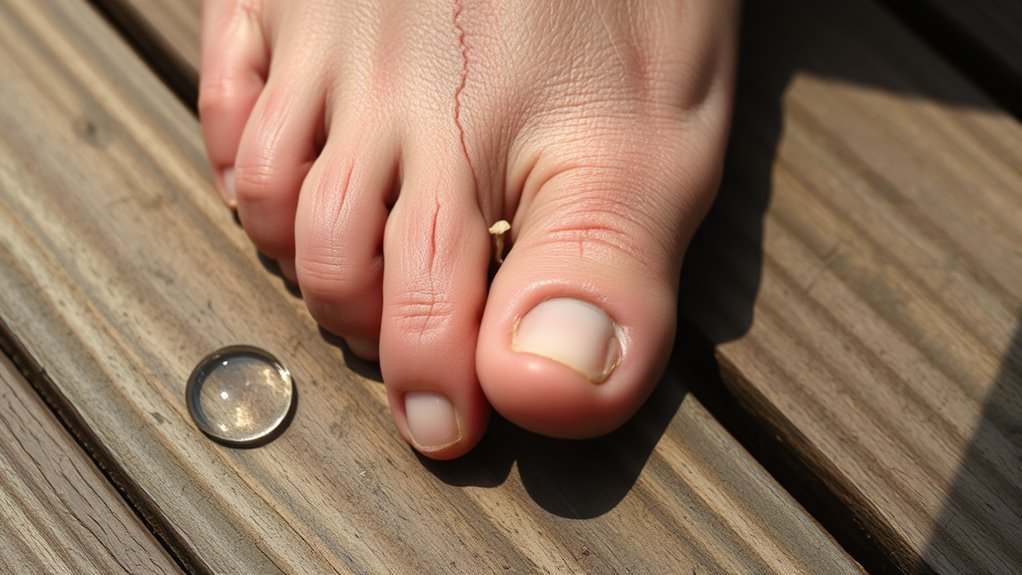
Athlete’s foot doesn’t always itch. While itching is a common symptom for many, some people may only notice redness, peeling, or cracking skin without any signs of itchiness. Factors like skin sensitivity and environmental conditions can influence how symptoms manifest. If you see unusual changes in your feet, it’s crucial to monitor them. There’s more to understand about athlete’s foot and how to address it effectively for your foot health.
Understanding Athlete’s Foot
Even if you’ve never had it, understanding athlete’s foot is essential since it’s a common fungal infection that affects many people. This condition thrives in warm, moist environments, often taking hold in your shoes or between your toes. Keeping your skin health in check is vital; maintaining dry, clean feet can help prevent this pesky infection. Remember, it’s not just about avoiding athlete’s foot, but also promoting overall skin health. If you’re someone who enjoys the freedom of movement, you wouldn’t want anything holding you back, right? So, embrace practices that keep your feet fresh and dry. Knowledge is power, and understanding athlete’s foot can help you maintain that freedom and comfort you cherish.
Common Symptoms of Athlete’s Foot
Knowing about athlete’s foot sets the stage for recognizing its symptoms. You might notice redness, peeling, or cracking skin between your toes or on the soles of your feet. Sometimes, you’ll see blisters that can ooze and create discomfort. While itching is common, not everyone experiences it the same way. It’s important to understand the athlete’s foot causes, like damp environments and tight shoes, so you can take action. For effective fungal infection prevention, keep your feet dry, wear breathable footwear, and avoid walking barefoot in public places. By being aware of these symptoms and their triggers, you can maintain your freedom and comfort while preventing further issues with athlete’s foot. Stay informed, and take control of your foot health!
The Role of Itching in Fungal Infections
Itching is often one of the first signs you notice when dealing with a fungal infection like athlete’s foot. However, not everyone experiences itching to the same degree, and some may have little to no discomfort at all. Understanding this variability can help you better recognize and address your symptoms.
Itching as a Symptom
While many people associate athlete’s foot with intense itching, it’s important to understand that not everyone experiences this symptom. Itching can vary greatly among individuals, and for some, it may not even be a primary concern. Here are a few key points about itching as a symptom of fungal infections:
- Itching triggers can include moisture, heat, and friction.
- Fungal reactions often lead to skin irritation, which can cause discomfort.
- Not all fungal infections manifest with noticeable itching.
- Some individuals may experience mild symptoms without significant itching.
- Other symptoms like redness or peeling may dominate instead.
Understanding these nuances can help you navigate the experience of athlete’s foot with more freedom and awareness.
Variability in Individual Experience
Athlete’s foot can manifest differently from person to person, particularly when it comes to itching. You might experience severe itching, while someone else feels little to none. This symptom variability can be attributed to individual reactions to the fungal infection. Factors like skin sensitivity, overall health, and even stress levels can influence how your body responds.
| Symptom | Individual Reaction |
|---|---|
| Itching | Varies widely |
| Redness | Common |
| Peeling | Common |
| Blisters | Less common |
| Pain | Rarely severe |
Understanding your unique experience can empower you. If itching becomes unbearable, don’t hesitate to consult a healthcare professional for tailored advice.
Factors Influencing Itching Severity
When it comes to athlete’s foot, itching severity can vary based on several factors. Your skin’s sensitivity, the level of infection, and even the moisture and temperature of your environment all play a role. Understanding these aspects can help you better manage your discomfort.
Skin Sensitivity Variations
Although itching is a common symptom of athlete’s foot, not everyone experiences it to the same degree. Variations in skin sensitivity can greatly affect how you perceive itching. Your skin barrier plays an essential role, as a compromised barrier may lead to heightened sensory perception and discomfort.
Here are some factors that influence itching severity:
- Skin Type: Oily, dry, or sensitive skin can react differently.
- Environmental Factors: Heat and humidity may amplify itching sensations.
- Personal Health: Conditions like eczema or allergies can heighten sensitivity.
- Hygiene Practices: Poor hygiene may increase irritation.
- Stress Levels: Anxiety can make you more aware of itching.
Understanding these factors can help you manage your symptoms and reclaim your comfort.
Infection Severity Levels
The severity of an athlete’s foot infection can considerably influence the level of itching you experience. As the infection progresses, you might notice changes in itching intensity, often linked to the extent of skin damage. In cases of mild infections, itching may be minimal and only a nuisance. However, as the infection worsens, symptoms can escalate, leading to intense itching and discomfort. When making a symptom comparison, a more severe infection typically presents with additional signs like redness, scaling, or blistering, all of which can amplify your urge to scratch. Understanding these factors helps you gauge your condition and empowers you to seek appropriate treatment, ensuring you can enjoy life free from the grips of this pesky issue.
Moisture and Temperature Effects
Moisture and temperature play a crucial role in determining the severity of itching associated with athlete’s foot. When you manage moisture and regulate temperature, you can greatly reduce itching. Here are some key factors to keep in mind:
- Keep your feet dry: Moist environments promote fungal growth, leading to more irritation.
- Choose breathable footwear: This helps in maintaining airflow, preventing excessive sweating.
- Change socks regularly: Fresh, dry socks can help manage moisture effectively.
- Use antifungal powders: These can absorb sweat and reduce itching sensations.
- Maintain a comfortable temperature: Avoid overheating your feet, as it can exacerbate itching.
Other Symptoms to Look Out For
Many people don’t realize that athlete’s foot can present a variety of symptoms beyond just itching. You might notice redness, peeling, or cracking skin, especially between your toes. Blisters can also form, leading to discomfort when you walk. It’s important to recognize these signs to take action early. If you’re dealing with these symptoms, you can explore effective prevention strategies, like keeping your feet dry and wearing breathable footwear. For symptom management, antifungal creams or powders can be quite helpful. Remember, staying proactive about your foot health will allow you to enjoy life without the nagging discomfort of athlete’s foot. Keep an eye out for these symptoms to maintain your freedom and comfort.
Why Some People Don’t Experience Itching
Not everyone with athlete’s foot will experience itching, which can be surprising given that it’s a common symptom associated with the condition. This lack of itching might be due to several factors affecting itch perception and individual sensitivity to the fungal response.
Here are some reasons why you might not feel the itch:
- Immune Response: Your body’s immune system may not react strongly to the fungus.
- Skin Sensitivity: Some people have less sensitive skin, leading to reduced itching.
- Severity of Infection: A mild fungal infection might not trigger itching.
- Genetic Factors: Genetic predispositions can influence how you perceive itchiness.
- Medications: Certain medications may dampen the itch response.
Understanding these factors can empower you to manage your health better!
Diagnosing Athlete’s Foot Without Itching
While itching is a common symptom of athlete’s foot, it’s possible to have the infection without experiencing this discomfort. If you’re dealing with non-itching symptoms, like redness, peeling skin, or a foul odor, it’s essential to seek an athlete’s foot diagnosis. These signs can indicate the presence of the fungus without the typical itching. Look closely at your feet for any unusual changes, particularly between the toes and on the soles. If you notice any abnormalities, don’t hesitate to consult a healthcare professional. They can help determine if it’s athlete’s foot or something else entirely. Staying informed allows you to take control of your foot health, ensuring you enjoy your freedom without the hassle of an untreated infection.
Treatment Options for Athlete’s Foot
When you’re dealing with athlete’s foot, finding the right treatment is key. You can choose from topical antifungal medications that target the infection directly or explore some effective home remedies. Understanding your options will help you get back on your feet in no time.
Topical Antifungal Medications
Topical antifungal medications are often the first line of defense against athlete’s foot, providing effective relief from the infection. You’ll find various options among these topical treatments, primarily antifungal creams. Here’s what you can expect from them:
- Quick relief from itching and burning
- Easy application directly to affected areas
- Minimal side effects compared to oral medications
- Availability over-the-counter, so no prescription needed
- Targeted action against the fungi causing the infection
When using antifungal creams, make sure to follow the instructions for the best results. Applying consistently is key to overcoming athlete’s foot and regaining your freedom from discomfort. With these topical treatments, you’re on your way to healthier feet!
Home Remedies Effectiveness
If you’re looking for alternative ways to treat athlete’s foot, home remedies can be an appealing option. Many people prefer the freedom of using natural treatments over commercial products. Simple ingredients like tea tree oil, vinegar, or baking soda can offer relief. For instance, soaking your feet in a vinegar solution may help balance the pH and combat fungus. Similarly, tea tree oil has antifungal properties that can be effective when applied directly. While these home remedies can be beneficial, their effectiveness varies from person to person. It’s essential to stay consistent and monitor your symptoms. If the condition persists or worsens, don’t hesitate to seek professional advice. Remember, natural doesn’t always mean safe, so use caution.
Prevention Tips to Avoid Athlete’s Foot
To keep athlete’s foot at bay, it is essential to adopt a few simple yet effective prevention strategies. By incorporating these tips into your routine, you can enjoy healthy feet without the worry of fungal infections.
- Prioritize foot hygiene by washing and thoroughly drying your feet daily.
- Choose breathable shoe options that allow for air circulation.
- Opt for moisture-wicking sock materials to keep your feet dry.
- Maintain proper nail care by trimming your nails regularly and keeping them clean.
- Don’t forget skin moisturization; hydrated skin is less prone to cracks and fungal growth.
When to Seek Medical Advice
While many cases of athlete’s foot can be managed at home, knowing when to seek medical advice is crucial for preventing complications. If your symptoms persist despite over-the-counter treatments, or if you notice increased redness, swelling, or discharge, it’s time to consult a healthcare professional. A medical evaluation can help determine if you have a more severe infection or another condition altogether.
| Symptoms to Monitor | Action Required |
|---|---|
| Persistent Itching | Seek medical advice |
| Increased Redness | Schedule a consultation |
| Swelling or Blisters | Get a medical evaluation |
| No Improvement After 2 Weeks | Consult a doctor |
Taking charge of your health guarantees you maintain the freedom to enjoy life without discomfort.
Frequently Asked Questions
Can Athlete’s Foot Be Mistaken for Other Skin Conditions?
Yes, athlete’s foot can definitely be mistaken for other skin conditions. With symptom overlap like redness, scaling, and irritation, it’s easy to misdiagnose. You might confuse it with eczema, psoriasis, or even a fungal nail infection. Understanding the nuances of each condition is vital; otherwise, you risk treating the wrong issue. If you’re unsure, consulting a healthcare professional is always a wise choice to guarantee you get the right diagnosis and treatment.
How Long Does Athlete’s Foot Typically Last Without Treatment?
If you don’t treat athlete’s foot, it might last anywhere from a few weeks to several months. The treatment duration can vary depending on how severe your symptoms are and how quickly they progress. As the infection spreads, you could experience more discomfort and irritation. To reclaim your freedom from this pesky condition, it’s best to seek treatment early to prevent it from worsening and taking longer to heal.
Is Athlete’s Foot Contagious Even Without Itching?
Yes, athlete’s foot is contagious even without itching. The transmission methods include direct contact with an infected person or touching contaminated surfaces, like locker room floors. To prevent spreading it, keep your feet clean and dry, wear breathable footwear, and avoid sharing socks or shoes. Also, consider using antifungal powder regularly. By following these prevention tips, you can enjoy your freedom while keeping your feet healthy and safe from infection.
Can Athlete’s Foot Cause Blisters Without Itching?
Yes, athlete’s foot can cause blister formation without itching. The symptom variability of this fungal infection means you might experience blisters without the typical itching sensation. If you notice blisters on your feet, it’s essential to keep the area clean and dry. Don’t ignore these symptoms, as they could indicate a more severe infection. Seeking treatment can help you regain comfort and freedom in your daily activities without discomfort.
Are There Different Types of Athlete’s Foot?
Absolutely, there are different types of athlete’s foot! You’ve got the classic interdigital type, which loves to hide between your toes, and then there’s the moccasin type that can make your soles feel like they’re on fire. Treatment options include antifungal creams and powders, while prevention methods like keeping your feet dry and wearing breathable shoes can keep this pesky fungus at bay. Don’t let it cramp your style—stay free and fabulous!