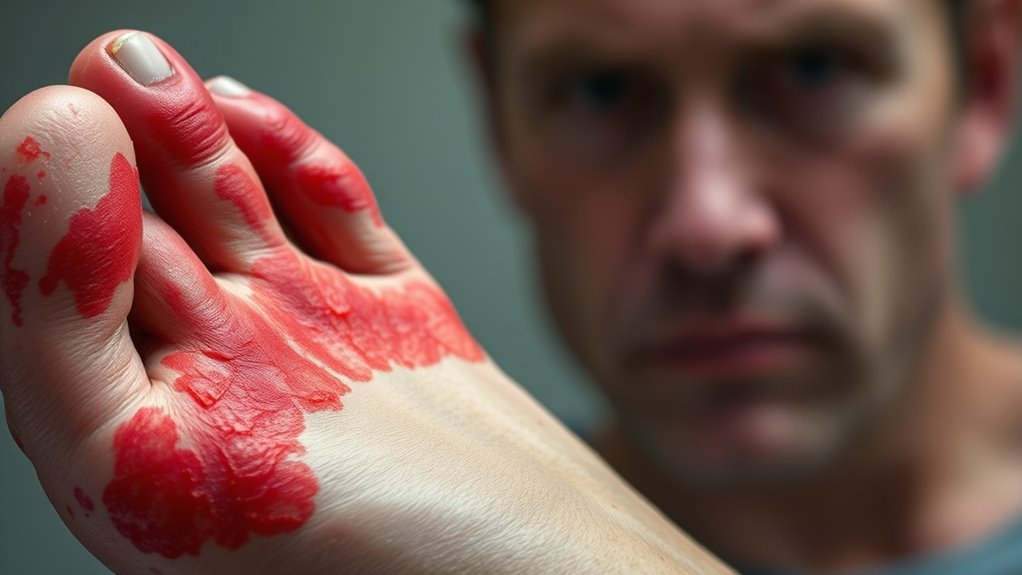
Yes, athlete’s foot can spread to your face if you don’t take proper precautions. The fungal infection can travel from your feet to other body parts, including the groin and hands. If you touch your infected feet and then your face, you increase the risk. To prevent this, maintain good hygiene and avoid sharing personal items. Staying informed about symptoms and treatment options can help you keep your skin healthy and infection-free. There’s more to explore on this topic!
Understanding Athlete’s Foot
Although athlete’s foot might seem like a minor annoyance, it can actually lead to uncomfortable symptoms and complications if left untreated. Understanding this fungal infection is vital for maintaining your freedom and well-being. It thrives in warm, moist environments, often affecting your feet when they’re confined in tight shoes or damp socks. You might not realize that proper skin care can help prevent the spread of athlete’s foot. Keeping your feet clean and dry is essential, as is using antifungal powders or sprays if you’re prone to infections. Be mindful of your surroundings; communal spaces like gyms and pools can be hotspots for these fungi. By taking proactive steps, you can safeguard yourself from the discomfort and complications associated with athlete’s foot.
Symptoms of Athlete’s Foot
Recognizing the symptoms of athlete’s foot is essential for prompt treatment and relief. You might notice an itchy rash between your toes or on the soles of your feet. That pesky itch can be hard to ignore, and it often comes with red, inflamed skin. You could also experience peeling skin, which might reveal raw areas that are sensitive and uncomfortable. Sometimes, blisters might form, leading to increased irritation. If you have a burning sensation or notice a foul odor, these can also be signs of athlete’s foot. Staying in tune with your body can help you tackle this issue head-on, allowing you to enjoy life without the discomfort that comes with a fungal infection.
How Athlete’s Foot Spreads
Athlete’s foot spreads easily through direct contact with an infected person or contaminated surfaces. You can pick up the fungus from gym floors, locker rooms, or even shared towels. Being aware of these transmission methods can help you take steps to protect yourself.
Direct Contact Transmission
When you come into contact with contaminated surfaces or infected individuals, the risk of spreading athlete’s foot increases considerably. This fungal infection thrives in warm, moist environments, making direct contact a prime method for transmission. If someone with athlete’s foot walks barefoot and you share that space, the fungus can easily transfer to your skin. It’s not just about stepping where they’ve walked; a simple handshake or sharing shoes can lead to fungal transmission. So, if you’re living life to the fullest, be mindful of those interactions. Protecting yourself is all about awareness and taking a few precautions, like wearing sandals in communal areas and avoiding sharing personal items. Freedom doesn’t mean ignoring risks; it means being smart about them.
Contaminated Surfaces Risk
Contaminated surfaces pose a significant risk for spreading athlete’s foot, often silently lurking in places you wouldn’t expect. Think about your gym or locker room, where moisture reigns supreme. When you walk around in contaminated shoes, you can easily pick up the fungus that causes this pesky infection. Shared towels can also be a hidden threat; if someone with athlete’s foot uses a towel and then you use it, you’re inviting trouble. To keep your feet free and clear, avoid walking barefoot in communal areas and always use your own towel. By staying mindful of these seemingly harmless surfaces, you can protect yourself and enjoy your freedom without the worry of athlete’s foot creeping into your life.
Risk Factors for Spreading Athlete’s Foot
When it comes to spreading athlete’s foot, poor hygiene practices can play a significant role. If you don’t keep your feet clean and dry, you’re increasing your risk, especially in environments where skin-to-skin contact occurs. Being aware of these factors can help you take steps to protect yourself.
Poor Hygiene Practices
Although maintaining good hygiene might seem straightforward, many people neglect simple practices that can lead to the spread of athlete’s foot. Poor hygiene not only increases the risk of skin irritation but also creates an environment where fungi thrive. To avoid this, consider the following:
- Always wear clean, dry socks and shoes.
- Avoid walking barefoot in public places like pools or gyms.
- Keep your feet clean and dry, especially between the toes.
Skin-to-Skin Contact
Skin-to-skin contact can greatly increase your risk of contracting athlete’s foot, especially in environments where people are close together. When you’re in communal spaces, like gyms or locker rooms, that direct skin contact can lead to the spread of the fungus. If someone with athlete’s foot touches you or shares a towel, you could easily pick it up. This type of skin contact isn’t just limited to your feet; it can also lead to a facial infection if you’re not careful. Avoid sharing personal items and practice good hygiene to minimize risks. By being aware of how athlete’s foot spreads, you can enjoy your freedom and stay healthy without worrying about unwanted infections.
Can Athlete’s Foot Affect Other Body Parts?
While most people associate athlete’s foot primarily with the feet, this fungal infection can indeed spread to other body parts. If you’re not careful, the fungi responsible for athlete’s foot might find their way to areas like:
- The groin, leading to jock itch
- The hands, causing a painful rash
- The face, resulting in a rare facial infection
These infections can be uncomfortable and frustrating, but the good news is that with prompt treatment, you can regain control. Be vigilant about hygiene and avoid sharing personal items. If you notice any unusual symptoms or rashes appearing elsewhere, don’t hesitate to consult a healthcare professional. Taking action early can help you enjoy your freedom without the burden of athlete’s foot lingering around.
The Connection Between Athlete’s Foot and Facial Skin
You might not realize that athlete’s foot can lead to issues beyond your feet, including your facial skin. The same fungal infection that affects your toes can spread to more vulnerable areas of your body, especially if you don’t take precautions. Understanding this connection is key to preventing further irritation and infection.
Fungal Infection Spread
Athlete’s foot, a common fungal infection primarily affecting the feet, can surprisingly lead to issues on other parts of the body, including the facial skin. The fungal transmission methods involved can make it easier than you think for the infection to spread. Here are some key points to take into account:
- Fungal spores can be transferred through direct contact with contaminated surfaces.
- Touching your feet and then your face raises facial infection risks considerably.
- Moist environments, like sweaty feet, can foster fungal growth that may travel.
Staying aware of these factors can help you avoid unwanted complications. If you notice any unusual symptoms on your face after dealing with athlete’s foot, it’s wise to consult a healthcare professional to nip any issues in the bud.
Facial Skin Vulnerability
When dealing with athlete’s foot, it’s easy to overlook how vulnerable the facial skin can be to fungal infections. Your skin’s barrier is designed to protect you, but if you’re not careful, that barrier can be compromised. Fungal infections thrive in warm, moist environments, and if you touch your feet and then your face, you risk transferring those unwanted invaders.
| Fungal Infection Type | Affected Area | Symptoms |
|---|---|---|
| Athlete’s Foot | Feet | Itching, redness |
| Ringworm | Body | Circular rashes |
| Tinea Versicolor | Skin | Discolored patches |
Stay aware of your hygiene practices, and don’t underestimate the importance of keeping your facial skin healthy and clean.
Preventing the Spread of Athlete’s Foot
Although the discomfort of athlete’s foot can be bothersome, preventing its spread is quite manageable with a few simple practices. You can take charge of your foot health by incorporating some smart habits into your routine.
- Always wear proper footwear in public places, like pools and gyms, to minimize exposure.
- Keep your feet dry and clean; moisture fuels fungus, so consider using home remedies like tea tree oil for extra protection.
- Change socks regularly, especially after workouts, to avoid dampness and give your feet a chance to breathe.
Treatment Options for Athlete’s Foot
If you find yourself dealing with athlete’s foot, there are several effective treatment options available to help alleviate the symptoms and eliminate the infection. Topical treatments, like antifungal creams or sprays, are often the first line of defense. These products can quickly target the infection and provide relief from itching and discomfort. Additionally, you might explore home remedies, such as soaking your feet in a mixture of vinegar and water or rubbing tea tree oil on the affected areas. These natural solutions can complement topical treatments and promote healing. Remember to keep your feet clean and dry, as moisture can encourage further fungal growth. With the right approach, you can reclaim your comfort and get back to enjoying life.
When to See a Doctor
Wondering when it’s time to seek medical help for athlete’s foot? It’s essential to know when to consult a healthcare professional. If you notice any of the following, don’t hesitate to reach out:
- Symptoms persist beyond a couple of weeks despite treatment
- You experience increasing pain, swelling, or redness
- There’s a noticeable discharge or foul odor
Tracking your symptoms timeline can help you and your doctor assess the situation better. If your athlete’s foot seems to worsen or spreads to other areas, including your face, it’s a sign you need professional guidance. Remember, taking charge of your health means knowing when to seek assistance, ensuring you can regain your freedom to move comfortably. Don’t wait until it’s too late!
Maintaining Foot and Skin Health
Taking care of your feet and skin is essential, especially after dealing with issues like athlete’s foot. You deserve to feel good in your own skin, so prioritize foot care. Start by keeping your feet clean and dry; moisture is a breeding ground for fungi. Regularly change your socks and choose breathable footwear to let your feet breathe. Don’t forget about skin hydration! Use a good moisturizer on your feet and legs to keep the skin supple and prevent cracking. If you notice any signs of irritation or fungal infection, tackle them early. By maintaining a consistent foot care routine and ensuring your skin stays hydrated, you’ll enjoy the freedom of healthy, happy feet and skin! Additionally, proper hydration is crucial for overall skin health and can help prevent infections.
Frequently Asked Questions
Can Athlete’s Foot Cause Acne or Other Facial Skin Issues?
Athlete’s foot itself doesn’t directly cause acne or facial skin issues, but it can lead to complications if you don’t practice good facial skin care. If you touch infected areas and then your face, you risk transferring the fungus, potentially causing irritation. Keeping your skin clean and avoiding cross-contamination is key. Remember, athlete’s foot symptoms are primarily localized, so focus on treating that area to maintain overall skin health.
Is Athlete’s Foot Contagious Through Shared Towels or Clothing?
Absolutely, athlete’s foot can spread like wildfire through shared towels or clothing. If you’re using someone else’s items, you’re playing with fire when it comes to fungal transmission. It’s essential to maintain good shared hygiene, especially in communal spaces. To keep yourself in the clear, stick to your own towels and avoid sharing clothes. Remember, prevention is key to keeping those pesky fungi at bay and enjoying your freedom!
Can Dogs or Pets Carry Athlete’s Foot to Humans?
No, dogs or pets can’t directly transmit athlete’s foot to you. While they can be fungal carriers, the specific fungus that causes athlete’s foot typically doesn’t affect animals. You might catch it from surfaces or through close contact with infected individuals. So, to keep your freedom intact, just make sure to maintain good hygiene and avoid sharing personal items. Enjoy your time with your pets worry-free!
Are There Home Remedies for Treating Athlete’s Foot Effectively?
Are you tired of dealing with athlete’s foot? You can try several effective home treatments! Natural remedies like tea tree oil or vinegar can help combat the fungus. Just mix a few drops of tea tree oil with a carrier oil or soak your feet in diluted vinegar. Remember to keep your feet dry and clean, too. These simple methods can give you the freedom to enjoy your days without the discomfort of athlete’s foot!
How Long Does Athlete’s Foot Typically Last Without Treatment?
Athlete’s foot typically lasts around two to four weeks without treatment, but the symptoms timeline can vary. You might notice itching, redness, and peeling, which can persist as long as the fungus remains untreated. If you’re looking for freedom from discomfort, it’s best to tackle it sooner rather than later. Ignoring it can lead to persistent issues, so consider seeking treatment to expedite your recovery and regain your comfort.