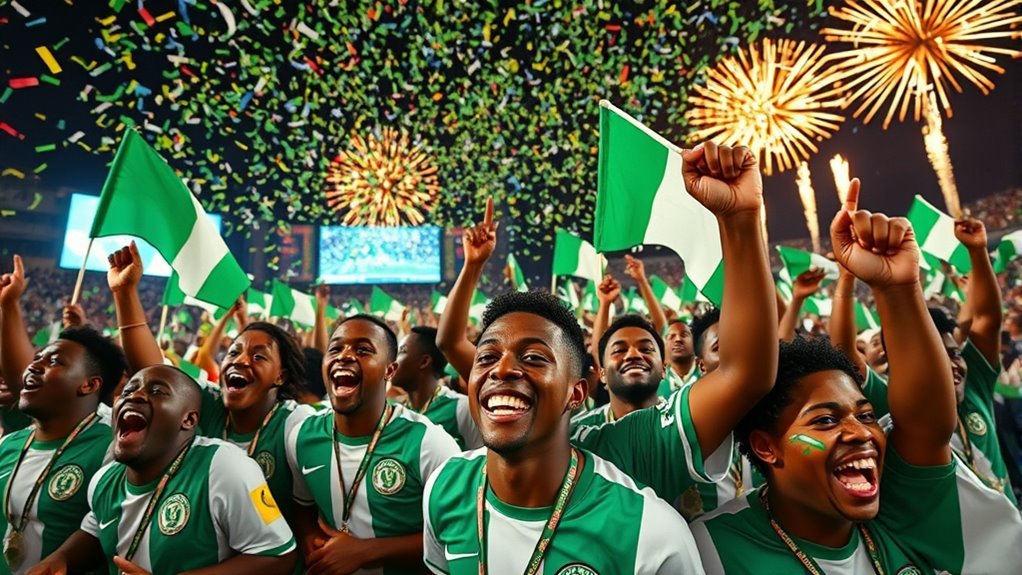
As of October 2023, Nigeria hasn’t qualified for the FIFA World Cup 2026 yet, making their performance in the ongoing qualification rounds critical. They’ve faced ups and downs, with key players showcasing their skills while maneuvering various challenges. Fans continue to rally behind the Super Eagles, fueling hope for the future. If you’re curious about how Nigeria’s football history and current standings play into their qualification journey, there’s more to discover.
Overview of Nigeria’s Football History
Nigeria’s football history is rich and vibrant, showcasing a passionate journey that’s captivated fans both locally and globally. You can see how the love for the game runs deep in the veins of every Nigerian, with football culture being a essential part of daily life. From the bustling streets where kids kick makeshift balls to the grand stadiums filled with fervent supporters, this sport embodies freedom and unity.
Nigerian legends like Jay-Jay Okocha and Nwankwo Kanu have not only brought glory to the nation but have also inspired generations to dream big. Their flair and skill on the pitch reflect the spirit of a country that cherishes its heroes. The passion for football transcends mere entertainment; it’s a rallying point for millions, fostering a sense of belonging and pride. You’ll find that in every match, there’s a story, a heartbeat, and a celebration of Nigerian identity.
The Qualification Process for FIFA World Cup 2026
As the road to the FIFA World Cup 2026 unfolds, teams across Africa, including Nigeria, must navigate a rigorous qualification process. The qualification format for this World Cup involves a series of regional competitions, where national teams compete fiercely for a coveted spot. In Africa, the Confederation of African Football (CAF) organizes these competitions, allowing teams to showcase their talent and determination.
Nigeria’s path will depend on their performance in these qualifiers, facing off against other nations to secure their place in the tournament. Each match counts, and every point is essential. Fans are enthusiastic to rally behind their team, embodying the spirit of freedom and hope that football brings. This journey isn’t just about winning; it’s about pride, unity, and the dream of representing their country on the world’s biggest stage. So, gear up and follow the thrilling journey ahead!
Nigeria’s Performance in Previous World Cups
When you think about Nigeria’s journey in the World Cup, you’ll notice the ups and downs of their historical appearances. They’ve had some notable achievements and records that showcase their talent on the global stage. Let’s also explore how their recent qualification attempts have shaped their reputation in international football.
Historical World Cup Appearances
Although it’s often remembered for its passionate fanbase and vibrant culture, Nigeria’s journey in the FIFA World Cup has been marked by both triumphs and challenges. As you explore Nigeria’s football culture, it is crucial to recognize the nation’s World Cup legacy, which includes:
- 1994: Nigeria’s debut, reaching the Round of 16.
- 1998: Another appearance, though they were eliminated in the group stage.
- 2002: A disappointing campaign, finishing last in their group.
- 2014: A return to form, advancing to the Round of 16 once more.
These appearances reflect not just the team’s growth but also the enduring spirit of Nigerian fans, who embody the vibrant essence of their football culture and continue to dream of greater successes on the global stage.
Notable Achievements and Records
Nigeria’s performance in the FIFA World Cup has been marked by several notable achievements that highlight the nation’s footballing prowess. You’ve witnessed Nigeria’s triumphs, from reaching the knockout stage in 1994 and 1998 to their unforgettable matches featuring football legends like Jay-Jay Okocha and Nwankwo Kanu.
Here’s a snapshot of their World Cup journey:
| Year | Stage Reached | Key Player |
|---|---|---|
| 1994 | Round of 16 | Jay-Jay Okocha |
| 1998 | Round of 16 | Nwankwo Kanu |
| 2014 | Group Stage | Vincent Enyeama |
These moments not only showcased talent but also ignited the passion of millions, symbolizing freedom and unity.
Recent Qualification Attempts
Despite the talent and potential within the Nigerian football team, recent qualification attempts for the FIFA World Cup have been challenging. You might’ve noticed several key factors affecting their journey:
- Inconsistent Recent Performances: Fluctuating results in qualifying matches have made it difficult to secure spots.
- Evolving Qualification Strategies: Changes in coaching and player selections often lead to uncertainty in team dynamics.
- Injury Issues: Key players missing due to injuries have hindered the team’s overall strength.
- Tactical Adjustments: Adapting to opponents’ strategies has sometimes proven overwhelming, leading to missed opportunities.
These elements underscore the struggle Nigeria faces in their quest for World Cup glory, reminding us of the unpredictable nature of sports and the need for resilience.
Key Players to Watch in the Super Eagles
As you look ahead to the World Cup, it’s essential to keep an eye on the key players who’ll shape Nigeria’s chances. From the star strikers firing goals to the midfielders controlling the game and the defenders standing strong, each role is critical. These athletes will be central to the Super Eagles’ quest for success on the global stage.
Star Striker Performance Insights
While the Super Eagles gear up for the 2026 FIFA World Cup, all eyes are on their star strikers, whose performances could shape Nigeria’s success on the global stage. These key players are essential for goal scoring and can turn the tide in critical matches. Here are four star strikers to watch:
- Victor Osimhen – Known for his speed and clinical finishing, he’s a game-changer.
- Kelechi Iheanacho – His creativity and knack for finding the net make him a threat.
- Samuel Chukwueze – With dazzling dribbles, he can create opportunities out of nothing.
- Taiwo Awoniyi – His physicality and aerial ability add depth to Nigeria’s attack.
Keep your eyes peeled; their impact could be monumental!
Midfield Mastery and Control
When it comes to midfield mastery, the Super Eagles have some exceptional players who can dictate the pace of the game and provide essential support to both the defense and attack. Key players like Wilfred Ndidi and Alex Iwobi excel in midfield dynamics, showcasing their ability to shift smoothly between defensive duties and offensive creativity. They understand tactical formations and how to exploit spaces, making them invaluable assets. With their vision and passing range, they can control the tempo and release the forwards at critical moments. As you watch Nigeria’s matches, keep an eye on how these midfield maestros navigate challenges, making them a thrilling part of the Super Eagles’ strategy in pursuit of World Cup glory.
Defensive Strength and Resilience
Although the Super Eagles are known for their attacking flair, their defensive strength and resilience are equally crucial to their success on the world stage. You can’t overlook the key players who embody tactical discipline and excel in defensive formations. Here are four players to watch:
- William Troost-Ekong – A rock at the back, he’s known for his leadership and aerial ability.
- Leon Balogun – His experience and positioning skills make him a crucial part of the defense.
- Zaidu Sanusi – A rising star, his pace and tackling prowess add depth to the backline.
- Omeruo Kenneth – His versatility allows him to adapt to various defensive setups.
With these players, the Super Eagles create a formidable wall against any opponent.
Challenges Faced During the Qualification Campaign
As Nigeria commenced its qualification campaign for the 2026 FIFA World Cup, it faced a multitude of challenges that tested the resilience of its players and coaching staff. You couldn’t help but feel the tension as coaching changes disrupted the team’s chemistry, leaving them scrambling to find a consistent strategy. Each new tactic required adjustments that not only confused the players but also hindered their ability to perform at their best.
Adding to the struggle, player injuries plagued the squad, sidelining key talents just when they were needed most. You saw how these setbacks took a toll on the team’s morale, with supporters yearning for a glimpse of the brilliance they knew the players could deliver. The importance of understanding the injury recovery timeline became evident as the team navigated these challenges. Despite these hurdles, the spirit of the Nigerian team remained unbroken, embodying the hope and tenacity that fans have always cherished. Only time would tell if these trials would strengthen their resolve.
Current Standings in the Qualification Group
Despite the challenges faced, Nigeria’s current standings in the qualification group reflect a mix of determination and struggle. You’ll find that the team’s performance has been a rollercoaster ride, with moments of brilliance overshadowed by setbacks. Here’s a brief group analysis of Nigeria’s position:
- Points Accumulated: Nigeria has secured a respectable number of points, showcasing their competitive edge.
- Match Results: The team’s wins and draws highlight their potential, but losses have been costly.
- Goal Difference: An essential factor, their goal difference indicates both offensive strength and defensive weaknesses.
- Upcoming Matches: Future fixtures will be pivotal in determining their fate; every match counts.
As you follow the journey, remember that every point matters in the quest for World Cup qualification. Keep an eye on the current standings, as they’ll evolve with each game played.
The Role of Fans and Supporters
While Nigeria’s journey to the World Cup hinges on the players’ performance, the unwavering support of fans and supporters plays an equally essential role. Your energy and enthusiasm can lift the spirits of the team, creating an electric atmosphere that fuels their passion. Fan engagement isn’t just about cheering from the stands; it’s about building a community that believes in the dream of World Cup glory.
The supporter impact is profound. When you rally behind the team, your voices resonate, encouraging players to push harder, reach further, and believe in their potential. Your presence at matches, whether in the stadium or at home, sends a powerful message: together, you’re unstoppable.
Future Prospects for Nigerian Football
Looking ahead, the future prospects for Nigerian football are promising, especially with a new generation of talented players emerging. The focus on youth development and innovative coaching strategies will play an essential role in shaping the sport. Here’s what you can expect:
- Investment in Academies: More resources will flow into grassroots programs, nurturing young talent from an early age.
- Enhanced Coaching Techniques: Coaches will embrace modern strategies, ensuring players are well-prepared for international competition.
- Increased International Exposure: Young players will gain valuable experience through international tournaments and training camps abroad.
- Stronger Community Support: A growing fanbase will rally behind local clubs, promoting a culture of football that empowers youth.
As these elements intertwine, you’ll witness a revitalized Nigerian football landscape, filled with hope and potential for global success. Embracing change is key, and the future looks bright!
Frequently Asked Questions
When Will the FIFA World Cup 2026 Take Place?
The FIFA World Cup 2026’s set for June 8 to July 8. While the tournament format expands to 48 teams, it promises thrilling matches. You’ll want to mark your calendar for this epic event!
How Many Teams Qualify for the FIFA World Cup?
A total of 48 teams qualify for the FIFA World Cup, with team allocations based on regional confederations. Each confederation has specific qualification criteria, giving nations a fair chance to compete on the global stage.
What Are the Host Countries for the FIFA World Cup 2026?
The host countries for the FIFA World Cup 2026 are the United States, Canada, and Mexico. With a unique tournament format featuring 48 teams, you’ll experience matches across various vibrant host cities. Enjoy the excitement!
How Does the World Cup Qualification Impact Nigerian Football?
World Cup qualification’s like a beacon, guiding Nigerian football toward growth. It fuels youth development and grassroots initiatives, igniting passion and inspiring dreams, creating a powerful pathway for future generations to embrace their freedom in sports.
What Is the Selection Process for the Super Eagles’ Coach?
The selection process for the Super Eagles’ coach involves a selection committee evaluating coaching criteria like experience, tactical knowledge, and past performance. You’ll find it’s designed to guarantee Nigeria’s football reaches its full potential.