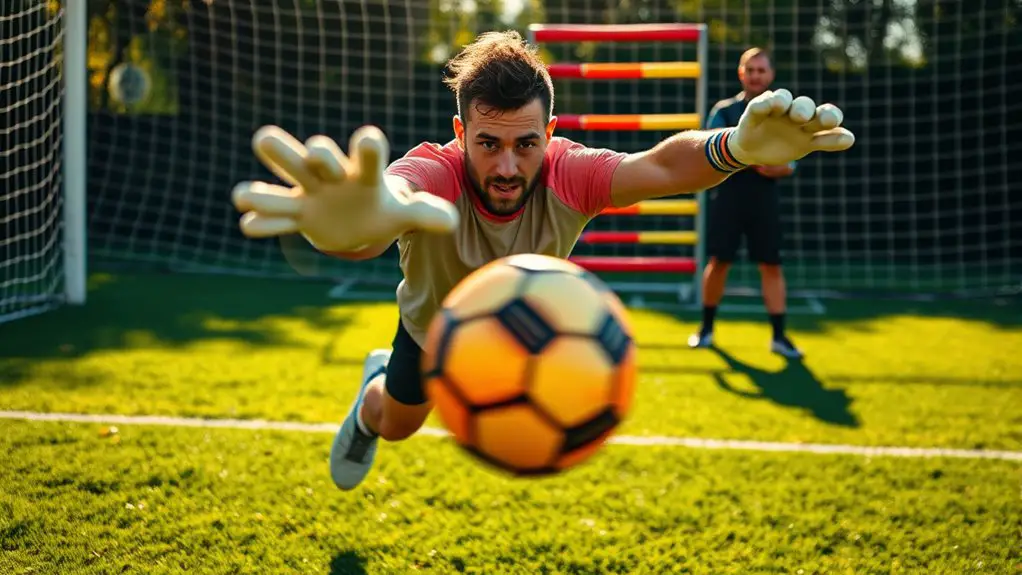
To improve your reaction time as a sprinter, focus on mental readiness and practice quick-response drills. Utilize explosive starts from a seated position and plyometric exercises like box jumps and depth jumps to engage your fast-twitch muscle fibers. Additionally, assess your current timing using video analysis and wearable tech. Don't forget that proper nutrition and recovery are essential for peak performance. Keep exploring these strategies, and you'll uncover even more ways to enhance your speed.
Understanding Reaction Time and Its Importance in Sprinting
Reaction time is the vital link between an athlete's mental readiness and physical response, especially in sprinting. It's that split second when your brain processes the starting signal and your body leaps into action. In sprinting, every millisecond counts, and a faster reaction time can be the difference between crossing the finish line first or second.
Understanding how your brain and body work together is significant. When you're mentally focused and relaxed, your reaction time improves. You're not just waiting; you're anticipating the start. This anticipation can release your potential, providing a sense of freedom as you explode off the blocks. Incorporating mental conditioning techniques can further enhance your reaction time by preparing your mind for quick responses in high-pressure situations.
Analyzing Your Current Reaction Time
To improve your sprinting performance, it's essential to analyze your current reaction time. You can use timing assessment techniques, reaction time drills, and performance tracking methods to get a clearer picture of where you stand. Understanding these elements will help you identify areas for improvement and boost your overall speed. Incorporating agility drills into your training can significantly enhance your foot speed and coordination, contributing to quicker reactions at the start of your sprints.
Timing Assessment Techniques
Evaluating your current timing is essential for improving your sprinting performance. Knowing where you stand helps you identify areas for improvement. You can use various timing assessment techniques to gauge your reaction time effectively.
Here's a simple table to help you visualize your options:
| Technique | Description |
|---|---|
| Stopwatch Timing | Use a partner to time your starts. |
| Light Gates | Set up sensors to measure your time. |
| Video Analysis | Record your starts and review them. |
Reaction Time Drills
Improving your reaction time is essential for sprinters, especially since even a fraction of a second can impact your performance considerably. To analyze your current reaction time, start with simple drills. Use a stopwatch or a friend to signal you to start running as quickly as possible after a visual cue. You can also practice with a reaction ball; when it bounces, you'll have to react quickly to catch it. Another effective drill involves using auditory cues—listen for a sound and take off immediately. Track your progress by timing yourself and refining your technique. Remember, the goal is to make your responses instinctive. With consistent practice, you'll find your reflexes sharpen, giving you the freedom to perform your best on race day.
Performance Tracking Methods
Tracking your performance is essential for understanding and improving your reaction time as a sprinter. By analyzing your current stats, you can break free from limitations and reach new heights. Here are some effective methods to track your progress:
- Use a stopwatch or app to time your starts.
- Record your reaction times during practice sessions.
- Compare your results against previous records.
- Seek feedback from coaches or experienced sprinters.
- Take note of how different drills impact your response.
Each of these methods helps clarify where you stand and what you need to improve. Embrace the journey, learn from the data, and let your passion for speed drive you to release your true potential on the track!
Drills to Enhance Fast-Twitch Muscle Response
To boost your reaction time as a sprinter, incorporating specific drills that target fast-twitch muscle fibers is essential. Start with explosive starts from a seated position. This simulates the starting block and trains your muscles to react quickly. Next, practice sprinting against resistance, using a sled or bands. This helps develop power and speed while enhancing your muscle response.
Another effective drill is the "quick feet" exercise. Set up cones and alternate quick, short steps between them, focusing on speed and agility. Plyometrics, like box jumps, also engage fast-twitch fibers and improve explosive power. Additionally, incorporating plyometric training can further enhance your ability to generate explosive movements.
Finally, incorporate reaction drills, such as sprinting on a coach's cue or responding to a light signal. These exercises sharpen your reflexes and prepare you for the unexpected on the track. By consistently integrating these drills into your routine, you'll notice a significant improvement in your overall reaction time.
The Role of Mental Focus in Reaction Time
Although physical training plays an essential role in enhancing reaction time, mental focus can greatly influence your performance as a sprinter. When you're mentally sharp, you're not just reacting; you're anticipating and seizing every moment. Embracing this mental clarity can set you free on the track.
- Feel the thrill of the starting gun echoing in your mind.
- Visualize the finish line and let your spirit soar.
- Breathe deeply, letting go of distractions like a gust of wind.
- Embrace the adrenaline, transforming nerves into pure power.
- Connect with your passion, igniting the fire within.
Moreover, mindfulness in athletic performance enhances your ability to tune out distractions and maintain focus during those critical moments of the race.
Utilizing Technology to Measure and Improve Reaction Time
To enhance your reaction time, leveraging technology can make a big difference. Wearable tech devices can track your performance in real-time, while video analysis software allows you to review your starts and refine your technique. With these tools, you can identify areas for improvement and accelerate your progress on the track. Additionally, using real-time data from wearable fitness trackers can help you optimize your training sessions for better performance outcomes.
Wearable Tech Devices
As sprinters aim for faster starts, wearable tech devices have emerged as essential tools for measuring and improving reaction time. These innovations empower you to take control of your performance, offering insights that can lead to freedom on the track. With real-time data, you can fine-tune your training and release your true potential.
- Experience the thrill of faster starts
- Gain confidence with precise feedback
- Break through personal barriers
- Celebrate every millisecond of improvement
- Embrace the freedom of optimized training
Video Analysis Software
While training for speed, incorporating video analysis software can greatly enhance your reaction time. This technology allows you to break down your sprinting mechanics frame by frame, revealing where you might be losing precious milliseconds. You can spot reaction delays, analyze your start position, and refine your technique effectively. By reviewing your performances, you can pinpoint weaknesses and adjust your training accordingly, giving you the freedom to optimize your skills.
Additionally, sharing your video with coaches or peers can provide valuable feedback, allowing for collaborative improvement. Embrace this opportunity to harness technology in your training regimen, and watch your reaction time improve as you gain confidence in your abilities. It's about empowering yourself to reach new heights in your sprinting journey.
Incorporating Plyometric Exercises Into Your Training
Incorporating plyometric exercises into your training can greatly enhance your reaction time, giving you a competitive edge on the track. These explosive movements train your body to respond quicker and more efficiently when it matters most. You'll feel the thrill of releasing your full potential as you master these drills.
Here are some effective plyometric exercises to evaluate:
- Box jumps: Propel yourself into the air, feeling the freedom of flight.
- Depth jumps: Drop from a height and rebound, honing your reflexes.
- Bounding: Leap forward with power, channeling your inner speedster.
- Jump squats: Combine strength and explosiveness for a killer workout.
- Lateral jumps: Improve agility and quickness, essential for sprinters.
Additionally, incorporating dynamic movements like these can significantly train your muscles to generate power rapidly.
Nutrition and Recovery for Optimal Performance
To achieve peak performance on the track, you can't overlook the importance of nutrition and recovery. Proper fueling is essential; your body needs a balance of carbohydrates, proteins, and healthy fats to power through intense workouts and races. Focus on whole foods, like fruits, vegetables, lean meats, and whole grains. Hydration is equally significant—dehydration can slow you down and hinder your reaction times. Staying hydrated helps avoid fatigue and cramps, allowing you to maintain your speed and focus during training and competitions.
Recovery's not just about rest; it's when your body repairs and strengthens. Incorporate activities like stretching, foam rolling, and even adequate sleep into your routine. Give yourself time to let muscles recover, especially after hard training sessions. Remember, being a sprinter is about more than just speed—it's about giving your body what it needs to perform at its best. Embrace a holistic approach, and you'll find your reaction time and overall performance will improve, allowing you to enjoy the freedom of sprinting at your peak.
Setting Goals and Tracking Progress for Continuous Improvement
Setting clear goals and tracking your progress is essential for continuous improvement as a sprinter, since it provides direction and motivation. When you set your sights on specific targets, you're not just running; you're paving your path to freedom on the track.
To fuel your journey, consider these key aspects:
To fuel your journey, embrace visualization, celebrate milestones, and stay accountable for continuous growth.
- Visualize your success: Picture crossing the finish line ahead of the competition.
- Celebrate small victories: Each milestone is a step towards greater achievements.
- Adjust your goals: Be flexible and adapt as you grow stronger.
- Stay accountable: Share your goals with a friend or coach to keep you focused.
- Reflect regularly: Evaluate your progress and learn from your experiences.
- Focus on preparation: Consistent practice and preparation fosters confidence to face challenges.
Frequently Asked Questions
How Does Age Affect Reaction Time in Sprinters?
Age can slow your reaction time, as physical changes affect speed and coordination. While younger athletes often perform better, with training and focus, you can still maintain and improve your reaction capabilities, regardless of age.
Can Certain Footwear Improve Reaction Time?
Imagine running on clouds; the right footwear can transform your speed. It can enhance grip and cushioning, allowing you to feel free and agile. Don't underestimate the power of what you wear on your feet!
What Role Does Sleep Play in Reaction Time?
Sleep's essential for your reaction time; it helps your brain process information and respond quickly. When you're well-rested, you're sharper and more alert, giving you the freedom to perform at your best in any activity.
Are There Specific Warm-Up Routines for Better Reaction Time?
Imagine a racehorse stretching before a big event. You need a tailored warm-up routine to release your potential. Dynamic stretches and quick foot drills can sharpen your mind and body, enhancing your reaction time for any challenge.
How Does Music Influence Sprinting Reaction Time?
Music can energize and motivate you, enhancing your mood and focus. Upbeat tunes may boost your adrenaline, potentially leading to quicker reaction times. Just find the right rhythm that resonates with your spirit and pushes you forward.