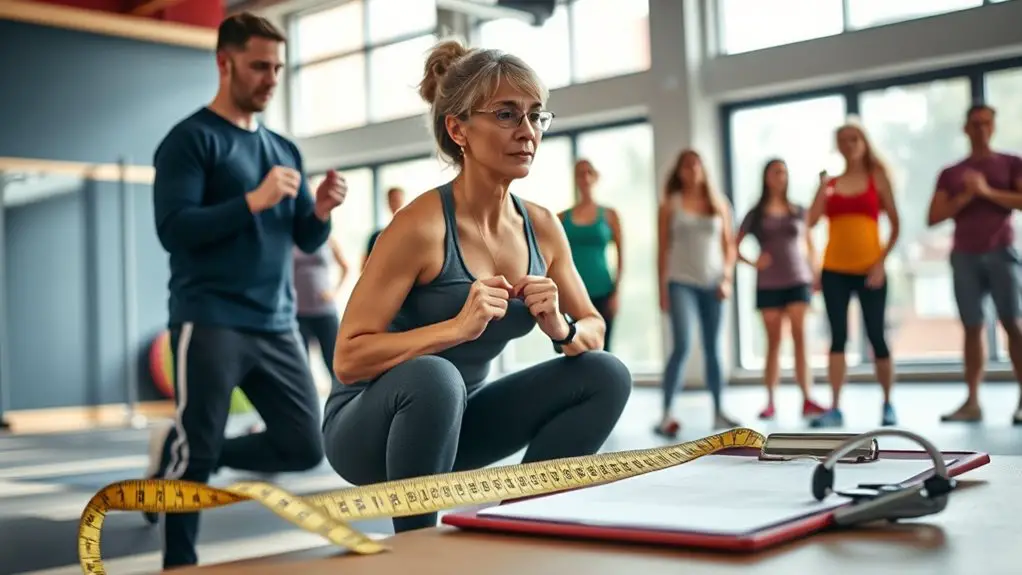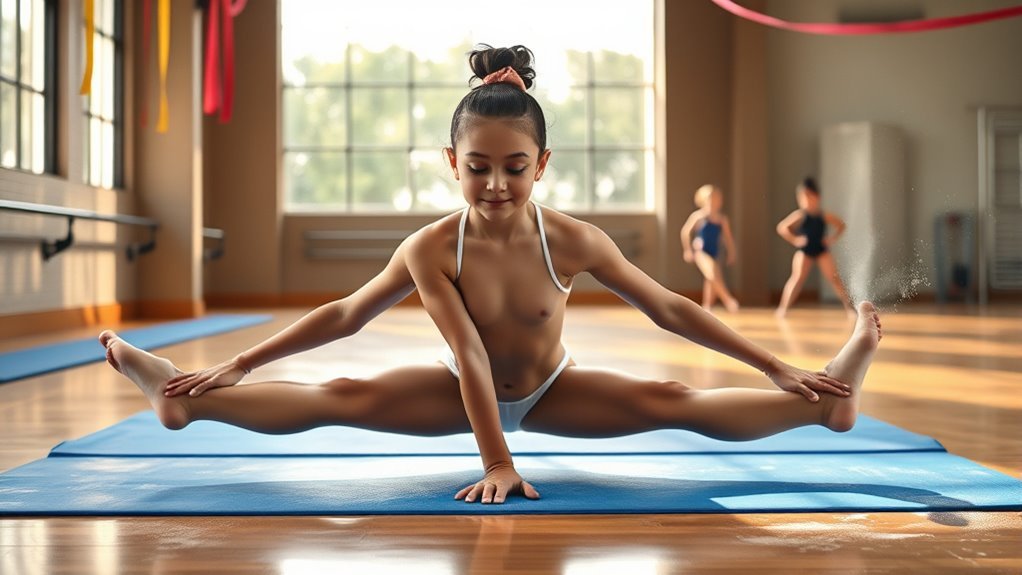
Flexibility training is essential for gymnasts because it enhances performance, reduces injury risk, and improves overall body control. With greater flexibility, you can execute dynamic moves with grace, jump higher, and achieve deeper stretches. It also fosters better balance and stability, leading to stronger routines. Plus, the mental benefits, like reduced stress and boosted self-esteem, can't be overlooked. Keep exploring to discover more about the techniques and success stories tied to flexibility training.
The Role of Flexibility in Gymnastics Performance
Flexibility plays an essential role in gymnastics performance, acting as the foundation for many skills and routines. When you're flexible, you can execute moves with more grace and precision, allowing you to express yourself freely. It opens up a world of possibilities, making it easier to achieve higher jumps, deeper stretches, and more dynamic spins. Imagine nailing that perfect split or landing a back handspring with ease; flexibility makes it all possible. Plus, it enhances your overall body awareness, helping you move fluidly through complex sequences. By incorporating flexibility training into your routine, you're not just improving your performance; you're embracing the freedom to explore your body's full potential. So, stretch it out and let your creativity shine!
Injury Prevention Through Increased Flexibility
When you enhance your flexibility, you greatly reduce the risk of injuries during training and competition. Increased range of motion allows your muscles and joints to move more freely, preventing strains and sprains. Imagine the freedom of executing a perfect landing or a smooth shift without fear of injury.
| Benefit | Description | Impact on Performance |
|---|---|---|
| Reduced Strain | Less tension in muscles | Greater control in routines |
| Enhanced Recovery | Quicker muscle repair | More consistent training |
| Improved Posture | Better alignment of body | Increased confidence |
| Greater Movement | Fluidity in skills | Elevated performance levels |
Enhancing Strength and Stability With Flexibility
While many think of flexibility solely as a means to prevent injuries, it also plays an important role in enhancing strength and stability. By improving your flexibility, you're allowing your muscles to work more efficiently. This means you can generate more power during your routines, enabling you to perform at your best.
When your joints have a full range of motion, you can maintain better balance and control, which is vital for executing complex skills. You'll find that flexibility helps you engage your core and stabilizer muscles more effectively, leading to improved overall performance. So, embrace flexibility training; it's not just about bending and stretching, it's about releasing your true potential and creating a strong, stable foundation for all your gymnastics endeavors.
Flexibility Training Techniques for Gymnasts
To achieve the best results in gymnastics, incorporating effective flexibility training techniques is essential. Start with dynamic stretching before workouts to warm up your muscles and increase blood flow. Incorporate static stretches for major muscle groups afterward, holding each stretch for 15-30 seconds. PNF (Proprioceptive Neuromuscular Facilitation) stretching can also be beneficial; partner with a teammate to help push your limits. Yoga and Pilates are great additions to your routine, enhancing both flexibility and body awareness. Don't forget to focus on your breathing; it helps relax your muscles and deepen stretches. Consistency is key, so set aside time each week for flexibility work, and soon you'll notice a significant improvement in your overall performance and freedom of movement.
The Connection Between Flexibility and Range of Motion
Flexibility training not only enhances your ability to perform various gymnastic moves but also plays a significant role in increasing your range of motion. When you work on your flexibility, you're allowing your joints and muscles to move freely and efficiently. This increased range of motion is essential for executing complex skills, whether it's a split or a back handspring. You'll find that with greater flexibility, you can achieve deeper positions and more fluid movements, giving you the freedom to express yourself in routines. Plus, improved flexibility can help prevent injuries, allowing you to train longer and push your limits. Embrace this connection, and you'll reveal your full potential as a gymnast while feeling more liberated in your practice.
Mental Benefits of Flexibility Training
As you engage in flexibility training, you'll discover that the benefits extend far beyond just physical prowess; it also greatly enhances your mental well-being. When you stretch and work on your flexibility, you're not just improving your body; you're also freeing your mind. This practice helps reduce stress and anxiety, allowing you to feel more centered and relaxed. Plus, as you achieve new flexibility milestones, you'll experience a boost in confidence and self-esteem. The focus required during training fosters mindfulness, promoting a sense of clarity and calm. Ultimately, flexibility training empowers you, granting you the freedom to express yourself fully in gymnastics and life. Embrace these mental benefits, and watch how they transform your overall performance!
Creating a Balanced Training Program
When developing a balanced training program for gymnasts, it's vital to integrate various elements that promote overall athleticism. Start by incorporating strength training, which builds the power needed for complex routines. Next, add flexibility exercises, focusing on dynamic and static stretches to enhance range of motion and prevent injuries. Don't forget about conditioning; aerobic and anaerobic workouts will improve endurance and recovery. Skill practice is essential too, so dedicate time to perfecting routines and techniques. Finally, guarantee you include rest and recovery days to keep the body fresh and avoid burnout. By creating a program that balances these components, you'll not only enhance performance but also foster a love for the sport, giving gymnasts the freedom to explore their potential.
Success Stories: Gymnasts Who Excelled Through Flexibility Training
Though many factors contribute to a gymnast's success, flexibility training often stands out as a game-changer. Take, for example, the remarkable journey of Simone Biles. Her dedication to flexibility not only enhanced her breathtaking routines but also helped prevent injuries, allowing her to soar higher. Look at Aly Raisman, whose deep stretches and mobility exercises revealed her full potential, giving her the freedom to execute complex moves with grace. These athletes show that embracing flexibility can transform your performance, pushing boundaries and opening doors to new possibilities. When you prioritize flexibility training, you're not just improving your skills—you're also empowering yourself to express your unique style and creativity on the mat. So, let those stretches lead you to greatness!
Frequently Asked Questions
How Often Should Gymnasts Incorporate Flexibility Training Into Their Routines?
You should incorporate flexibility training into your routine at least three to four times a week. Consistency helps improve your range of motion, enhances performance, and reduces the risk of injury, giving you more freedom in your movements.
Can Flexibility Training Improve a Gymnast's Scores in Competitions?
They say "the more you bend, the more you blend," and that's true! Flexibility training can enhance your performance, allowing you to execute moves with grace and precision, ultimately boosting your competition scores.
What Age Is Optimal to Start Flexibility Training for Gymnasts?
You can start flexibility training as early as age six, but it's important to focus on proper techniques. Developing a strong foundation allows you to enhance your skills while minimizing the risk of injury as you progress.
Are There Specific Stretches for Different Gymnastics Disciplines?
Yes, there are specific stretches for each gymnastics discipline. You'll find that splits, backbends, and shoulder stretches enhance performance, helping you achieve fluidity and grace, no matter which event you're focusing on.
How Long Does It Typically Take to See Flexibility Improvements?
Improving flexibility's like tending a garden; with patience and consistent effort, you'll see growth. Typically, you'll notice changes in about four to six weeks, but everyone's different, so embrace your unique journey toward freedom of movement.