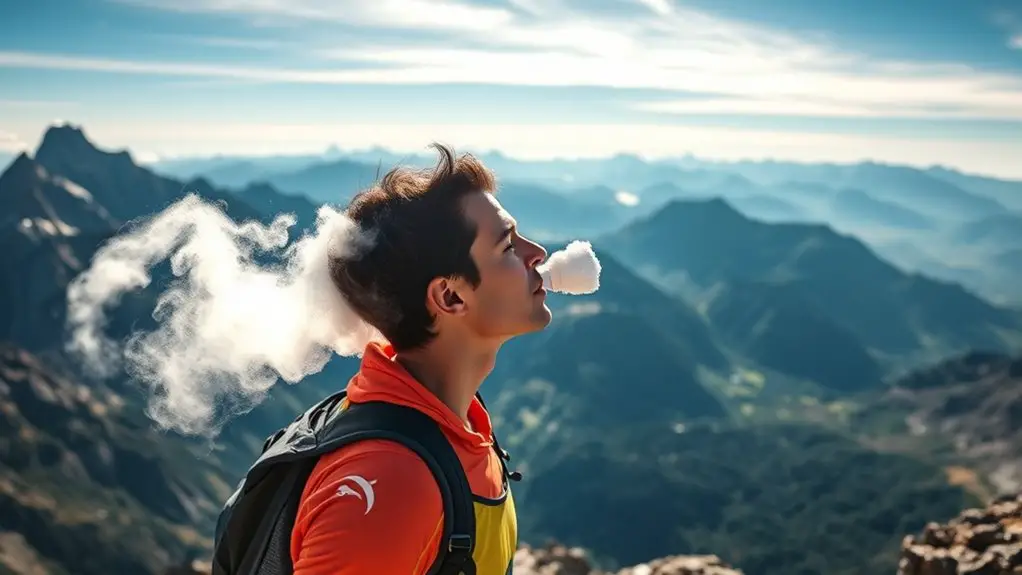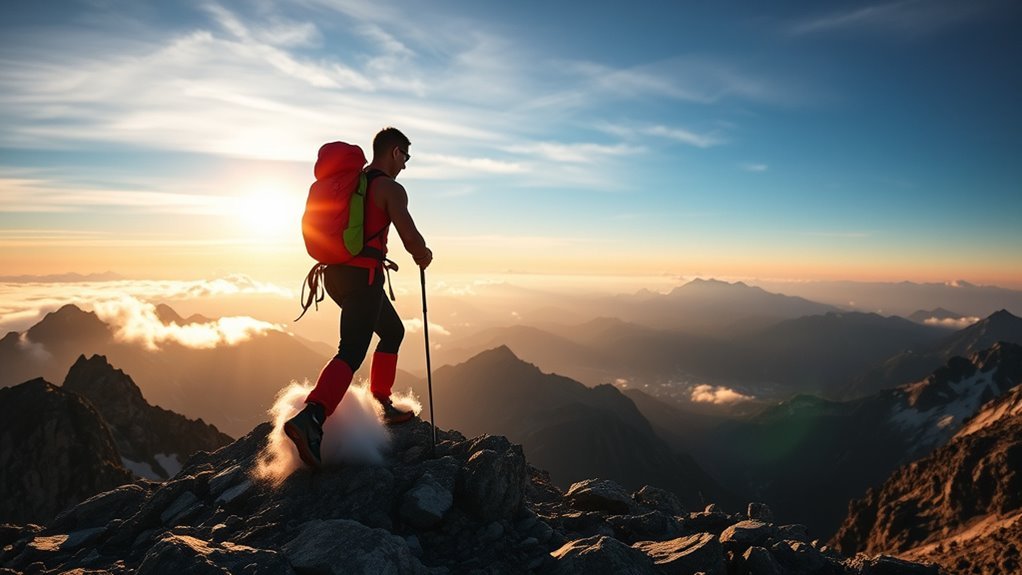
Cardiovascular endurance plays an essential role in mountaineering. It helps you efficiently deliver oxygen to your muscles, enabling you to tackle steep ascents and challenging terrains with greater ease. This stamina allows you to enjoy breathtaking views instead of gasping for breath. Plus, improved endurance aids in quicker recovery and reduces the risk of altitude sickness. A strong aerobic base supports your adventures, making each climb more enjoyable. Discover more about enhancing your performance and overall endurance.
Understanding Cardiovascular Endurance
When you commence on a mountaineering adventure, understanding cardiovascular endurance becomes essential. It's not just about reaching the summit; it's about enjoying the journey and embracing the wild. Cardiovascular endurance refers to your body's ability to efficiently supply oxygen to your muscles during intense activities. This means that the better your heart and lungs function together, the longer and more joyfully you can traverse rugged terrains.
Consider your training as a way to access freedom in the mountains. Whether you're hiking steep trails or maneuvering rocky paths, a strong cardiovascular system will help you push through fatigue and keep exploring. You'll find that your stamina allows you to soak in the breathtaking views instead of gasping for breath. Additionally, improved oxygen delivery to muscles enhances your overall performance, making every climb feel more achievable. So, take the time to build your endurance—your future self will thank you as you conquer new heights and savor the thrill of the climb!
The Importance of Cardiovascular Fitness in Mountaineering
Building on your understanding of cardiovascular endurance, it's clear that cardiovascular fitness plays a pivotal role in mountaineering. It's not just about reaching the summit; it's about enjoying the journey, feeling alive in every step you take. When you're out there, high above the world, your heart and lungs need to work in harmony, keeping you energized and focused.
Good cardiovascular fitness means you can tackle steep ascents, navigate challenging terrain, and recover quickly after exertion. It allows you to push your limits without feeling overwhelmed, granting you the freedom to explore new heights and embrace the adventure fully.
Moreover, strong cardiovascular health reduces the risk of altitude sickness and fatigue, letting you savor the breathtaking views rather than worrying about your stamina. In mountaineering, being fit isn't just a luxury; it's a necessity that fuels your passion for the wild.
Training Strategies to Improve Cardiovascular Endurance
To enhance your cardiovascular endurance for mountaineering, implementing a variety of training strategies is essential. Start with interval training; it'll push your limits by alternating between high-intensity bursts and recovery periods. This helps build stamina quickly. Incorporate long-distance hikes or runs into your routine, gradually increasing the distance to build a solid aerobic base. Don't forget cross-training—swimming, cycling, or rowing can provide excellent cardiovascular workouts while reducing the risk of injury. Additionally, consider incorporating hill training to mimic the demands of mountain terrain. And remember to allow for rest and recovery; your body needs time to adapt and grow stronger. Finally, keep it fun! Explore new trails or join a group; the camaraderie will motivate you. By mixing these strategies, you'll not only enhance your endurance but also enjoy the journey toward your mountaineering goals. Embrace the challenge, and feel the freedom of the mountains!
Moreover, utilizing interval training as a method can significantly improve your cardiovascular endurance through structured workouts that alternate between high-intensity and lower-intensity exercises.
High-Altitude Challenges and Their Impact on Endurance
When you climb to high altitudes, you'll face significant challenges like reduced oxygen availability that can hinder your endurance. Altitude sickness may also set in, affecting your performance and energy levels. Understanding these factors is essential for maximizing your cardiovascular endurance in mountaineering. Additionally, increased red blood cell production can provide a critical advantage by enhancing your body's ability to transport oxygen efficiently.
Oxygen Availability Constraints
Although mountaineering offers breathtaking views and a sense of adventure, it also presents significant challenges due to oxygen availability at high altitudes. When you ascend, the air thins, making it tougher to breathe and reducing your stamina. This decrease in oxygen can hinder your body's ability to perform, and you may find yourself gasping for breath, even during light exertion. To truly embrace the freedom of climbing, you need to train your cardiovascular endurance and adapt to these conditions. Proper acclimatization becomes essential; it helps your body adjust to lower oxygen levels. Stay aware of your limits, and don't rush the process. By understanding these constraints, you can enhance your mountaineering experience and push your boundaries safely.
Impact of Altitude Sickness
Altitude sickness can strike unexpectedly, impacting your performance and enjoyment during climbs. It usually kicks in at elevations above 8,000 feet, and symptoms vary from mild headaches to severe complications. Recognizing these effects is essential for your safety and success.
| Symptom | Description | Action |
|---|---|---|
| Headache | Throbbing pain in the head | Rest and hydrate |
| Nausea | Upset stomach, possible vomiting | Descend if severe |
| Fatigue | Unusual tiredness | Slow down and rest |
| Dizziness | Feeling lightheaded or faint | Sit and stabilize |
| Shortness of Breath | Difficulty catching your breath | Descend to lower altitude |
Energy Depletion Factors
As you ascend to higher elevations, your body faces unique challenges that can lead to energy depletion, considerably impacting your endurance. The thin air reduces oxygen levels, forcing your heart and lungs to work harder just to maintain basic functions. This increased demand can quickly drain your energy reserves. Additionally, cold temperatures can sap your strength, making every step feel heavier.
Dehydration's another stealthy thief; without proper hydration, your body struggles to perform effectively. You might also encounter altitude sickness, which can further diminish your stamina. To preserve your energy, it's vital to listen to your body, pace yourself, and fuel adequately. Understanding these factors allows you to embrace the freedom of the mountains while maintaining your endurance.
Balancing Strength and Endurance for Optimal Performance
To excel in mountaineering, you need to strike the right balance between strength and endurance. Focusing solely on one can leave you unprepared for the demanding terrain. Let's explore the essentials of strength training and effective endurance techniques to enhance your performance. A balanced approach to training can help reduce injury risks and improve overall athletic capabilities, which is crucial for tackling challenging climbs.
Strength Training Essentials
While many mountaineers focus primarily on cardiovascular endurance, integrating strength training is vital for peak performance. Building strength enhances your ability to tackle tough terrains, carry heavy packs, and maintain stability on unpredictable surfaces. You don't need a gym; simple bodyweight exercises like squats, push-ups, and lunges can work wonders. Incorporate resistance bands or free weights if you can, targeting major muscle groups to support your climbing and hiking movements. Balance is essential—too much strength without endurance can leave you fatigued, while too much endurance might compromise your power. Find that sweet spot where both elements coexist, allowing you the freedom to explore the mountains with confidence and resilience. Embrace strength training, and watch your performance soar!
Endurance Training Techniques
Integrating endurance training techniques into your routine can greatly elevate your performance in mountaineering. Start by incorporating long, steady cardio sessions like hiking or cycling to build your aerobic base. Mix in interval training—short bursts of high-intensity effort followed by recovery—to improve your stamina and speed. Don't forget to balance it with strength training; it'll enhance your muscle endurance, which is vital for those steep climbs. You can also try outdoor activities like trail running or rock climbing to keep things exciting and engage different muscle groups. Listen to your body, rest when needed, and gradually increase your training intensity. This balanced approach will help you release your full potential, giving you the freedom to conquer those breathtaking peaks!
Benefits of Cardiovascular Endurance Beyond Climbing
Although many people associate cardiovascular endurance primarily with climbing, its benefits extend far beyond the mountains. When you build your endurance, you're not just preparing for high-altitude adventures; you're enhancing your overall quality of life. With improved cardiovascular health, you'll find everyday activities feel easier and more enjoyable, whether it's hiking through a forest, biking along winding trails, or simply keeping up with friends during a weekend getaway.
In addition, strong cardiovascular endurance boosts your energy levels, helping you tackle challenges both big and small. You'll recover faster from physical exertion and feel more invigorated in your daily routine. The mental resilience you gain through endurance training also translates to other areas, promoting a sense of freedom and adventure in everything you do. Building stamina through structured training methods, such as HIIT, can significantly enhance your endurance levels. So, embrace the journey of building your endurance—it's not just about conquering peaks; it's about releasing your potential in every aspect of life.
Frequently Asked Questions
How Does Diet Affect Cardiovascular Endurance for Mountaineering?
Just like fuel powers a fire, your diet fuels your cardiovascular endurance. Eating nutrient-rich foods boosts your energy, enhances stamina, and keeps you feeling light and free, ready to conquer any challenge that comes your way.
What Role Does Hydration Play in Endurance During Climbs?
Hydration's essential for your endurance during climbs. Staying well-hydrated helps maintain energy levels, regulates body temperature, and prevents fatigue. You'll perform better when you drink enough water before, during, and after your climbs.
Can You Improve Endurance With Outdoor Activities Other Than Climbing?
You can boost your endurance through activities like hiking, cycling, or running. These outdoor pursuits engage your cardiovascular system, enhancing your stamina and overall fitness, helping you tackle any adventure that calls for endurance.
How Do Altitude Acclimatization and Endurance Training Interact?
As you embrace the heights, altitude acclimatization and endurance training dance together, enhancing your body's efficiency. You'll find that training boosts your oxygen utilization, making each step lighter amidst the clouds, granting you newfound freedom.
What Are the Signs of Overtraining in Endurance Training for Climbing?
If you're overtraining, you might feel constant fatigue, decreased performance, irritability, and sleep disturbances. Pay attention to your body; it's signaling for rest. Embrace recovery to maintain your passion and stay strong for climbing adventures.