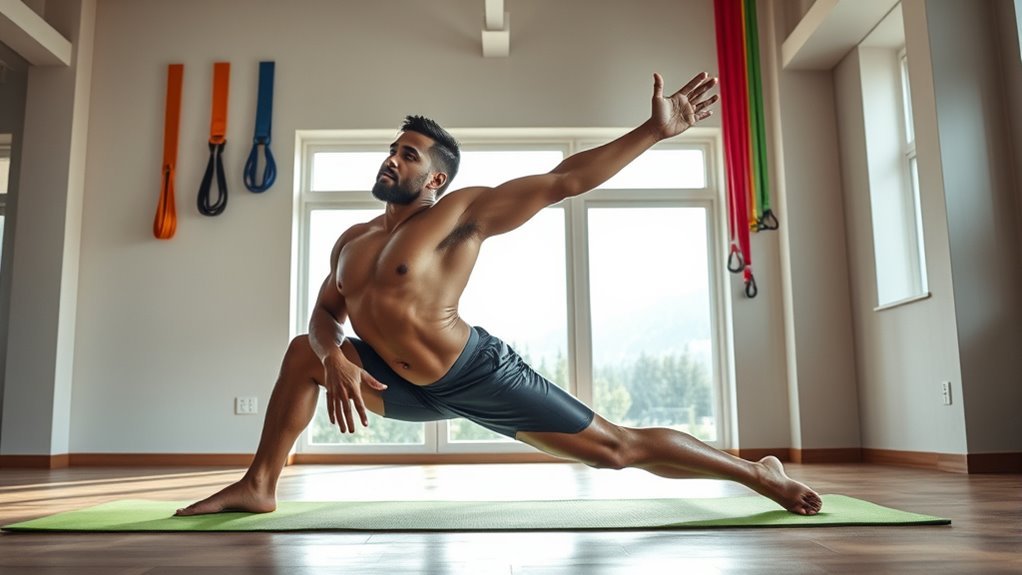
To increase flexibility without losing power, focus on dynamic stretching, strength training, and mobility drills. Incorporate dynamic stretches into your warm-up to improve range of motion and activate muscles. Strengthen through compound movements like squats and deadlifts while pairing them with flexibility exercises. Regular yoga or Pilates can enhance flexibility and stability. Combine these elements with proper recovery techniques for ideal results. Stick around, and you'll discover even more effective strategies to elevate your performance.
Understanding the Flexibility-Power Relationship
While many athletes believe that flexibility and power are opposing forces, understanding their relationship can actually help you enhance both. Flexibility isn't just about bending your limbs; it's the key to revealing potential and freedom in your movements. When your body's flexible, you can execute powerful movements more efficiently, reducing the risk of injury.
Think of flexibility as the canvas for your power. When you improve your range of motion, you're allowing your muscles to engage fully, translating energy into explosive performance. This freedom of movement can lead to better overall athleticism, giving you a competitive edge. Additionally, improved mobility training can enhance performance by allowing for smoother and more efficient movements.
Instead of viewing flexibility as a trade-off, embrace it as a complementary force. By integrating flexibility training into your routine, you'll find that power and flexibility can coexist, creating a harmonious balance that empowers your athletic pursuits. So, don't hold back—explore this connection and elevate your game!
Benefits of Increased Flexibility for Athletes
Incorporating increased flexibility into your training regimen can greatly enhance your athletic performance, as it allows for greater range of motion and improved movement efficiency. When you're more flexible, you can execute movements with fluidity, reducing the risk of injury and enhancing your overall freedom of movement. Here are some key benefits:
| Benefit | Description | Impact on Performance |
|---|---|---|
| Enhanced Mobility | Greater joint and muscle flexibility | Improved agility and speed |
| Injury Prevention | Reduced strain on muscles and joints | Longer, healthier athletic career |
| Improved Posture | Better body alignment | Increased power generation |
Embracing flexibility can transform not just how you move, but how you feel in your athletic pursuits. You'll enjoy the freedom to explore your limits and perform at your best, both in training and competition. Additionally, mobility training is essential for athletes to enhance overall performance and reduce the risk of injuries.
Dynamic Stretching: The Key to Flexibility and Power
To maximize the benefits of increased flexibility, dynamic stretching is a powerful tool that combines movement with stretching to enhance both flexibility and strength. Unlike static stretching, which can leave you feeling stiff, dynamic stretching engages your muscles through active movements, allowing your body to warm up and prepare for more intense activities. You can incorporate exercises like leg swings, arm circles, and walking lunges into your routine. These movements not only improve your range of motion but also boost your athletic performance by increasing blood flow and activating your muscles. Additionally, dynamic stretching prepares muscles and joints for action, enhancing flexibility and range of motion while elevating heart rate.
Incorporating Strength Training With Flexibility Exercises
As you aim to enhance your flexibility, integrating strength training into your routine can make a significant difference. By building strength while improving flexibility, you're not just gaining mobility but also enhancing your overall power and performance. Focus on compound movements like squats and deadlifts, which engage multiple muscle groups and promote flexibility in your hips, hamstrings, and lower back.
Pair these exercises with dynamic stretching or yoga to guarantee your muscles are both strong and supple. For instance, after a heavy lifting session, follow up with stretches that target the muscles you've worked, allowing them to recover and lengthen. This approach not only fosters a balanced physique but also minimizes the risk of injury. Additionally, incorporating functional mobility and flexibility drills into your training routine can help improve your overall athletic performance. Remember, it's about finding that sweet spot where strength and flexibility coexist, giving you the freedom to move with ease and confidence in any activity you choose.
Mobility Drills to Enhance Joint Range of Motion
Strength training lays a solid foundation for flexibility, but enhancing your joint range of motion requires specific mobility drills. These drills aren't just about stretching; they're designed to increase your body's freedom of movement. Start with dynamic warm-ups like leg swings and arm circles to activate your joints. Then, focus on targeted mobility exercises such as hip openers and thoracic rotations. These will not only enhance flexibility but also improve your overall athletic performance. A strong core stabilizes the body for powerful movements, which complements your enhanced joint mobility during physical activities.
Incorporate foam rolling to release tension in tight muscles, allowing for greater joint mobility. Remember, consistency is key; dedicate time to these drills regularly, and you'll notice the benefits in your everyday movements. By committing to mobility work, you're investing in your freedom of movement, enabling you to perform tasks with ease and confidence. Embrace these drills, and watch as your range of motion expands, allowing you to move through life more freely.
The Role of Yoga and Pilates in Building Flexibility
While many people associate yoga and Pilates with relaxation, both practices play an essential role in enhancing flexibility. You might find that incorporating these disciplines into your routine not only stretches your muscles but also deepens your body awareness. Through various poses and movements, you'll reveal tight areas, allowing for greater freedom in your range of motion.
Yoga emphasizes breath and alignment, helping you cultivate a mindful connection to your body. Each pose encourages lengthening and releasing tension, making it easier to move fluidly in your daily activities. Pilates, on the other hand, focuses on core strength and stability, which can support your flexibility goals. By engaging your core and using controlled movements, you'll promote a balanced body that moves with grace. Additionally, bodyweight exercises enhance flexibility and mobility, complementing the benefits of both yoga and Pilates.
Together, yoga and Pilates create a powerful synergy that enhances flexibility without compromising your strength, giving you the freedom to express your body's full potential.
Recovery Techniques for Maintaining Flexibility
To maintain flexibility effectively, incorporating recovery techniques into your routine is essential. These practices not only help you recover but also enhance your overall freedom of movement. By giving your body the care it needs, you'll keep your flexibility intact while feeling invigorated.
Incorporating recovery techniques into your routine is vital for maintaining flexibility and enhancing your freedom of movement.
- Foam Rolling: Breaks down muscle knots, promoting better blood flow.
- Gentle Stretching: Engages your muscles without overstressing them, keeping them pliable.
- Hydration: Keeps your muscles hydrated, reducing stiffness and enhancing flexibility.
- Restorative Yoga: Provides deep relaxation, allowing your body to recover and maintain elasticity. Incorporating foam rolling into your post-workout routine can significantly reduce soreness and stiffness.
Integrating these recovery techniques into your life can help you stay limber and ready for action. You'll not only feel great but also enjoy the freedom to move without restrictions. Embrace these practices, and watch your flexibility flourish!
Creating a Balanced Training Program for Flexibility and Power
After incorporating effective recovery techniques, it's important to focus on creating a balanced training program that prioritizes both flexibility and power. To achieve this, start by integrating dynamic stretches into your warm-up, which can enhance your range of motion while preparing your muscles for action. Follow this with strength training exercises like squats or deadlifts to build power.
Next, dedicate time to static stretching after your workouts. This'll help improve flexibility and prevent tightness. Consider incorporating yoga or Pilates sessions into your routine, as they promote both strength and flexibility. Additionally, ensure you include dynamic stretching in your warm-up routine to activate your muscles effectively.
Lastly, listen to your body. Adjust your training intensity based on how you feel, ensuring you maintain that freedom to move without restriction. By balancing these elements, you'll cultivate a body that's not only powerful but also fluid, allowing you to perform at your best in any activity.
Frequently Asked Questions
Can Flexibility Training Lead to Injuries if Not Done Correctly?
Imagine a dancer, graceful yet fragile; if flexibility training isn't approached mindfully, you could risk injury. Listen to your body's whispers, balance your movement, and embrace freedom without pushing too far into the unknown.
How Long Does It Typically Take to See Flexibility Improvements?
You might start noticing flexibility improvements within a few weeks of consistent practice. It really depends on your body and how often you train, but patience and commitment are key to revealing your full potential.
Are There Specific Diets That Help Enhance Flexibility?
Certain diets rich in omega-3 fatty acids, antioxidants, and hydration can support flexibility. Foods like fish, nuts, berries, and leafy greens help your body stay limber and responsive, creating a sense of freedom in movement.
Can Age Impact My Ability to Increase Flexibility?
You might think age limits your flexibility, but it doesn't have to. With consistent practice and the right techniques, you can experience freedom of movement at any age, embracing life's adventures without restriction or discomfort.
Is It Necessary to Warm up Before Flexibility Exercises?
Yes, it's necessary to warm up before flexibility exercises. Warming up increases blood flow, reduces injury risk, and prepares your muscles for stretching. You'll feel more comfortable and free during your flexibility routine, enhancing your overall experience.