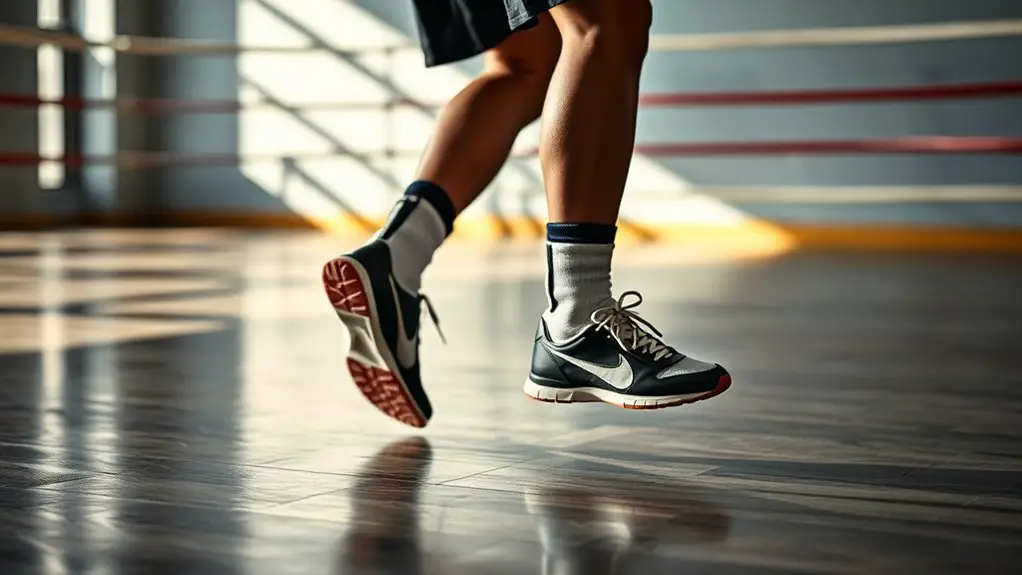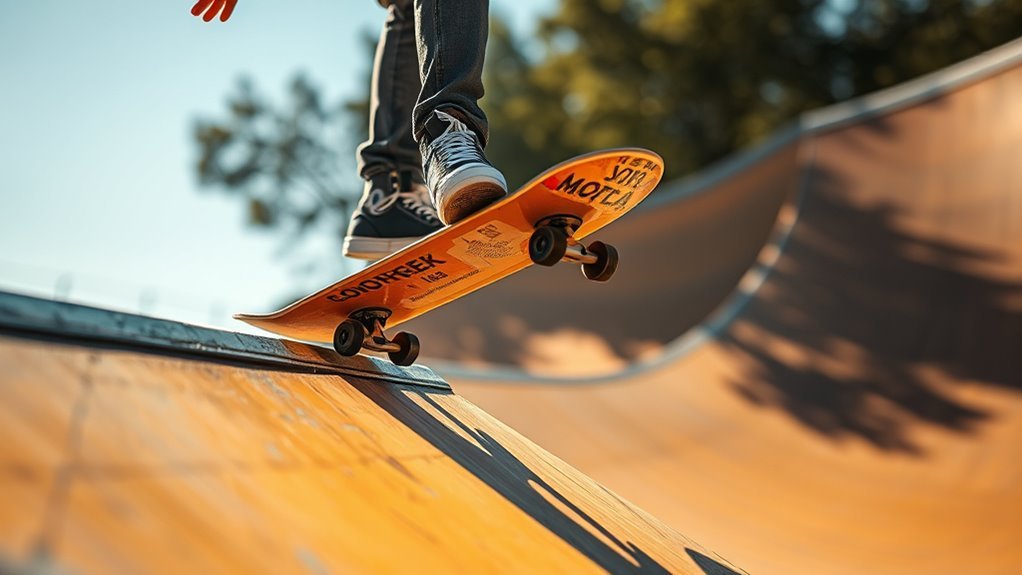
To improve your balance for skateboarding, focus on basic exercises like one-leg stands and practicing yoga poses such as the Tree Pose. Incorporate a balance board into your routine to enhance stability and spatial awareness. Strength training is key too; work on your core with planks and twists. Experiment on different surfaces, from grass to concrete, to challenge your skills. Plus, learning to fall safely will boost your confidence. There's more you can explore to elevate your balance skills.
Understanding the Importance of Balance in Skateboarding
Balance is the cornerstone of successful skateboarding. Without it, you're just a dreamer on four wheels, longing for the freedom of the open pavement. When you find your balance, you reveal a world where you can glide, carve, and perform tricks that feel almost magical. It's not just about standing upright; it's about feeling the board beneath your feet, knowing how to shift your weight to maintain control.
Every movement you make—whether you're accelerating, turning, or landing a trick—relies on this essential skill. If you want to experience the thrill of skateboarding fully, you need to connect with your board and trust your instincts. The more you understand balance, the more confidence you'll gain. This freedom allows you to express yourself creatively, turning the streets into your canvas. Embrace this journey, and you'll discover that balance isn't just a skill; it's an invitation to explore.
Basic Balance Exercises to Get Started
To master skateboarding, you need to strengthen your balance through specific exercises. Start with the classic one-leg stand; it's simple yet effective. Just lift one foot off the ground and hold it for as long as you can. Switch legs and repeat. Next, try balancing on a balance board or a wobble board. These tools challenge your stability and mimic the movements you'll encounter on your skateboard.
Another great exercise is the tree pose from yoga; it's all about finding your center. Stand tall, lift one foot, and place it against your inner thigh or calf while keeping your hands together at your chest. Don't forget to practice shifting your weight while standing still; rock back and forth on your feet to get used to the feeling. These basic exercises will lay a solid foundation so you can ride freely and confidently. Incorporating mobility training into your routine will further enhance your balance and overall performance. Get started, and feel the freedom flow!
Incorporating Yoga for Enhanced Stability
Incorporating yoga into your routine can considerably boost your skateboarding stability. You'll build core strength, enhance flexibility, and improve your balance through various poses. Plus, practicing mindfulness in your movements can help you stay centered while on your board. Engaging in yoga can also enhance focus, allowing you to make quicker, instinctive decisions while skateboarding.
Core Strength Development
A strong core is essential for improving your stability on a skateboard, and yoga is a fantastic way to develop that strength. By practicing specific poses, you'll not only enhance your core but also gain the freedom to maneuver your board with confidence.
| Yoga Pose | Core Benefit | Frequency |
|---|---|---|
| Plank | Builds endurance | 3-5 times/week |
| Boat Pose | Strengthens abdominals | 3-5 times/week |
| Warrior III | Engages stabilizers | 3-5 times/week |
Incorporating these poses into your routine will help you find your center of balance. Embrace the flow of your practice, and you'll notice improved control and freedom while skateboarding. Get on that mat and release your potential!
Flexibility and Balance
Flexibility plays an essential role in achieving balance on your skateboard, and yoga offers a perfect blend of both. By incorporating yoga into your routine, you not only enhance your flexibility but also improve your body awareness. Poses like downward dog and warrior help stretch and strengthen your muscles, allowing you to maneuver with grace and control. You'll find that increased flexibility leads to better stability on your board, making it easier to land tricks and maintain balance during your rides. Plus, the flowing movements of yoga can help you feel more connected to your body, giving you the freedom to express yourself on the skateboard. So, roll out your mat and start exploring the benefits of yoga today!
Mindfulness in Movement
While practicing skateboarding, being mindful of your movements can greatly enhance your stability. Incorporating yoga into your routine can help you connect with your body, improve balance, and boost overall performance. Here's a quick guide to some essential yoga poses that can enhance your skateboarding skills:
| Pose | Benefit | Duration |
|---|---|---|
| Tree Pose | Builds core strength | 30 seconds each side |
| Warrior II | Improves focus and balance | 30 seconds each side |
| Downward Dog | Stretches the spine | 1 minute |
| Chair Pose | Strengthens legs | 30 seconds |
| Bridge Pose | Opens hips and chest | 1 minute |
Using a Balance Board for Skill Development
Five minutes on a balance board can greatly enhance your skateboarding skills. This simple tool lets you practice balance in a controlled environment, making it easier to transfer that skill to your board. As you rock and roll on the board, your body learns to adjust and respond, helping you find that sweet spot of equilibrium.
Start with basic movements, like shifting your weight from side to side. As you gain confidence, try adding tricks or even turns to mimic the dynamic movements you'll use while skating. You'll feel more connected to your board and develop a stronger sense of spatial awareness.
Incorporating the balance board into your routine not only builds your balance but also boosts your overall comfort on the skateboard. So, grab one, pop it in your living room, and let it take your skateboarding to the next level. Freedom on the board starts with solid balance!
Strength Training for Core Stability
To enhance your skateboarding balance, focusing on core stability through strength training is essential. A strong core acts as your foundation, allowing you to maintain control and fluidity while riding. Start with exercises like planks and Russian twists, which target the muscles that help stabilize your body. Incorporate movements that engage your entire core—think of exercises like bicycle crunches and medicine ball throws.
Don't shy away from incorporating dynamic workouts, too; kettlebell swings and stability ball exercises can improve your core strength while mimicking the movements you'll use on your board. Aim for consistency, working on your core at least two to three times a week. A strong core also reduces injury risk by supporting the spine during exertion. Remember, a stable core means greater freedom on your skateboard, letting you push your limits and explore new tricks without fear of losing balance. So, embrace the grind and feel the difference as you ride!
Practicing on Different Surfaces
To really enhance your balance for skateboarding, it's important to practice on a variety of surfaces. Trying your skills on grass, concrete, and even uneven terrain can help you adapt to different conditions and improve your stability. Each surface presents unique challenges that can make you a more versatile skater.
Grass and Soft Surfaces
While practicing on grass and other soft surfaces might seem unconventional, it can greatly enhance your balance for skateboarding. The uneven terrain forces you to engage your core and adjust your stance constantly, mimicking the adjustments you'll need while riding. You'll discover how to shift your weight effectively, helping to build muscle memory.
Try rolling on a grassy hill or even just standing on your board in the yard, allowing yourself to feel the board beneath you without fear of falling hard. This freedom to experiment and wobble can boost your confidence. Plus, the softer landing means you can focus on your balance without worrying as much about spills. Embrace the grass, and watch your skills flourish!
Concrete and Asphalt
After getting comfortable on grass, it's time to tackle concrete and asphalt. These surfaces are where the real magic happens. Start by finding a smooth patch to practice your balance. You'll notice that the stability of concrete and asphalt lets you push your limits. Begin with gentle pushes, keeping your knees slightly bent and your weight centered. Feel the board beneath you; it's your ticket to freedom.
As you gain confidence, experiment with slight turns and shifts in weight. The more you ride, the more you'll connect with the pavement. Don't rush the process; let your body adapt to the speed and responsiveness of the surface. Embrace the thrill, and soon you'll be carving through the streets like a pro.
Uneven Terrain Practice
Once you're comfortable on smooth surfaces, challenging yourself on uneven terrain can greatly enhance your balance. Think about heading to a local park or finding a gravel path. Riding over bumps, grass, or even sand will force you to adjust your weight and stay centered. This kind of practice mimics real-world conditions, where you'll often encounter unpredictable surfaces. Start slow and focus on feeling the board's response beneath you. As you improve, try maneuvering around small obstacles or uneven curbs, which will sharpen your skills even further. Remember, it's all about pushing your limits and discovering how your body adapts. Embrace the freedom of movement, and let each ride on uneven terrain elevate your balance and confidence!
Learning to Fall Safely
Learning to fall safely is just as important as mastering tricks on your skateboard. When you're cruising and pushing your limits, spills are bound to happen. But how you fall can make all the difference. Instead of bracing yourself with your arms, try rolling to distribute the impact. This technique not only protects your wrists but also helps you regain your balance faster.
Keep your knees bent and your body relaxed; stiffening up can lead to injuries. If you sense a fall coming, lean into it rather than fighting it. Practice this on soft surfaces before hitting the pavement, so it feels more natural.
You want to embrace the thrill of skateboarding, and learning to fall safely gives you the confidence to push your boundaries without fear. Remember, every skater has fallen—it's part of the journey, so don't let it hold you back from experiencing the freedom of skateboarding.
Regularly Assessing Your Progress
Falling safely is only one part of your skateboarding journey; evaluating your progress is just as important. Regular assessments help you stay in tune with your balance and skills, ultimately leading you to freedom on your board. Here's how to keep track of your growth:
Evaluating your progress is crucial for mastering skateboarding and achieving balance and freedom on your board.
- Set Goals: Identify specific skills or tricks you want to master.
- Keep a Journal: Write down what you practice and how you feel after each session.
- Record Videos: Film yourself skating to visually see improvements and areas to work on.
- Seek Feedback: Ask friends or fellow skaters for their thoughts on your technique.
Frequently Asked Questions
How Can I Improve My Balance Without a Skateboard?
Balance builds bravery! To enhance your equilibrium without a skateboard, try yoga, practice Pilates, or engage in balance exercises like standing on one leg. These activities can cultivate confidence, coordination, and a sense of freedom in movement!
What Are Common Mistakes Beginners Make in Balance Training?
When you're starting balance training, don't rush progress or neglect core strength. Overlooking proper posture and failing to practice consistently can hinder your growth. Embrace the journey, and enjoy discovering your body's potential!
How Does Diet Affect Balance and Stability in Skateboarding?
Ever wondered how what you eat influences your stability? A balanced diet fuels your body, enhancing muscle function and coordination. When you're well-nourished, you'll naturally feel more grounded, ready to conquer any challenge that comes your way.
Can Age Impact My Ability to Improve Balance?
Yes, age can impact your balance abilities. With time, your body may lose some flexibility and strength, but you can still enhance your balance through practice and dedication, regardless of your age. Stay active and enjoy!
How Often Should I Practice Balance Exercises for Best Results?
To see real progress, you should practice balance exercises several times a week. Consistency's key, so integrate them into your routine. Even short sessions can lead to significant improvements over time, giving you more freedom on your board.