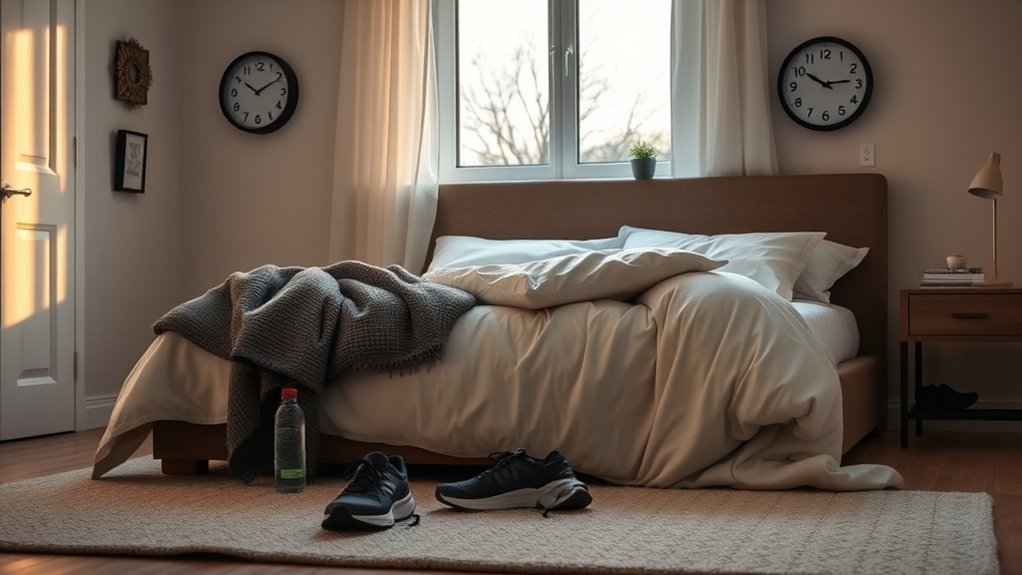
To optimize your athletic recovery, prioritize sleep by sticking to a consistent schedule. Create a sleep-inducing environment with blackout curtains and a cool room temperature. Limit screen time at least an hour before bed to improve sleep quality. Incorporate relaxation techniques like deep breathing or gentle yoga to soothe your mind and body. Also, monitor your caffeine and alcohol intake, as these can disrupt restful sleep. There's more to explore about enhancing your recovery through sleep habits.
Understanding the Importance of Sleep for Athletes
When you're pushing your body to its limits, it's easy to overlook sleep, but it plays an essential role in athletic recovery. Quality sleep restores your energy, repairs muscles, and enhances overall performance. Without it, you might find your focus waning and your endurance slipping. Think of sleep as your body's natural reset button, allowing you to tackle each day with renewed vigor. It's not just about quantity; the quality of sleep matters too. Deep sleep stages promote growth hormone release, important for healing and muscle growth. So, if you want to release your full potential, prioritize sleep. Embrace it as a critical part of your training regimen, and you'll enjoy the freedom of peak performance and enhanced recovery.
Establishing a Consistent Sleep Schedule
To maximize your recovery and performance, establishing a consistent sleep schedule is essential. Your body thrives on routine, and going to bed and waking up at the same time each day helps regulate your internal clock. This consistency can make falling asleep easier and improve the quality of your rest. You might feel tempted to stay up late or sleep in, but those habits can disrupt your sleep patterns. Instead, aim for a balance that allows you to enjoy your freedom while prioritizing recovery. Consider setting a bedtime that accommodates your training and daily activities, making it easier to wake up refreshed. With a consistent schedule, you'll not only enhance your recovery but also boost your overall athletic performance.
Creating a Sleep-Inducing Environment
Creating a sleep-inducing environment is essential for promoting restorative rest, especially after intense training sessions. To enhance your sleep quality, consider these key elements:
| Element | Tips |
|---|---|
| Lighting | Use blackout curtains to block out light. |
| Temperature | Keep your room cool between 60-67°F (15-19°C). |
| Noise Control | Use white noise machines or earplugs to minimize disturbances. |
Limiting Screen Time Before Bed
A well-designed sleep environment sets the stage for restorative rest, but it's equally important to contemplate what you do before hitting the pillow. Limiting screen time before bed is essential for enhancing your sleep quality. The blue light emitted by phones, tablets, and TVs can disrupt your natural sleep cycle, making it harder to drift off. Instead of scrolling or binge-watching, consider unplugging at least an hour prior to bedtime. This gives your mind a chance to unwind and prepares your body for deeper sleep. You'll not only feel more refreshed but also recover better for your next athletic challenge. Embrace the freedom that comes with a restful night, and let go of those screens to truly recharge.
Incorporating Relaxation Techniques
While you might already be prioritizing sleep, incorporating relaxation techniques can further enhance your recovery. Techniques like deep breathing, progressive muscle relaxation, or gentle yoga can help ease tension and promote a restful state. Find what resonates with you—whether it's listening to calming music, practicing mindfulness, or indulging in a warm bath. These practices can shift your focus away from daily stresses, allowing your body to unwind. Consider setting aside a few minutes each day for these activities, creating a sacred space just for you. The freedom to choose your preferred method can make all the difference, as you not only improve your sleep quality but also nurture your overall well-being. Embrace these moments; your body will thank you.
Monitoring Caffeine and Alcohol Intake
Since both caffeine and alcohol can greatly impact your sleep quality, it's crucial to monitor your intake, especially during periods of intense training. Caffeine can keep you alert, but too much can disrupt your sleep cycle. On the other hand, while alcohol might help you fall asleep faster, it often leads to restless nights. Here's a quick guide to help you balance your enjoyment with your recovery needs:
| Time of Day | Caffeine (mg) | Alcohol (drinks) |
|---|---|---|
| Morning | 0-200 | 0 |
| Afternoon | 0-100 | 1 |
| Evening | 0 | 0-1 |
| Night | 0 | 0 |
| Recovery Days | 0-100 | 1-2 |
Being mindful of your consumption can enhance your recovery!
The Role of Napping in Recovery
Napping can be a game-changer for your recovery, especially when you've pushed your body to its limits during training. A well-timed nap can recharge your energy levels, enhance your focus, and speed up muscle repair. Just a short 20-30 minute snooze can help you shake off fatigue and boost your performance for the rest of the day. It's not about sleeping for hours; it's about giving your body a quick reset. Don't underestimate the power of a nap—it's a simple way to let your body heal and recover without sacrificing your freedom to train hard. Listen to your body; when it craves a break, embrace the nap and release greater potential in your athletic journey.
Prioritizing Quality Over Quantity
When it comes to sleep, focusing on quality rather than quantity can greatly impact your athletic recovery. You might get eight hours, but if it's restless, your body won't reap the benefits. Prioritize deep sleep cycles to enhance muscle repair and cognitive function.
Here's a quick comparison:
| Quality Sleep Benefits | Quantity Myths |
|---|---|
| Boosts recovery | More hours equals better sleep |
| Enhances performance | Sleep debt doesn't matter |
| Improves focus | Late bedtimes are fine |
| Increases energy | Snoozing is always good |
| Supports immune function | Naps can replace nightly sleep |
Listening to Your Body's Needs
Understanding your body's signals is key to optimizing recovery. You've got to listen when your body tells you it needs rest, nourishment, or movement. Ignoring these cues can lead to burnout or injury. Pay attention to how you feel after workouts and adjust your sleep accordingly. If you're waking up fatigued or sore, your body might be craving more recovery time. Embrace the freedom to take a rest day or adjust your training intensity. It's all about finding that balance that works for you. Remember, everyone's needs are different, so don't compare yourself to others. Trust your instincts, and give your body what it needs. You'll not only recover better but also enhance your performance in the long run.
Frequently Asked Questions
How Does Sleep Affect Muscle Recovery and Growth?
When you sleep, your body repairs muscle tissues and releases growth hormones. If you don't get enough rest, you're limiting recovery and growth, making it harder to reach your fitness goals and feel your best.
Can Sleep Deprivation Impact Athletic Performance Significantly?
Yes, sleep deprivation can markedly impact your athletic performance. It affects your focus, reaction time, and endurance, making it harder to achieve your goals. Prioritizing restful sleep is essential for maintaining peak performance levels.
What Are the Best Sleep Positions for Athletes?
Did you know 70% of athletes report better performance with side sleeping? When you're looking for ideal rest, try curling up on your side. It promotes airflow and reduces pressure points, helping you feel more refreshed.
Is It Beneficial to Use Sleep Supplements for Recovery?
Using sleep supplements can be beneficial, but it's important to choose wisely. You'll want to guarantee they're safe and effective for your needs, enhancing your recovery without disrupting your natural sleep patterns.
How Do Age and Gender Influence Sleep Needs for Athletes?
Age shapes your sleep duration; younger athletes need more rest, while older ones might require less. Gender influences sleep patterns; women often experience different sleep cycles than men, affecting overall recovery and performance.