Sand training is an excellent way to boost your soccer performance. It enhances strength, agility, and endurance while reducing injury risk. You'll want to invest in training shoes for better traction and bring a water bottle for hydration. Warm up with a light jog and dynamic stretches. Incorporate bodyweight exercises and agility drills to make the most of your workout. By embracing this unique training method, you'll prepare yourself for impressive gains on the field. There's much more to explore!
Benefits of Sand Training for Soccer Players
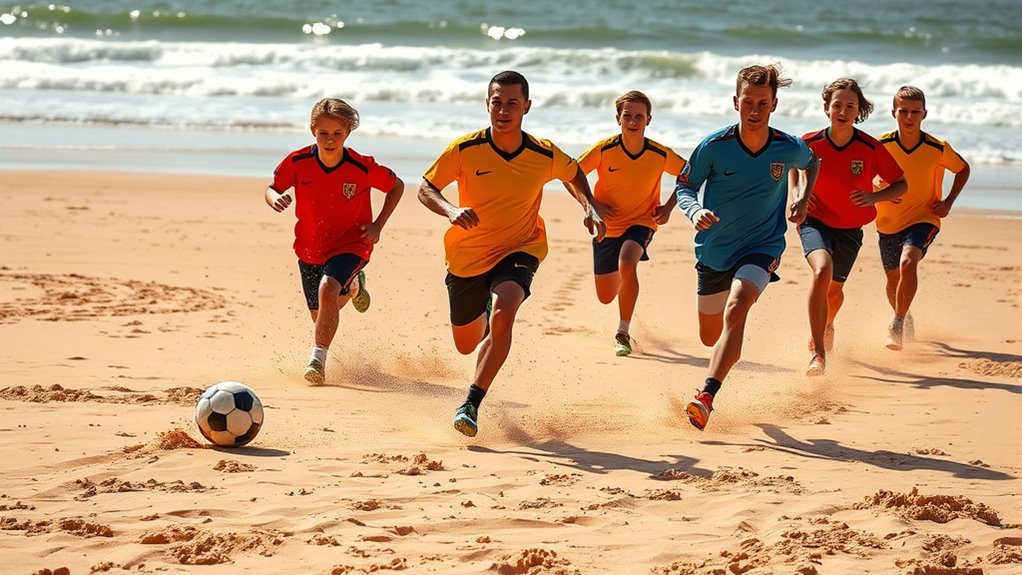
When you train on sand, not only do you enhance your strength and endurance, but you also improve your agility and coordination. The uneven surface forces your muscles to work harder, leading to increased power and stability in your movements. You'll notice that your footwork becomes sharper, giving you that extra edge on the field. Sand training also reduces the risk of injury, as the softer surface absorbs impact better than harder ground. Plus, it's a revitalizing change from the usual routine, allowing you to connect with nature and enjoy the freedom of open spaces. Embracing this unique training method can elevate your game, making you faster and more resilient when it matters most. So, why not take your training to the beach?
Essential Equipment for Sand Workouts
To get the most out of your sand workouts, having the right equipment is essential. Start with a good pair of training shoes designed for sand; they'll provide traction and support without weighing you down. A resistance band can also be a game-changer, helping you build strength and flexibility. Don't forget a water bottle to stay hydrated; training in sand can be tougher than it looks. A soccer ball is vital for keeping your skills sharp, and cones can help you set up drills or mark distances. Finally, consider a mat or towel to stretch on after your workout. With the right gear, you'll elevate your training, embracing the freedom and challenge that sand workouts offer!
Warm-Up Exercises for Sand Training
Before diving into intense sand workouts, it's crucial to warm up properly to prevent injuries and enhance performance. Begin with a light jog along the shoreline, letting the soft sand cushion your feet. Follow this with dynamic stretches—think arm circles, leg swings, and walking lunges—to get your muscles ready. Incorporate high knees and butt kicks to elevate your heart rate and activate your legs. You might also find it beneficial to do some quick footwork drills, like side shuffles, to engage your lateral movements. This warm-up not only prepares your body but also primes your mind for the freedom you'll experience during your sand training. Embrace the energy, and you'll be ready to tackle any challenge that comes your way!
Strength and Conditioning Drills in Sand
While sand training offers a unique challenge, incorporating strength and conditioning drills can greatly enhance your performance on the field. Start with bodyweight exercises like push-ups and squats; the resistance of the sand intensifies these movements, building strength. You can also try lunges, ensuring each step sinks into the sand for added resistance. Next, integrate resistance bands for exercises like lateral walks or overhead presses, targeting key muscle groups while improving stability. Don't forget to include core workouts, like planks or Russian twists, to develop your overall balance and power. Finally, consider incorporating sprint intervals, as the soft surface forces your muscles to engage more, ultimately boosting your strength. Embrace the challenge, and watch your game elevate!
Agility and Coordination Workouts on Sand
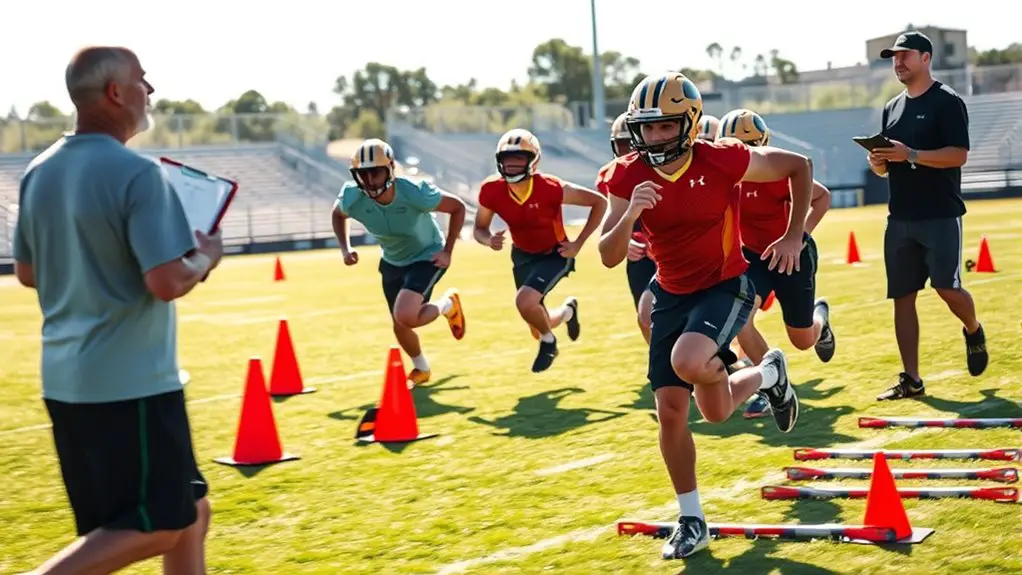
Agility and coordination workouts on sand can greatly improve your footwork and reaction time, making them essential for soccer players. The soft, unstable surface forces you to engage your core and stabilizing muscles, enhancing your overall agility. Start with quick lateral shuffles, focusing on sharp changes in direction. Incorporate cone drills to practice sprinting and stopping, helping you develop better control.
Try ladder drills on the sand for foot speed, or set up hurdles for explosive jumps. These workouts not only build strength but also improve your balance and coordination. Embrace the challenge of the sand; it'll push your limits, leading to greater freedom of movement on the field. Let your creativity flow as you design your unique agility routine!
Recovery and Cool Down After Sand Training
After an intense sand training session, it is crucial to focus on recovery and cool down to prevent injury and aid muscle repair. Start by walking or jogging lightly for a few minutes on the sand to gradually lower your heart rate. Next, stretch those muscles that worked hard—think hamstrings, quads, and calves. Hold each stretch for about 20-30 seconds, feeling that gentle release. Hydration's key, so drink plenty of water to replenish lost fluids. Consider using a foam roller to massage sore spots, easing tension and improving blood flow. Finally, treat yourself to some relaxation techniques, like deep breathing or meditation, to bring your body and mind back to balance. Embrace this time; your body deserves it!
Frequently Asked Questions
How Often Should I Do Sand Training Each Week?
You should aim for sand training two to three times a week. This frequency lets you build strength and endurance without overdoing it. Listen to your body, and adjust as needed to avoid injury.
Can Sand Training Prevent Soccer Injuries?
Yes, sand training can help prevent soccer injuries. It strengthens muscles and improves stability, reducing the risk of strains and sprains. Just remember to balance it with other training to avoid overuse injuries.
Is Sand Training Suitable for Beginners?
Absolutely, sand training can be great for beginners! It offers a softer surface, reducing impact on joints while building strength. Just start slow, listen to your body, and enjoy the freedom of movement it provides.
What Type of Sand Is Best for Training?
When it comes to choosing sand, you'll want the soft, fine variety—it's like running on clouds. It'll give you that freedom to push your limits while minimizing the chance of injury. Enjoy the challenge!
How Can I Track My Progress in Sand Training?
To track your progress in sand training, keep a workout journal. Note distances, times, and techniques. Regularly review your entries to see improvements and adjust your routine for continued growth and freedom in your training.