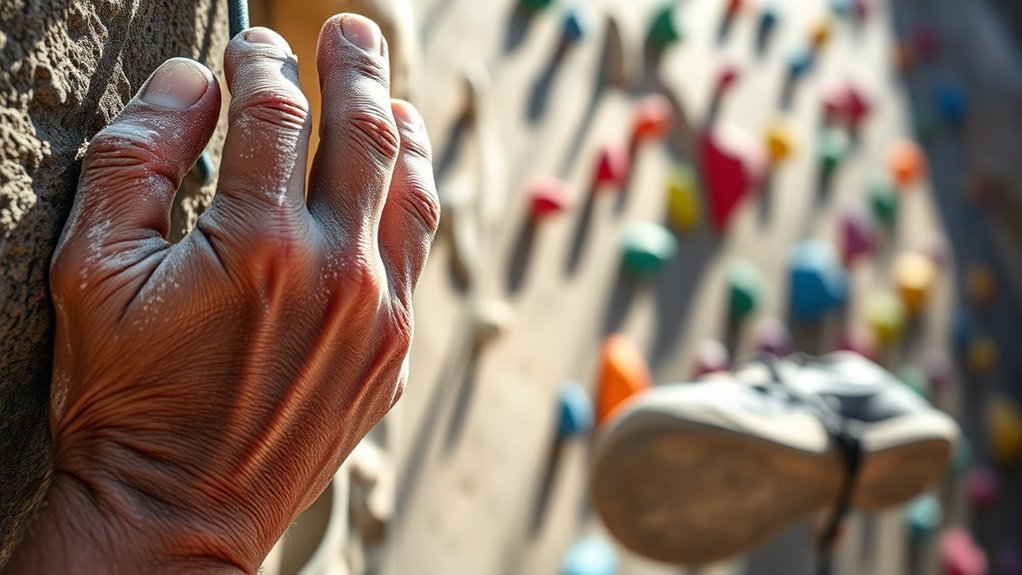
To improve your grip strength for rock climbing, incorporate specific exercises like dead hangs and fingerboard training. Use grip trainers and tools, and focus on warm-up routines to prevent injuries. Strengthening your forearms is key, so try endurance exercises as well. Don't forget to maintain proper nutrition and recovery practices to support muscle growth. By committing to a consistent regimen, you'll see significant progress, and there's more to discover to enhance your training further.
Understanding Grip Strength and Its Importance in Climbing
Grip strength is an essential element in rock climbing, often determining your success on the wall. It's not just about pulling yourself up; it's about holding on, finding your balance, and moving fluidly. A powerful grip allows you to conquer challenging routes and embrace the freedom of climbing without fear of slipping. When you strengthen your grip, you're empowering yourself to explore heights you might've thought were out of reach. Plus, it enhances your overall endurance, making every ascent feel more fluid and natural. By investing time in grip strength, you're not just improving your climbing skills; you're revealing a deeper connection with the rock, the movement, and the exhilarating experience of scaling new heights. So get ready to embrace the climb!
Types of Grip Used in Rock Climbing
When you're climbing, understanding the different types of grips can greatly enhance your performance on the wall. Each grip has its unique application, and mastering them can make your climbs more efficient and enjoyable. Here's a quick look at some common grips:
| Grip Type | Description |
|---|---|
| Crimp | Fingers bent, maximizing contact |
| Open-Hand | Palms flat, using the entire hand |
| Pinch | Squeezing with thumb and fingers |
| Sloper | Smooth holds requiring body tension |
| Jug | Large, easy-to-hold grips |
Warm-Up Exercises for Grip Strength
Before you tackle those challenging climbs, incorporating warm-up exercises specifically for grip strength can make a significant difference in your performance and prevent injuries. Start with wrist rolls to loosen up your joints, then move to finger stretchers or rubber bands to engage your fingers and improve dexterity. Try hanging from a pull-up bar for short bursts; it builds strength while mimicking climbing grips. You can also perform dead hangs on a climbing holds board, focusing on maintaining a relaxed grip. Don't forget to mix in some forearm stretches to keep everything limber. These warm-ups not only enhance your grip but also prepare your body for the freedom of movement you'll experience on the rock face. Enjoy your climbs!
Fingerboard Training Techniques
Mastering fingerboard training techniques can elevate your rock climbing performance considerably. Incorporating specific holds into your routine will boost your grip strength and endurance. Start with basic dead hangs and gradually progress to more challenging grips.
Here's a quick overview of effective fingerboard techniques:
| Technique | Duration |
|---|---|
| Dead Hangs | 10-20 seconds |
| One-Handed Hangs | 5-10 seconds per hand |
| Repeaters | 7 seconds on, 3 seconds off for 6 reps |
Remember to focus on form and engage your core to avoid injury. Consistency is key, so integrate these techniques into your training regimen, and you'll feel the freedom of climbing at your best!
Using Grip Trainers and Tools
Grip trainers and tools can greatly enhance your grip strength for rock climbing. These handy devices can fit right into your lifestyle, allowing you to train anytime, anywhere. From simple hand grippers to more specialized tools like fingerboards and pinch blocks, each offers a unique way to build strength and endurance. You'll find that incorporating these tools into your routine can make a noticeable difference in your climbing performance. Plus, they're great for warming up before a climb or recovering after a tough session. Remember, the key is consistency. By regularly using grip trainers and tools, you'll unleash the potential to tackle those challenging routes that once felt out of reach. Embrace the freedom to climb higher!
Incorporating Climbing-Specific Exercises
Although using grip trainers is effective, incorporating climbing-specific exercises into your routine can take your strength to the next level. Try practicing dead hangs on a pull-up bar or your climbing wall; hang for time to build endurance and grip strength. Consider doing campus board workouts to develop explosive power. Additionally, work on your footwork and body positioning by traversing sideways on the wall, which requires you to engage your grip actively. Don't forget to include dynamic movements like dynamic reaches or lock-offs to mimic real climbing scenarios. These exercises not only enhance grip strength but also improve your overall climbing technique, allowing you to feel more free and confident on the rock face. Embrace the journey—your hands will thank you!
Building Forearm Strength for Better Grip
Building forearm strength is essential for enhancing your grip in rock climbing. Strong forearms give you the endurance and control needed to tackle challenging routes. Start with exercises like wrist curls and reverse wrist curls to target different muscle groups. You can also use a grip trainer or a stress ball to improve your grip strength directly. Incorporating pull-ups and hanging from a bar or your climbing holds will further develop your forearm muscles. Remember to mix in some climbing-specific drills, like traversing or bouldering, to keep it fun and engaging. Consistency is key—aim for a balanced routine that fits your schedule. Strong forearms will empower you to climb with confidence and freedom!
Techniques for Improving Endurance
To climb efficiently for longer periods, you'll need to develop your endurance alongside your grip strength. Start by incorporating interval training into your climbing sessions. Try climbing for a set time—like three minutes—followed by a one-minute rest. This simulates the demands of climbing while building stamina. Additionally, practice traversing easier routes at a steady pace; this helps you maintain grip while keeping your heart rate up. Another useful method is to use a hangboard with timed intervals, focusing on grip position and endurance. Finally, don't shy away from cross-training activities like swimming or running, as they enhance overall cardiovascular fitness, which translates to longer climbs. Embrace these techniques, and you'll find the freedom to climb without fatigue holding you back.
Nutrition and Recovery for Grip Strength
After enhancing your endurance, it's time to focus on how nutrition and recovery play an essential role in improving grip strength. Eating a balanced diet rich in protein, healthy fats, and complex carbs fuels your body for climbing. Foods like lean meats, nuts, and whole grains can help repair muscle tissue and build strength. Don't forget to hydrate; water keeps your muscles functioning at their best.
Recovery is just as important. Incorporate rest days into your training to give your muscles time to heal and grow stronger. Stretching and foam rolling can alleviate tension and prevent injury. Prioritize sleep, as it's during this time that your body does most of its recovery work. Remember, your grip strength journey thrives on proper nutrition and recovery!
Tracking Progress and Setting Goals
Setting clear goals and tracking your progress is essential for improving grip strength in rock climbing. When you know where you're headed, it becomes easier to break down the journey into manageable steps. Here's how to effectively track your progress and set goals:
Setting clear goals and tracking progress are crucial for enhancing grip strength in rock climbing, making your training journey more manageable.
- Establish specific grip strength goals: Decide on the types of grips or holds you want to improve.
- Keep a training log: Record your workouts, weights, and techniques.
- Regularly assess your performance: Test your grip strength every month.
- Adjust your goals as needed: Don't hesitate to revise them based on your progress.
- Celebrate small victories: Acknowledge your improvements, no matter how minor.
Frequently Asked Questions
How Often Should I Train Grip Strength Each Week?
You might think training grip strength requires endless hours, but just two to three times a week can work wonders. Balance it with other activities, and you'll feel free and strong in no time.
Can Poor Grip Strength Lead to Climbing Injuries?
Yes, poor grip strength can definitely lead to climbing injuries. If you can't hold onto holds securely, you might overcompensate, straining your muscles and joints. Strengthening your grip will help you climb safer and enjoyably.
What Are Common Grip Strength Training Mistakes?
You might overlook proper warm-ups, thinking they're unnecessary. Ignoring rest days can lead to burnout, too. Also, focusing solely on one grip type can limit your overall strength. Balance and variety are key for effective training.
Is It Possible to Overtrain Grip Strength?
Like a river's current, pushing too hard can lead to erosion. Yes, you can overtrain grip strength; it's essential to listen to your body, rest, and let those muscles rejuvenate for true freedom in your pursuits.
How Does Body Weight Affect Grip Strength?
Body weight can influence your grip strength; as you gain or lose weight, your muscles adapt. If you're lighter, you might find it easier to lift yourself, but heavier weights can build more strength over time.