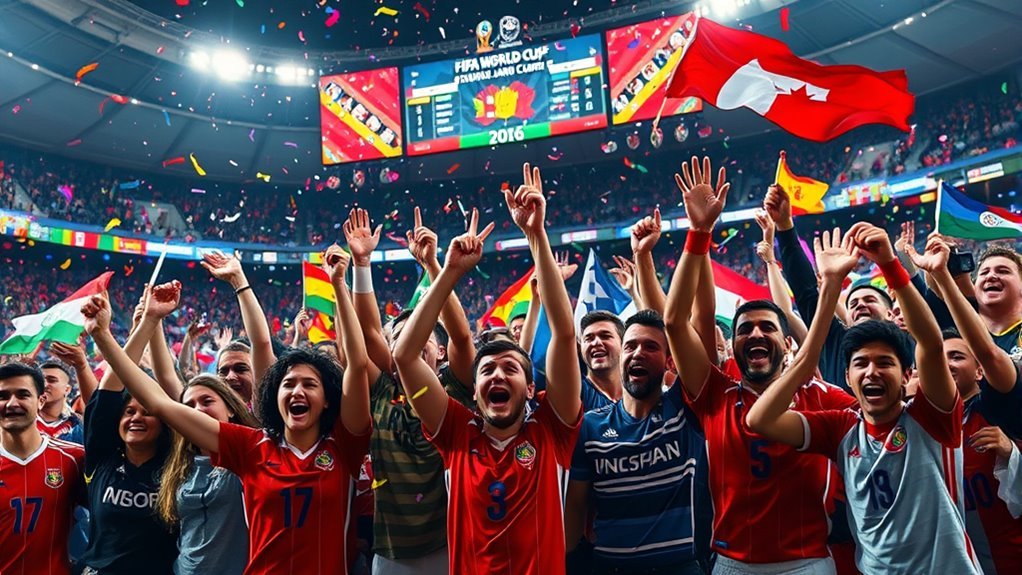
As of now, the FIFA World Cup 2026 will feature 48 teams, including the United States, Canada, and Mexico, which automatically qualify as host nations. Various other national teams are battling through the qualification process, showcasing their skills and determination. You can expect surprising upsets and fierce competition along the way. If you’re curious about the other teams and players set to shine, there’s much more to discover!
Overview of the Qualification Process
When it comes to the FIFA World Cup 2026 qualifications, understanding the process is essential for fans and teams alike. The qualification criteria vary by confederation, but each team must demonstrate skill, determination, and teamwork to secure their spot. The tournament format for 2026 is expanding, allowing more teams to compete, which means the stakes are higher.
Each confederation will have its own set of matches leading up to the tournament, and these matches are vital for teams aiming to prove their worth. You’ll see a mix of home and away games, with points awarded for wins and draws. The excitement builds as teams endeavor to meet the criteria, showcasing their talent and ambition.
Host Nations and Automatic Qualifications
The FIFA World Cup 2026 will feature a unique aspect with its host nations, the United States, Canada, and Mexico, automatically qualifying for the tournament. This decision reflects the host nation dynamics that aim to enhance the excitement and accessibility of the event. By granting automatic qualifications, FIFA recognizes the immense effort these countries put into hosting such a monumental competition.
This approach also fosters a sense of unity among the nations, as they’ll work together to create an unforgettable experience for fans and players alike. With the automatic qualification criteria in place, these nations can focus on showcasing their cultures and the passion they have for soccer, rather than stressing over qualifying matches. It’s an opportunity for each nation to display their talent on the world stage, igniting their fans’ spirit and pushing for memorable moments in the tournament.
Key Matches in the Qualification Stages
As you follow the qualification stages for the 2026 World Cup, you’ll notice some key matches that could shape the tournament’s landscape. From thrilling playoff encounters to surprising upsets, every game can change a team’s fate. Let’s explore these pivotal moments that capture the excitement of the journey to the World Cup.
Crucial Playoff Encounters
While many teams have already secured their spots in the FIFA World Cup 2026, several essential playoff encounters loom on the horizon, adding an extra layer of excitement to the qualification stages. These matches are where playoff intensity rises, and every moment counts. You’ll witness teams employing tactical strategies that reflect their unique strengths and weaknesses. Coaches will push the limits, adapting their game plans on the fly, while players dig deep, fueled by the hunger for glory. Each play, each decision can pivot the course of their dreams. As fans, you’ll feel the electric atmosphere, knowing everything is on the line. These significant encounters are the essence of what makes football so thrilling, showcasing the relentless pursuit of freedom through sport.
Surprising Upsets Noted
In the heat of the qualification stages, unexpected results have kept fans on the edge of their seats. Who could’ve predicted the stunning triumphs from underdog teams that shook the football world? You probably watched in disbelief as lesser-known nations secured crucial victories against traditional powerhouses, igniting wild fan reactions. These unexpected triumphs not only shifted group dynamics but also inspired hope among supporters who yearn for a fresh narrative. The excitement sparked in stadiums and living rooms alike proved that football’s unpredictable nature is what makes the game so thrilling. As you reflect on these surprising upsets, you can’t help but wonder what’s next. The stage is set for an unforgettable World Cup, filled with potential for even more surprises.
Notable Teams That Have Qualified
Notably, several powerhouse teams have secured their spots for the FIFA World Cup 2026, setting the stage for an exciting tournament. The qualified nations include traditional giants and some unexpected entries that’ll surely spice things up. Here’s what you can look forward to:
Exciting times ahead as powerhouse teams secure their spots for FIFA World Cup 2026, promising thrilling competition and surprises!
- Brazil: Always a favorite, they bring flair and skill.
- Germany: Known for their tactical prowess, they aim to reclaim glory.
- Argentina: With a rich history and a strong squad, they’re a force to reckon with.
- USA: As hosts, they’re ready to make a mark on home soil.
These teams not only represent high-level talent but also embody the spirit of competition. As fans, you’ll want to keep an eye on how these nations perform and see if any surprises emerge, especially with those unexpected entries shaking things up. The excitement is building, and the world will be watching!
Surprising Upsets and Dark Horses
As the qualification matches unfold, fans can’t help but keep an eye out for surprising upsets and dark horses that could shake up the tournament. It’s always thrilling to witness those unexpected victories that flip the script, sending shockwaves through the football world. Remember the underdog stories from past tournaments? They remind us that anything’s possible when it comes to the beautiful game.
Teams that might not have the star power or resources often rise to the occasion, proving that grit and determination can lead to remarkable feats. These squads inspire fans everywhere, showcasing the spirit of competition. Whether it’s a smaller nation taking down a football giant or a lesser-known player stepping into the spotlight, the unpredictability of the qualifiers keeps you on the edge of your seat. So, keep your eyes peeled; the next great underdog story could be just around the corner, ready to surprise us all.
Regional Qualification Highlights
As we turn our attention to regional qualification highlights, you’ll see how North American teams are gearing up for a historic tournament on home soil. The UEFA qualification process is shaping up with intense matchups, while updates from the AFC and CAF are bringing surprises to the mix. Get ready to explore how these regional battles are unfolding!
North America Teams
While the excitement builds for the 2026 FIFA World Cup, the journey for North American teams to secure their spots has already begun. With Canada Soccer, Mexico Football, and USA Soccer in the mix, the CONCACAF strength is undeniable. The regional rivalry fuels their passion and drive, making every match intense. Here are some key highlights:
- Canada’s rising talent showcasing potential on the international stage.
- Mexico’s experienced squad aiming for a strong comeback.
- USA’s youth development pushing boundaries and expectations.
- The ongoing North American rivalry that brings fans together.
As these teams battle it out, regional development will play a vital role in shaping the future of football in North America. You won’t want to miss this thrilling journey!
UEFA Qualification Process
With North American teams fiercely competing for their World Cup spots, Europe’s qualification process also brings its own set of challenges and excitement. The UEFA qualification system is complex and competitive, with teams battling it out for a limited number of spots. You’ll find that the UEFA ranking plays an essential role, influencing seedings and matchups. It’s not just the top-tier nations that shine; there are often qualification surprises from underdog teams that defy the odds. Every match is a chance for glory or heartbreak, and fans enthusiastically watch as their favorites work hard to secure a place in the prestigious tournament. This journey showcases not just skill, but the resilience and passion that keeps European football alive.
AFC and CAF Updates
The excitement surrounding the AFC and CAF qualification processes continues to grow, as teams from Asia and Africa vie for their chance to compete on the world stage. Here’s what you need to know about the latest AFC developments and CAF standings:
- AFC developments: Several teams have shown impressive form, with surprises in match outcomes.
- CAF standings: The battle for spots is heating up, making every match essential.
- Top teams: Traditional powerhouses are pushing hard, but emerging nations are challenging the status quo.
- Upcoming matches: Key fixtures are set to determine which teams will advance, keeping fans on the edge of their seats.
With each game, the stakes rise, and the passion for football unites millions across continents. Don’t miss the action!
Impact of Expansion to 48 Teams
As FIFA expands the World Cup to 48 teams, it’s essential to contemplate the implications this change brings to the tournament’s competitive balance and global representation. The new tournament format can greatly impact team dynamics, allowing more nations to participate, which could lead to unexpected outcomes and thrilling matches.
| Advantage | Challenge |
|---|---|
| Increased global representation | Potential dilution of talent |
| More competitive matches | Longer tournament duration |
| Opportunities for emerging teams | Unpredictable team dynamics |
| Enhanced fan engagement | Logistical complexities |
This expansion can empower underrepresented nations, giving them a platform to showcase their talent. However, it also raises questions about maintaining the quality of play. As you follow the journey of your favorite teams, keep an eye on how these dynamics evolve throughout the tournament.
Players to Watch From Qualified Teams
As the World Cup approaches, you’ll want to keep an eye on some rising stars and key players from the teams that qualified. These athletes have shown incredible talent and could make a significant impact on their national squads. Identifying them now will help you appreciate the excitement they’ll bring to the tournament.
Rising Stars to Monitor
With over 30 teams already securing their spots for the 2026 FIFA World Cup, a new generation of talent is ready to shine on the global stage. You’ll want to keep an eye on these emerging talents, as they could become future stars:
- Jude Bellingham (England): A midfield maestro with vision and skill.
- Giovanni Reyna (USA): An electrifying winger who can change games.
- Pedri (Spain): A young playmaker with an uncanny ability to read the game.
- Florian Wirtz (Germany): A dynamic attacker known for his creativity and flair.
These players represent the next wave of soccer brilliance, and their performances could very well define the tournament. Don’t miss out on watching them!
Key Players to Watch
The 2026 FIFA World Cup promises to showcase some of the biggest names in soccer, making it essential to know the key players from the qualified teams. You’ll want to keep an eye on emerging talents like Canada’s Alphonso Davies, whose dynamic play can turn games around. From the U.S., Christian Pulisic continues to deliver standout performances, proving he can handle the pressure on the world stage. Don’t overlook Brazil’s Vinícius Júnior, either; his dribbling skills and speed make him a nightmare for defenders. Other notable players include England’s Harry Kane, a goal-scoring machine, and France’s Kylian Mbappé, whose electrifying pace can change the course of any match. These players could be the difference-makers in this thrilling tournament.
Historical Context of Qualified Nations
While examining the historical context of nations that have qualified for the FIFA World Cup, you’ll notice a diverse tapestry of footballing cultures and legacies. Each nation’s journey reflects both their historical performance and evolving qualification trends.
Consider these key points:
- Long-standing powerhouses like Brazil and Germany consistently showcase strong performances.
- Emerging nations such as Croatia have made remarkable strides, surprising many with their progress.
- Continental shifts have seen teams from Africa and Asia gaining more representation over the years.
- Qualification cycles reveal patterns, highlighting how some nations struggle to maintain their status while others rise to prominence.
This rich history not only adds depth to the competition but also inspires future generations to pursue their football dreams, embracing the freedom that comes with the beautiful game.
What Lies Ahead for the Qualified Teams
As nations prepare for the FIFA World Cup 2026, they face both opportunities and challenges that could shape their legacy on the global stage. Each qualified team must navigate future challenges, from adapting to new formats to competing against emerging football nations. The pressure to perform can be immense, but it also presents a chance to showcase their unique styles and strengths.
To truly harness their potential, teams will need to embrace tactical innovations that reflect the evolving nature of the game. This could mean integrating technology for better training or developing strategies that capitalize on their players’ skills. As you watch, remember that every match is not just about winning; it’s about laying the groundwork for future success. The road to glory is filled with obstacles, but with resilience and creativity, these teams can redefine what’s possible on the pitch, inspiring fans and future generations alike.
Frequently Asked Questions
How Many Teams Will Participate in the 2026 World Cup?
There’ll be 48 teams participating in the 2026 World Cup, marking a significant team expansion in tournament history. You’ll witness a broader representation, enhancing the excitement and freedom of global football competition. Enjoy the journey!
What Is the Format for the 2026 World Cup Matches?
The 2026 World Cup features a tournament structure with 48 teams, arranged into 16 groups. Match scheduling will guarantee exciting matchups, allowing you to enjoy a diverse range of teams and styles throughout the competition.
Where Will the Final Match of the Tournament Be Held?
The final match of the tournament’s set to be held at MetLife Stadium in New Jersey. Isn’t it exciting to think about such a vibrant location as the final venue? Let freedom ring in every cheer!
When Does the 2026 World Cup Start and End?
The 2026 World Cup starts on June 8 and ends on July 8. You’ll want to check the tournament schedule for match timings, so you don’t miss any exciting moments during this incredible event!
What Are the Ticket Purchasing Options for Fans?
You can purchase tickets online, with options like fan packages that offer great value. Ticket prices vary, so keep an eye out for deals. Enjoy the freedom to choose the experience that suits you best!