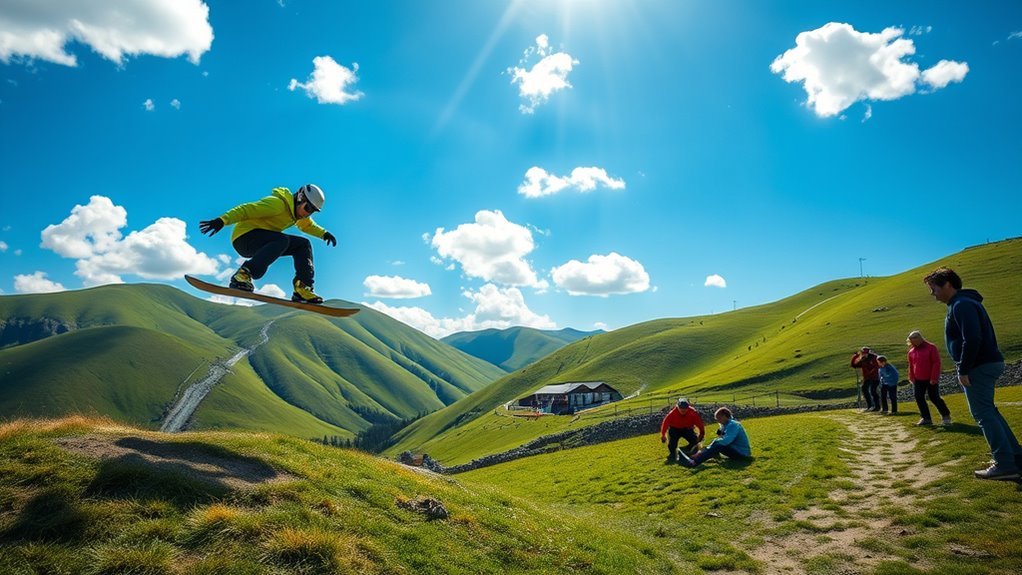
The best off-season training for snowboarders includes a mix of strength training, flexibility exercises, and cardiovascular conditioning. Focus on squats, lunges, and core workouts to build muscle and stability. Balance and agility drills, like single-leg stands and plyometric box jumps, are essential for improving control on the board. Incorporate dynamic stretching and yoga to enhance flexibility and recovery. If you want to discover more techniques to boost your performance, keep exploring your options!
Strength Training for Snowboarders
When you're gearing up for the snowboard season, strength training is essential, not just for building muscle but also for enhancing your balance and stability on the slopes. You want to feel that rush of freedom as you carve through fresh powder, and a solid strength foundation makes all the difference. Focus on exercises that target your core, legs, and back, since these muscles are vital for maintaining control while riding.
Incorporate squats, deadlifts, and lunges into your routine to build leg strength, while planks and rotational exercises can boost your core stability. Don't forget to include upper body workouts, like push-ups and rows, to support overall balance. Aim for a mix of heavy lifts and lighter, high-rep sessions to keep your muscles adaptable. A strong body will help you tackle challenging runs, so you can truly enjoy the freedom of the slopes without limitations. Adding Olympic lifts to your training can also enhance your explosive strength and improve your overall performance on the board.
Flexibility and Mobility Exercises
While strength is essential, flexibility and mobility are equally important for snowboarders looking to maximize their performance on the slopes. By incorporating these exercises into your routine, you'll not only enhance your range of motion but also prevent injuries that can keep you off the board. A strong core provides enhanced stability during dynamic movements, which is crucial for maintaining control while snowboarding. Here are some key exercises to take into account:
| Exercise | Benefits | Frequency |
|---|---|---|
| Dynamic Stretching | Increases blood flow | 3-5 times a week |
| Hip Openers | Enhances lower body mobility | Daily |
| Yoga | Improves overall flexibility | 2-3 times a week |
Balance and Stability Workouts
Building on flexibility and mobility, balance and stability workouts are essential for snowboarders aiming to improve their performance. When you're carving down the slopes, that sense of freedom relies heavily on your ability to maintain control. Incorporate exercises like single-leg stands, stability ball work, and balance boards into your routine. These will challenge your core and leg muscles, enhancing your overall stability.
Don't forget to mix in dynamic movements, such as lateral hops or agility drills. They'll help you adapt to the unpredictable nature of the snow. Yoga and tai chi are also fantastic for honing your balance while promoting mindfulness, letting you connect with your body in a liberating way. Additionally, incorporating strength training can further enhance your muscle power for directional changes on the board.
As you strengthen your balance, you'll find it easier to maneuver on the board, allowing you to express your style and freedom on the slopes. Embrace these workouts, and you'll be ready to ride with confidence.
Cardiovascular Conditioning
To maintain peak performance on the slopes, snowboarders need to prioritize cardiovascular conditioning. When you hit the mountains, endurance is key. You want to ride all day without feeling winded, and a solid cardio routine will help you do just that. Think about running, cycling, or swimming—activities that get your heart pumping and build stamina.
Aim for at least 30 minutes of moderate to high-intensity cardio a few times a week. Mix it up with interval training to boost your speed and power. Not only will this improve your performance, but it'll also enhance your recovery time, letting you enjoy every ride without the lag. Incorporating high-intensity interval training can maximize your cardiovascular endurance and overall fitness.
Ultimately, embracing cardiovascular conditioning gives you the freedom to explore new terrains and push your limits. So, lace up those sneakers or hop on that bike, and get ready to shred like never before!
Agility Drills for Enhanced Performance
Improving your agility is key to enhancing your snowboarding performance. Incorporate ladder drills for quick footwork, plyometric box jumps for explosive power, and balance board exercises to sharpen your stability. These drills will not only boost your skills but also help prevent injuries on the slopes. By regularly practicing agility ladder drills, you can significantly increase your overall agility and coordination.
Ladder Drills for Footwork
Ladder drills are a powerful tool for snowboarders looking to enhance their footwork and agility. These drills help you develop quickness and coordination, essential for maneuvering tricky terrain. Start with basic movements, like the one-foot in and out or lateral shuffles, then progress to more complex patterns. You'll find that as you repeat these drills, your body learns to respond faster and with more precision on the slopes. The freedom you crave while carving or hitting jumps comes from this improved agility. Incorporate ladder drills into your routine a few times a week, and you'll notice a significant boost in your overall performance. Remember, the more fluid your footwork, the more fun you'll have riding!
Plyometric Box Jumps
While you might think of box jumps as just a way to build leg strength, they're also a fantastic agility drill for snowboarders. These explosive movements help improve your coordination and power, essential for those quick turns on the slopes. Here's how you can make the most of your box jumps:
- Start with a solid base: Position your feet shoulder-width apart and engage your core.
- Focus on explosive power: Jump up onto the box, using your arms to generate momentum.
- Land softly: Absorb the impact by bending your knees and keeping your balance.
Incorporating box jumps into your training will elevate your agility and prepare you for the freedom of carving through fresh powder.
Balance Board Exercises
To excel on the slopes, mastering balance is just as essential as building strength and agility. Balance board exercises are perfect for enhancing your stability and coordination, giving you that feeling of freedom when carving down the mountain. Start with basic rocking movements to engage your core, then progress to more dynamic drills like 180-degree turns. These not only challenge your balance but also mimic the quick adjustments you make while riding. Incorporate one-leg stands and side-to-side shifts to further develop your skills. The more you practice, the more natural it'll feel when you're on your board. With consistent effort, you'll find your agility and confidence soaring, allowing you to release your true potential on the slopes.
Core Strength Development
Core strength is essential for snowboarders, as it helps maintain stability and control on the slopes. By developing your core, you'll improve your balance and reduce the risk of injury. Let's explore some effective exercises that can boost your core stability. Incorporating flexibility and mobility work into your training routine can further enhance your overall performance and joint health.
Importance of Core Stability
As you prepare for the snowboarding season, developing core stability is essential for enhancing your performance and preventing injuries. A strong core allows you to maintain balance while carving through fresh powder and maneuvering through challenging terrain. Here's why it matters:
- Improved Balance: A stable core helps you stay centered, allowing for smoother shifts and better control.
- Injury Prevention: Strong core muscles support your spine and reduce the risk of strains and falls, keeping you out on the slopes longer.
- Enhanced Power: Core stability translates into better energy transfer, letting you ride with more power and agility.
Effective Core Exercises
While some might think that core exercises are all about crunches and sit-ups, effective core training involves a variety of movements that engage multiple muscle groups. To build a strong core, try planks, Russian twists, and mountain climbers. These exercises not only stabilize your torso but also improve balance and coordination, essential for shredding the slopes. Incorporate stability ball exercises to challenge your core in different planes, and don't forget about rotational movements, which mimic the twists and turns of snowboarding. Integrating dynamic moves like kettlebell swings can enhance your power and endurance. Remember, a strong core translates to better control and agility, giving you the freedom to conquer any run with confidence. So, get moving and feel the difference!
Sport-Specific Skills Practice
To excel on the slopes, it is essential to dedicate time to sport-specific skills practice during the off-season. This isn't just about keeping your body fit; it's about honing the techniques that will make you a more versatile rider when winter arrives. Here are three key areas to focus on:
- Carving Techniques: Spend time practicing your turns on a skateboard or a balance board to mimic the carving motion. This'll improve your edge control.
- Jumping and Tricks: Use a trampoline or a foam pit to work on tricks. This helps you build confidence and improve your aerial awareness without the risks of falling on snow.
- Balance and Stability: Engage in exercises that challenge your balance, like slacklining or yoga. These activities will enhance your stability on the board, allowing for smoother rides. Additionally, focusing on proper footwork can significantly reduce the risk of injuries while improving your overall performance.
Cross-Training Activities
Incorporating cross-training activities into your off-season regimen can greatly enhance your performance on the snowboard. Exploring different physical activities not only keeps things fresh but also builds strength and endurance. Consider mixing in mountain biking or skateboarding; these sports mimic the board movements and balance you'll use on the slopes.
Yoga and Pilates are fantastic for improving flexibility and core strength, which are essential for those sharp turns and jumps. If you love the outdoors, hiking can boost your stamina while enjoying nature's freedom.
Don't forget about strength training—focus on your legs, core, and upper body to create a well-rounded physique. Swimming is another great option, as it provides a low-impact way to build endurance without straining your joints. Additionally, engaging in enhanced cardiovascular endurance through activities like swimming will help you develop the stamina needed for long days on the slopes. By diversifying your workouts, you'll not only stay engaged but also prepare your body for the challenges of snowboarding season.
Recovery and Injury Prevention Techniques
After a solid off-season of cross-training, it's important to focus on recovery and injury prevention techniques to keep your body in peak condition. You want to ride with freedom and confidence, so prioritize these essential practices:
- Stretching and Mobility Work: Incorporate dynamic stretching before workouts and static stretches post-session. This keeps your muscles flexible and reduces soreness.
- Foam Rolling: Use a foam roller to target tight muscles and fascia. This self-myofascial release technique promotes blood flow and helps alleviate muscle tension, enhancing muscle recovery for better performance.
- Rest and Nutrition: Don't underestimate the power of recovery days. Balance your training with adequate sleep and nutrition, fueling your body with whole foods rich in protein and healthy fats.
Frequently Asked Questions
What Nutritional Supplements Should Snowboarders Consider During Off-Season Training?
So, you think popping gummy vitamins will make you a pro? Think again! You'll want protein, omega-3s, and maybe some creatine. They'll fuel your freedom and keep you shredding when winter rolls back around!
How Can I Track My Progress During Off-Season Training?
You can track your progress by keeping a training journal, using fitness apps, or setting specific goals. Regularly assess your performance, adjust your routine, and celebrate small victories to stay motivated and feel free in your journey.
What Are the Best Resources for Snowboard Training Videos?
Did you know that 78% of snowboarders improve with video analysis? For training videos, check YouTube channels like Snowboard Addiction and Stomp It Tutorials. They'll give you the freedom to learn at your own pace.
How Often Should I Change My Training Routine?
You should change your training routine every 4 to 6 weeks. It keeps things fresh and prevents plateaus. Listen to your body, and don't hesitate to mix it up to stay motivated and engaged.
Can I Train Indoors, and How Effective Is It?
Yeah, you can definitely train indoors! It can be super effective, especially for strength and conditioning. Just make sure to mix things up to keep it fun and engaging, so you stay motivated and focused.